
Is your lab in need of a makeover? L’Oréal is revolutionizing laboratory design
Find out how ingenious flexible labs are making agile and sustainable research a reality
29 Jun 2020
Editorial article
What lab wouldn’t be tempted by the prospect of reduced costs, energy, and time savings, and an overall improved environmental impact? While the adoption of eco-friendly and low-waste practices is an attractive goal, achieving true sustainability can seem a hopeless mission for teams whose projects and research questions are ever changing. Born from this challenge, however, is a novel solution that could change the way science operates forever.
In this exclusive SelectScience® interview, we speak with Philippe Fristot, Head of Real Estate for Research and Innovation at cosmetics giant L’Oréal, about how he is helping to develop an exciting new wave of sustainable, flexible, and agile laboratories.
Four steps to future-proof your lab
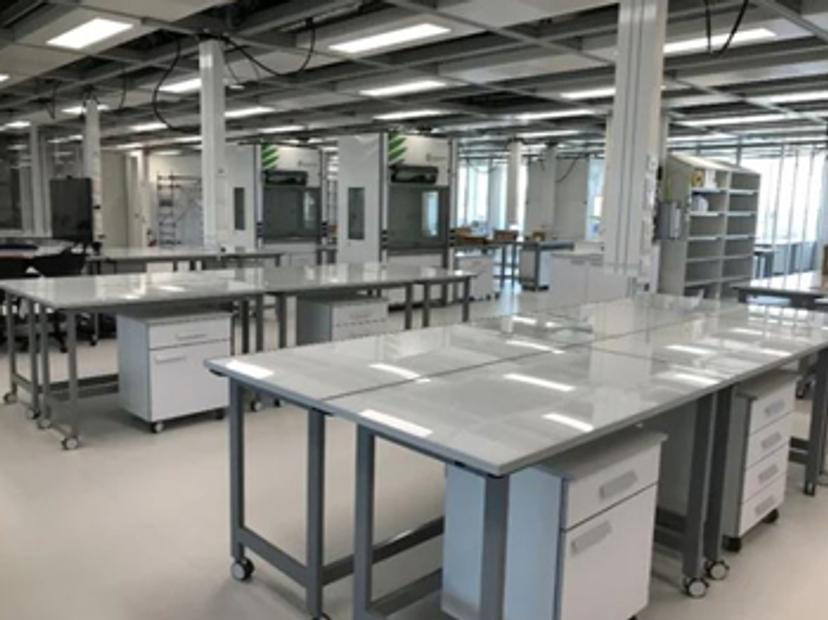
In 2011, Mr. Fristot received a request from a researcher who was eager for a responsive style of workspace that would make it easier to test new scientific instrumentation and workflows. In the process of answering this inquiry, Mr. Fristot discovered a new way to distribute the necessary equipment around a laboratory. The concept, now affectionately referred to as FlexLabs, relies on four simple solutions that enable the quick and easy rearrangement or removal of equipment:
- All utilities are distributed to the benchtops by movable media columns
- The media columns, benchtops, and larger pieces of equipment are housed on castors
- Approximately 30% of floor lab surface is kept free
- Fixed equipment, such as sinks or fume hoods, must be placed around structurally permanent features of the lab, such as pillars or walls
A complete makeover in just one day
You no longer need to spend money on redeveloping your facilities, nor do you need to wait for construction to be completed
Today, L’Oréal has implemented FlexLabs throughout its facilities, with the concept being continually refined over time. “Each time we renovate or build a new lab, FlexLabs are the new norm,” says Mr. Fristot, “and as each project progresses, we learn several new lessons to improve the design of the next space.” He also highlights the importance of input from end-users, explaining how they have “helped the concept evolve into something increasingly more flexible, efficient, and economical”.
This new approach to lab design redefines research management and the potential impact of these new spaces is significant. Research groups will no longer need to rely on costly technicians, project managers, and contractors to change the layout of a laboratory, as it can be reorganized to suit the individual needs of a project in just one day. “When a new approach to research is proposed, you no longer need to spend money on redeveloping your facilities, nor do you need to wait for construction to be completed,” explains Mr. Fristot.

Having safe technology that allows us to dramatically reduce the required air volume exchange is a benefit we can't ignore
GreenFumeHood Filtration Technology from Erlab has been instrumental to L’Oréal’s research for many years and now plays a key role in the new FlexLabs. “Sustainability is a driver for each L’Oréal project,” Mr. Fristot explains, “and having safe technology that allows us to dramatically reduce the required air volume exchange is a benefit we can't ignore.”
In addition, the flexibility of Erlab products allow L’Oréal to adapt to the rapidly changing needs of its laboratories. “They perfectly complement our FlexLab concept,” Mr. Fristot says. “Due to the lack of fixed exhausts, you can move the fume hoods like simple benches, all you need to find is an electrical plug.”

Connected laboratories around the world
L’Oréal FlexLabs installations
- 2012: Saint-Ouen, France
- 2013: Mumbai, India
- 2014: Pudong, China
- 2017: Rio de Janeiro, Brazil
- 2019: Chevilly Larue, France
Development of the FlexLab concept is now the new norm in both the Research and Innovation labs and in L’Oréal’s factories. “Our ultimate goal is to have this very simple tool that can be developed and implemented anywhere in the world,” declares Mr. Fristot. This involves the nurturing of collaborations and partnerships with local vendors to address location-specific challenges such as import taxes, legal compliance, and individual project costs. L’Oréal is open to sharing its experience in the development of FlexLabs and encourages the adoption of these practices for better-aligned research, to the point where some of L’Oréal’s biggest competitors have now adopted the concept for their own labs.
Looking to the future, the next step for L’Oréal is the implementation of comprehensive digital solutions to enable different teams across the globe to communicate seamlessly and align their laboratory setups and work together on projects more effectively.
L'Oréal
L'Oréal is a world-leading personal care company that aims to champion inclusivity and diversity in its product delivery. “Our goal is to offer each and every person around the world the best of beauty in terms of quality, efficacy, safety, sincerity, and responsibility to satisfy all beauty needs and desires in their infinite diversity.” – Philippe Fristot, Head of Real Estate for Research and Innovation
Do you use Erlab products in your lab? Write a review today for your chance to win a $400 Amazon gift card>>
Related products
Request Quote for All Products
GreenFumeHood 3
ErlabAdvanced integrated filtration technology for fume hoods with built-in smart communication

GreenFumeHood Technology
ErlabThe advantage of ductless on a traditional fume hood structure with lower operating and energy costs.