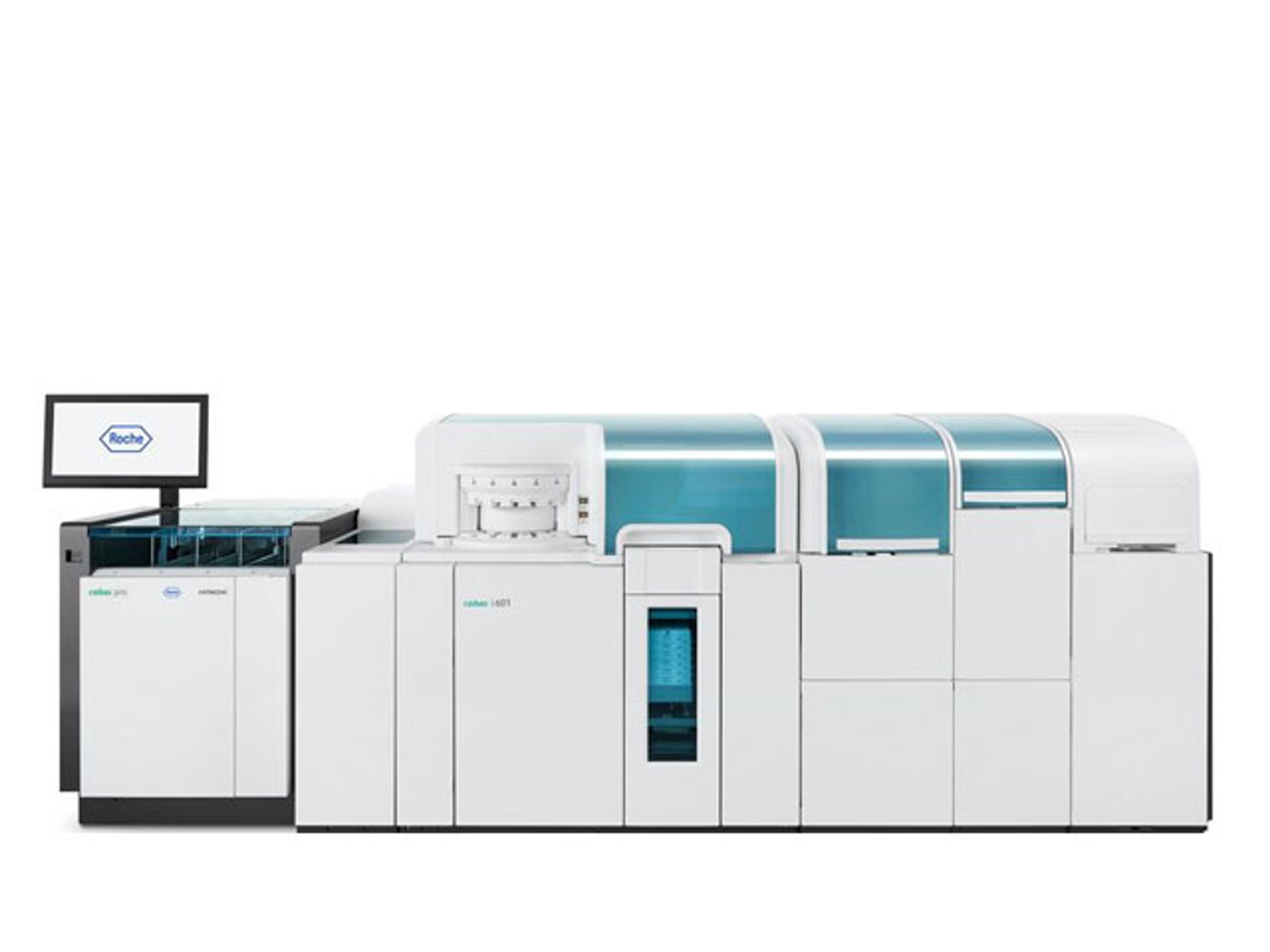
Ionify 25-Hydroxy Vitamin D total test achieves CLIA ‘Moderate Complexity’ categorization
Roche's achievement marks an important step in broadening the clinical utility of mass spectrometry testing across routine labs
19 Sept 2025
Roche has announced that its its Ionify® 25-Hydroxy Vitamin D total assay has been categorized by the U.S. Food and Drug Administration (FDA) as 'Moderate Complexity' under the Clinical Laboratory Improvement Amendments of 1988 (CLIA). This represents the first time a mass spectrometry-based test has achieved this designation, opening access to a broader range of clinical laboratories.
The assay runs on Roche’s cobas® i 601 analyzer, part of the cobas® Mass Spec solution. By combining mass spectrometry’s sensitivity and specificity with a standardized, easy-to-use workflow, the cobas® Mass Spec solution streamlines complex testing and reduces variability across labs. Traditionally, these tests have been confined to highly specialized labs due to complex workflows and the need for expert operators.
The Ionify® 25-Hydroxy Vitamin D total assay is the first in Roche’s planned U.S. pipeline for the cobas® Mass Spec solution. Roche already offers a broad menu of mass spectrometry assays in countries accepting the CE mark, with additional launches anticipated globally.
Brad Moore, President and CEO of Roche Diagnostics North America, said, "Achieving this level of automation for a mass spectrometry assay is a breakthrough for routine diagnostics. It will allow more labs to deliver highly accurate results efficiently, helping clinicians make better-informed decisions and ultimately improving patient care."
Roche’s proprietary chemistry enables scalable automation with a workflow that is faster, more reproducible and more environmentally sustainable than conventional mass spectrometry methods. This reduces variability across labs and helps minimize the need for outsourcing advanced testing.