Inventor of Beckman Coulter Life Sciences’ CytoFLEX Flow Cytometer Honored for his Engineering Innovation

Joins Dr. Beckman and Wallace Coulter as Fellows of American Institute for Medical and Biological Engineering (AIMBE)

18 Apr 2016
Alex Waite
Editorial Assistant

Industry news

The American Institute for Medical and Biological Engineering (AIMBE) has elected Dr. Yong Chen, the Chief Technology Officer of Beckman Coulter Life Sciences, a Danaher company, to its College of Fellows. This is in recognition of his work in the field of medical and engineering innovation and discovery.

This honor follows in the footsteps of the founding fathers of the company, Dr. Arnold Beckman and Wallace Coulter, both previous fellows of this prestigious organization.

“In honoring Dr. Chen, the AIMBE recognizes the impact the CytoFLEX flow cytometer’s outstanding technology has had on the life sciences research space,” explained Mario Koksch, Vice President and General Manager of the Flow Cytometry Business Unit, Beckman Coulter Life Sciences.

“With its use of disruptive technologies, the CytoFLEX sets new standards of fluorescence sensitivity, enabling scientists to expand into new research areas using side scatter off the violet laser for enhanced nanoparticle detection.”

In 2012, Dr. Chen founded Xitogen Technologies Inc., a China-based startup to develop a revolutionary life science instrument. Xitogen was acquired by Danaher two years later; and Dr. Chen has spearheaded the production of the first new instrument to be launched since the acquisition, the Beckman Coulter CytoFLEX Flow Cytometer.

“I am honored to be recognized by the AIMBE and to join such an illustrious group of fellows,” Dr. Chen explained. “The considerable research facilities offered by Beckman Coulter Life Sciences, not just in the field of flow cytometry, creates a stimulating and innovative environment in which to explore the frontier of medical and biological engineering.”

The American Institute for Medical and Biological Engineering (AIMBE) is a non-profit organization, with 50,000 members. It represents the top 2% of medical and biological engineering professionals. Dr. Chen was inducted into the College of Fellows at AIMBE’s 25th Annual Event, held earlier this month at the National Academy of Sciences, Washington, DC. The theme of this year’s event was ‘look back at 25 years of Innovation and to look forward to the next 25 years of progress’.

Mr. Milan Yager, the AIMBE Executive Director, said: “AIMBE serves as the leading voice and advocate for the benefit of medical and biological engineering to the public. Dr. Chen’s election is in recognition of his distinguished career and presents the opportunity to further broaden the impact of his achievements on life science engineering.”

Dr. Yong Chen

Dr. Chen was raised in China and received his PhD in Physical Chemistry from MIT in Cambridge, Massachusetts. His PhD work was recognized by the American Chemical Society as the best thesis of the year with the distinguished Nobel Laureate Signature Award in 1990. He started his career as an assistant professor in the College of Chemistry at University of California Berkeley, with a joint appointment as a senior faculty scientist in the Lawrence Berkeley Laboratory.

While Yong was at Berkeley, he built the first Femtochemistry lab in the University of California System and was an Alfred P. Sloan Research Fellow and winner of the Henry Dreyfus Young Investigator award and NSF Presidential Young Investigator award. He later joined the renowned Bell Laboratories. Dr. Chen has more than 20 issued and pending US and international patents.

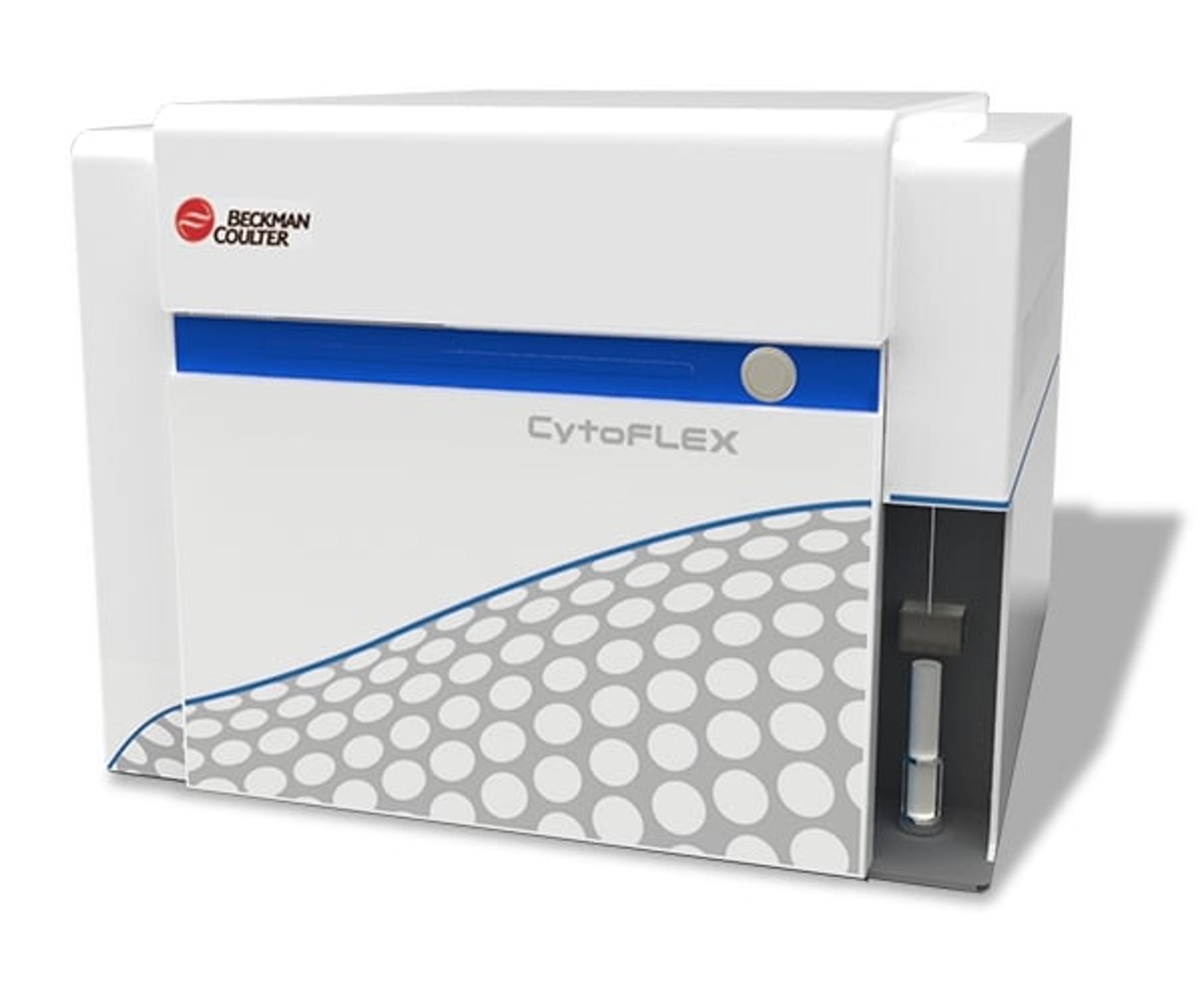
CytoFLEX Flow Cytometer

Beckman Coulter Life Sciences

Providing quality and performance at any configuration, the CytoFLEX system provides powerful sensitivity and resolution for the simple to the most challenging applications. CytoFLEX delivers and surpasses capabilities expected in top tier analyzers, with excellent performance and nanoparticle resolution.

(23)

Links

Tags

Fluorescence SpectroscopyFluorometers and spectrofluorometers (also called fluorescence spectrometers) are used to measure the intensity and wavelength of fluorescent light emitted from a sample after excitation by illumination. Spectrofluorometers utilize monochromators to select the desired wavelengths, whereas filter fluorometers employ a set of filters. Spectrofluorometers for measuring steady-state fluorescence and lifetime fluorescence (or time-resolved fluorescence) are available, as well as fluorescence microscopes and microplate readers. Find the best fluorescence spectroscopy products in our peer-reviewed product directory: compare products, check customer reviews and receive pricing direct from manufacturers.Sample ManagementSample management systems include sample storage devices such as freezers and plate storers, sample environment enclosures and sample organization, retrieval and sorter systems. Useful system features include high-throughput, automation, robotic arms, automated liquid handling and associated database systems. Accessories in sample management include barcode scanners, heat sealers and tubes.Flow Cytometry / Cell CountingFlow cytometers are used to count, sort and examine multiple characteristics of cells. Other cell analysis equipment includes image cytometers, cell counters, fluorescence-activated cell sorters (FACS), magnetic-activated cell sorters (MACS), and a range of flow cytometry assay kits. Flow cytometers can reveal information on cell viability, cell proliferation, apoptosis and cell cycle progression, as well as identify cell populations and intracellular or cell-surface molecules. Additionally, some flow cytometers, known as FACS, have an additional sorting function after analysis. Cell counters and image cytometers count live and dead cell populations and can also conduct cell proliferation assays. Find the best flow cytometers, cell counters and cell sorters in our peer-reviewed product directory: compare products, check customer reviews and receive pricing direct from manufacturers.NanotechnologyNanotechnology, or nanotech, is an engineering technique using molecular scale functional systems. Applications of nanotechnology include medicine and medical devices, electronics, air and water purification, food science and energy production.Robotic InstrumentsRobotic instruments can be used for high-throughput automation of many lab processes. Such processes use instruments for assays like cell based assays and ELISA, for sample preparation like shakers, centrifuges and incubators, and for analysis such as sequencing and western blot analyzers. Useful features of robotic instruments include speed, reproducibility, barcode readers, software and automation.Particle CharacterizationParticle characterization instruments are used to determine particle size distribution, shape, surface area, zeta potential, density and porosity of particles and materials. Multiple tecchniques are available for determining particle size, shape and count including dynamic light scattering (DLS), laser diffraction, electrozone (Coulter technique), imaging particle analysis and single particle optical sensing. Determine the density of your material with a gas pycnometer or examine its surface area and porosity with gas adsorption analyzers and mercury porosimeters. Find the best particle characterization instruments in our peer-reviewed product directory: compare products, check customer reviews and receive pricing direct from manufacturers.FluorescenceThe emission of fluorescence occurs when a photon of energy is supplied to a fluorescent chemical compound by an external source, causing it to become excited. Fluorescence can be detected and measured for different purposes using microplate readers, fluorescence microscopes, fluorescence scanners, and flow cytometers.Flow ChemistryFlow chemistry describes a chemical reaction being carried out continuously rather than in a batch process. The reagents are pumped through a pipe and forced together at a mixing junction, where they are allowed to combine until the reaction is stopped.CytometryCytometry is a broad term for the quantitative analysis of cells and cell systems. The most popular methods to study cytometry are flow cytometry and image cytometry.NanoparticlesNanoparticles are between 1-100nm in size. Nanoparticles can be used for a wide variety of applications including biomedical, catalysis and electronics.Engineered Nanoparticles
Inventor of Beckman Coulter Life Sciences’ CytoFLEX Flow Cytometer Honored for his Engineering Innovation