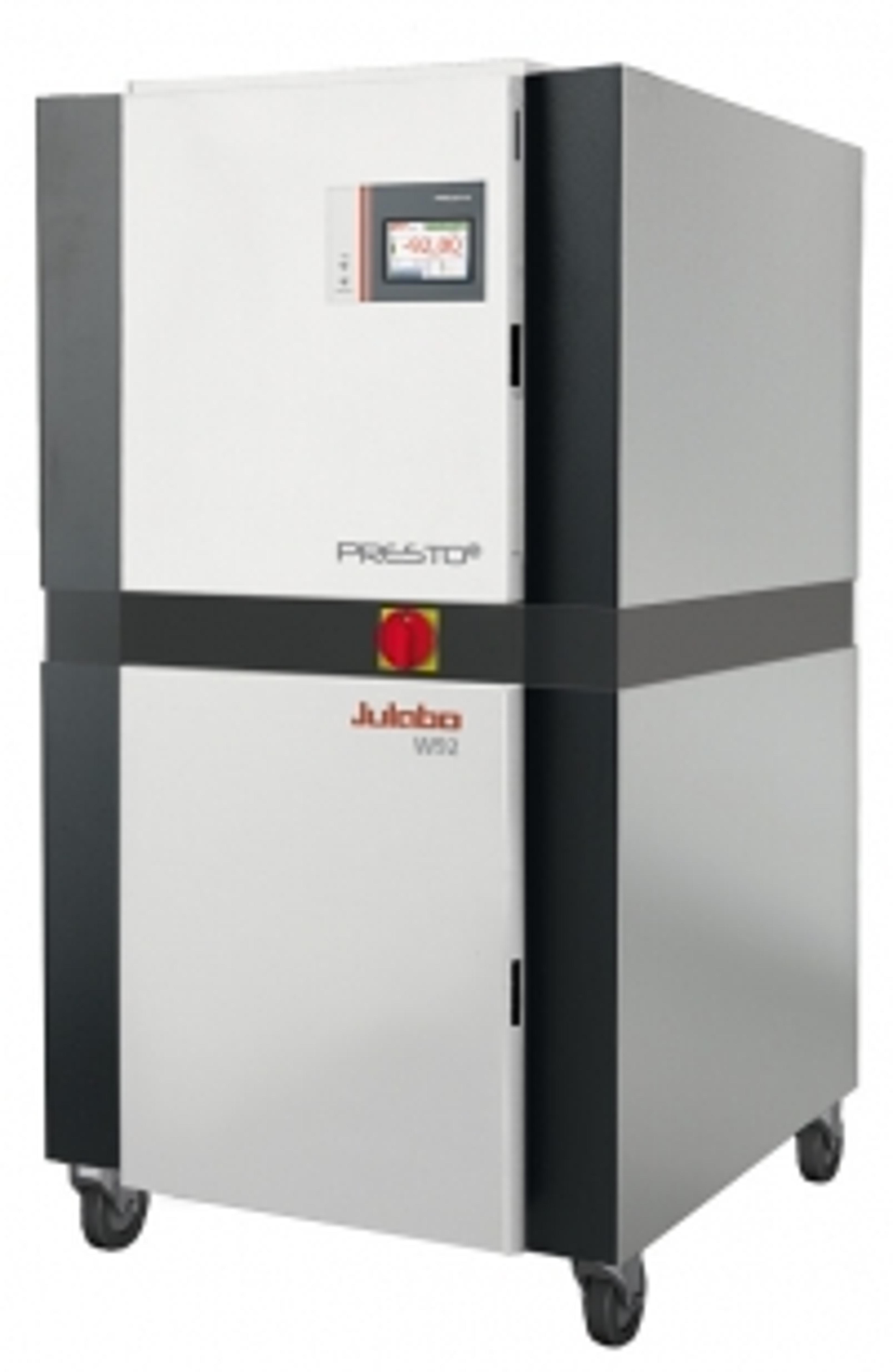
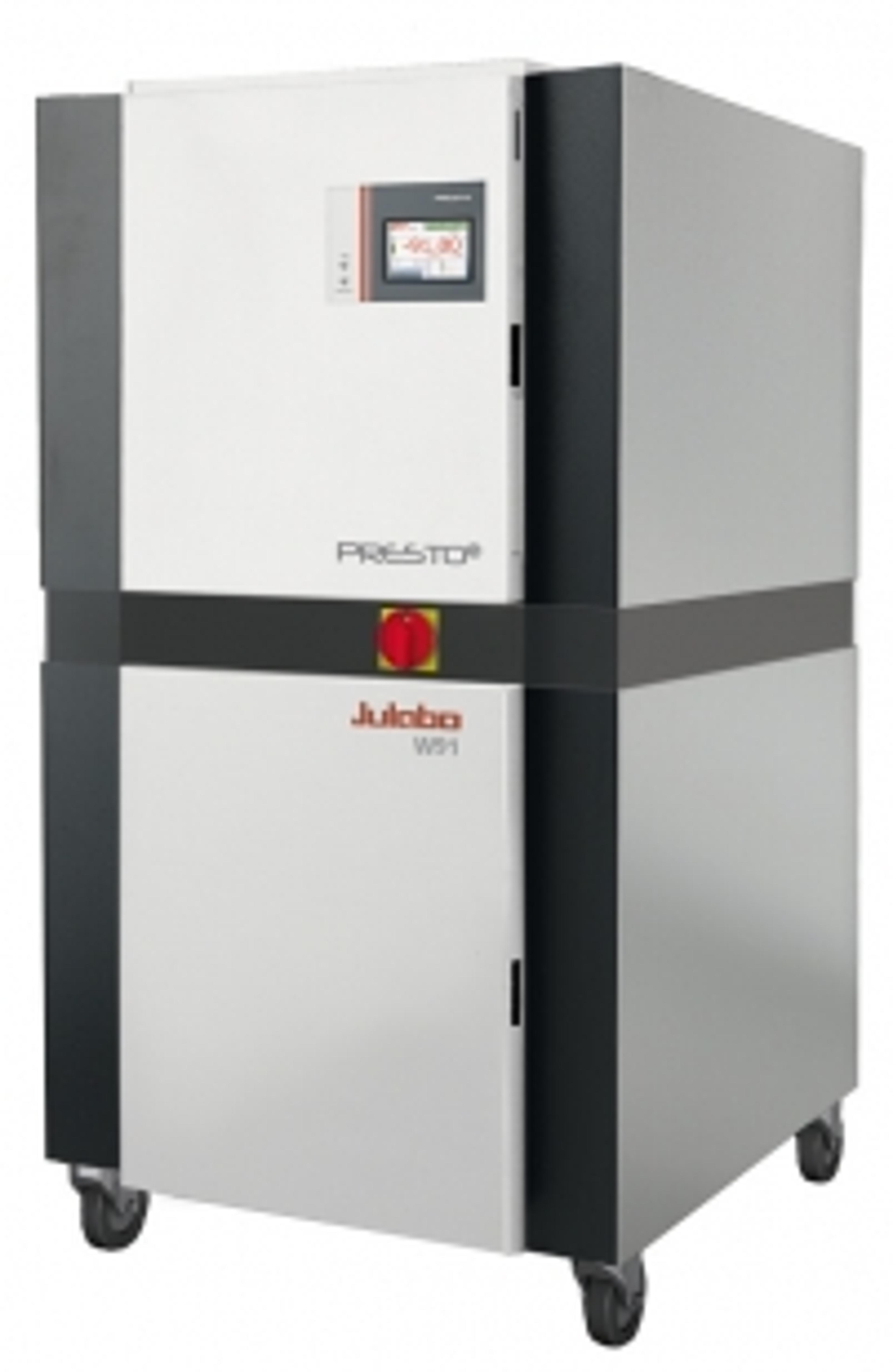
Introducing the PRESTO W91/W92 Thermdynamic Product
10 May 2017
Product news
The PRESTO series is designed for precise temperature control as well as rapid cool-down and heat-up phases, making it ideal for reactor temperature control, material stress tests, or temperature simulations.
PRESTO models W91, W92 as well as W91x and W92x benefit in particular from a significant increase in the refrigeration-heating capacity. The heating capacity increased from previously 12 kW to 18 kW, The W92tt(x) models offer even twice the heating capacity. The cooling capacity also increased considerably for all W92 models, for example, to 25 kW at 20 °C.
Special models PRESTO W92x and PRESTO W92ttx are additionally available with a powerful gear pump. The magnetic coupling of the pumps ensures a hydraulically sealed cooling circuit avoiding condensation and odors. Using highly efficient components, the models of the PRESTO W91 and W91 series impress as outstanding high-end product with high heating, refrigeration, and pump capacities.
The integrated 5.7-inch color industrial-grade touch panel is one of the identifying characteristics of the PRESTO models. It gives the user a clear and well-organized view of important information while greatly improving user-friendliness through intuitive control with the tip of a finger. The PRESTO ® models are whisper quiet and barely audible in a laboratory. They are extremely robust and work reliably even if the ambient temperature climbs as high as +40 °C. Numerous interfaces permit new remote control possibilities across networks and in superordinate control systems. In the case of a malfunction, an integrated black box enables quick support by the JULABO service team.
Functional and Space Saving
Thanks to free side panels without ventilation slits, the required footprint is reduced to a minimum. The instruments can be installed directly next to each other or the application. The PRESTO systems are available in three voltage variants for flexible usage worldwide.
Key Features:
- Extremely rapid cooling and heating
- Ambient temperature +5 °C to +40 °C
- Space saving design
- Well visible display
- Comprehensive plain text indicators on the display
- Temperature stability to ±0.05 °C ... ±0.2 °C
- Integrated programmer with real time clock
- Electronic display of filling level and pump capacity
- Powerful circulating pumps, electronically adjustable
- Interface for SD Memory Card