
Integrated DNA Technologies launches new respiratory virus panel
New ready-to-ship xGen NGS solution will enable researchers to combat challenging diseases of today and prepare for the next pathogen of tomorrow
24 Jul 2023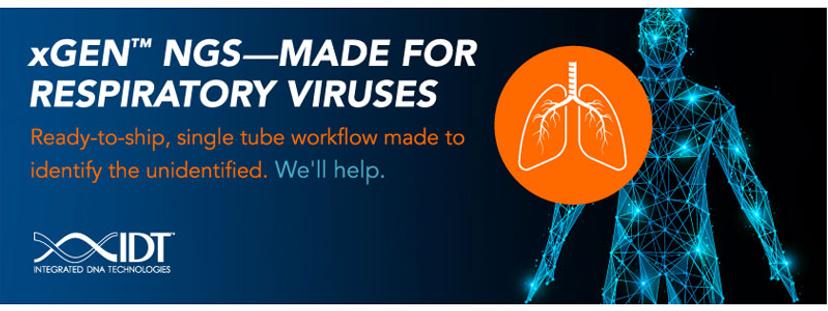
To meet customer demand for a multiplexed, multiple respiratory disease target panel that provides comprehensive genome coverage, Integrated DNA Technologies (IDT) is revealing a new next generation sequencing (NGS) solution, the xGen™ Respiratory Virus Amplicon Panel. With 98.7% total genomic coverage of viral respiratory variants Respiratory Syncytial Virus (RSV) A, RSV B, Influenza A H1N1, Influenza A H3N2, Influenza B, and SARS-CoV-2, the uniquely configured single panel is designed to monitor the evolution and spread of these six viruses. Leveraging IDT’s well-established NGS amplicon technology, the panel creates super amplicons to reliably distinguish identified and unidentified viral variants of multiple respiratory viruses in a single panel and allows for tracing evolving epidemiological patterns.
The IDT xGen Respiratory Virus Amplicon Panel’s single-tube workflow creates overlapping amplicons and goes from sample to sequencer in 2.5 hours with up to 1,536 unique dual indexing primers (UDIs) for multiplexed sequencing. Super amplicons result in increased coverage, even in changing or diverse genomes. Data can be sequenced from viral titers as low as 10 to 100 viral copies, using first- or double-strand cDNA. The xGen Respiratory Virus Amplicon Panel is also compatible with IDT Normalase™ technology.
“With respiratory season just around the corner, IDT wanted to ensure labs can stay one step ahead by being equipped with a reliable NGS solution that can help them monitor and track known and unknown viral lineages quickly,” said Steven Henck, PhD, Vice President, R&D at IDT. “Our solution—which is powered by our differentiated super amplicon technology—increases coverage for variable genomes, saving researchers critical time so that they can focus on monitoring emerging mutations and accelerate their path to discovery.”
Using NGS to enhance understanding of viruses
Respiratory infections are increasing, and monitoring known, and unknown infections is a top priority for health agencies. Pre-COVID-19, the use of NGS for pathogen surveillance was compelling, but underutilized. Now, it is projected to become more prevalent in the context of broader genomic surveillance, as NGS testing demonstrates its utility in researching, identifying and monitoring known and unknown pathogens in clinical settings. In addition, when compared with traditional, cultural-based methods which do not offer the sensitivity and multiplex level to monitor emerging mutations in a time sensitive manner, NGS is rising as a leading technology for respiratory pathogen research and monitoring due to its ability to detect—at ultra-low pathogen levels—emerging strains and variants for prevention, vaccine development and therapeutics.
“While it’s clear that NGS is here to stay for infectious disease surveillance, more adoption is still needed,” Henck added. “Its utility shows great promise and is one of the many reasons why IDT’s xGen NGS suite of solutions will continue to be part of IDT’s product roadmap. We’re proud to add a new solution that expands IDT’s existing NGS respiratory and infectious disease portfolio and supports the expected rise of cases for RSV and the flu during the fall and winter seasons to serve more researchers.”
Want the latest science news straight to your inbox? Become a SelectScience member for free today >>