
‘Inspiring others and rebuilding trust in science’
Ph.D. biology student and phycologist Ronald Kittle shares the inspiration behind his lifelong curiosity for learning and his hopes for the future of science communication
1 Sept 2021
Editorial article


Lab product reviews can change the world by helping other scientists find the best equipment to accelerate their vital work. Here at SelectScience®, we are dedicated to promoting peer-to-peer communication that will make the difference – but we couldn’t do it without our esteemed reviewers. In this regular feature, we put the spotlight on some of our most dedicated and impactful reviewers and find out what inspires them to keep sharing their knowledge with the global scientific community.
We are delighted to introduce this week’s Reviewer in the Spotlight, Ronald Kittle, Ph.D. biology student andphycologist (algologist) at the University of Louisiana. In this article, he tells us about the nature of his research and the people who have inspired his unshakable curiosity with science. Ronald also stresses the need for building trust in science and shares his hopes for the future of science communication.
Tell me about your role and your current research
I am an incoming 4th year Ph.D. biology student at the University of Louisiana at Lafayette, under the supervision of Dr. Suzanne Fredericq. I am a phycologist by training, and for my Ph.D. research, I am investigating the taxonomy and systematics of a special type of coralline red algae, called rhodoliths (rhodo=red, lith=rock). Rhodoliths, like other coralline algae, are very important for marine ecosystems and are heavily influenced by ocean acidification due to the composition of their cell walls. Other than the systematics of coralline algae, I am investigating whether there is a genetic basis towards calcification in coralline algae, primarily focusing on specimens found in the mesophotic depths in the Gulf of Mexico.
In the future, I would love to step away from coralline algae and investigate the evolution of red algal genomes in different clades, and possibly use various “–omic” tools to better understand invasive macroalgal species around the Pacific Ocean.
Who inspired you to become a scientist?
I think growing up, I have been the type of person who is always in deep thought. I have ADHD, so my mind never truly shuts off – it keeps questioning things as I go. My high school chemistry and biology teachers, Mrs. Teski and Mrs. Ruff, both encouraged me to keep asking questions and fostering curiosity, even if I struggled retaining information back then.
This continued throughout my undergraduate career with Dr. Karla McDermid at the University of Hawaii at Hilo, who would eventually become not only my undergraduate and graduate advisor, but a long-term collaborator with various projects throughout my Ph.D. program.
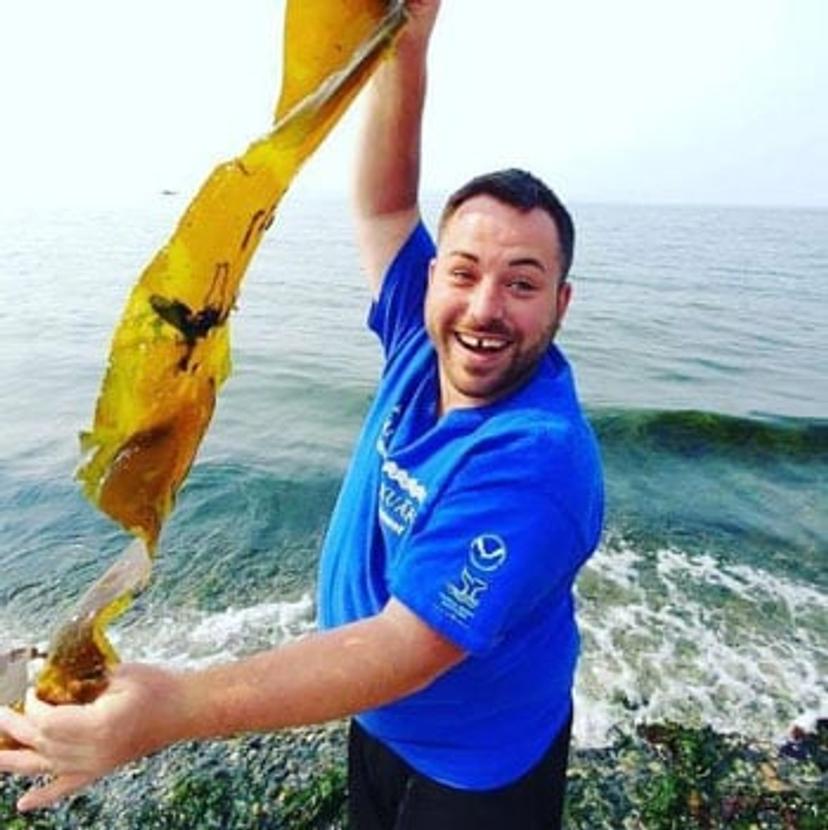
What have been your biggest challenges as a scientist?
One of the biggest challenges scientists face is definitely communication and finding a balance between presenting the right amount of information and knowing your audience. One of the best tips that I have received is to teach whatever you’re researching to a younger sibling, niece or nephew, and see if they can understand it. Thankfully, I have a plethora of nieces and nephews, so they are always my guinea pigs per se, and I hope to inspire them, just as how I was inspired in the past.
What can we learn about the need for clear science communication post-pandemic?
Clear science communication is essential! It’s needed to weed out alternative facts. As scientists, if we can effectively communicate information in a way that is clear and concise, there will be less fear of science and more trust in scientists and the science itself. I think the media always gets half the story at best. We need a clear science communicator to be the middle person so that the general public and scientists alike can understand science and the goals, results, and implications of every study.
What do you think the future of science communication should look like?
I think the future of science communication needs to include not only publishable, peer-reviewed journal articles, but also content that is published in a way for the general public to digest. In addition, I think the future of science communication should be publicly available to all and not be limited by journal and publisher ‘paywalls’ – having more affordable, open-access options should be a priority.
Why do you think lab equipment reviews are important when it comes to clear science communication?
As a graduate student, reading reviews is so important when looking around for new products and reagents, or to see if anyone has worked on similar organisms and used other products for similar research. Reviews also help when proposing experiments with different reagents, applying for small grants for graduate students, and just maybe being more informed on “what’s out there” for the future, when I have a “big kid” position somewhere.
What is the most innovative piece of lab equipment you use?
The most innovative piece of lab equipment for my current work is Zymo Research’s Quick DNA or Quick RNA Plant/Seed extraction kits. I’m using these for extracting DNA (or RNA) from different seaweeds. We have tried so many extraction kits and hands down Zymo Research has always performed much better than the others.

What are your future goals as a scientist?
As I am starting to establish myself as a scientist, I have a lot of ideas that I’m still curious about. Sometimes I think I need five of me to really accomplish every idea I have. If I had to pick a few goals for the future, I would love to continue researching red algae using molecular techniques. However, more importantly, I want to use these skills and applications to inspire and keep others interested in asking questions, just like how others fostered my own curiosity. I think the moment that we lose curiosity and stop asking questions is when we know we have failed in our job as a scientist.
Would you like to feature in our Reviewer Spotlight? Write your review here to be in with a chance >>
Related products
Request Quote for All Products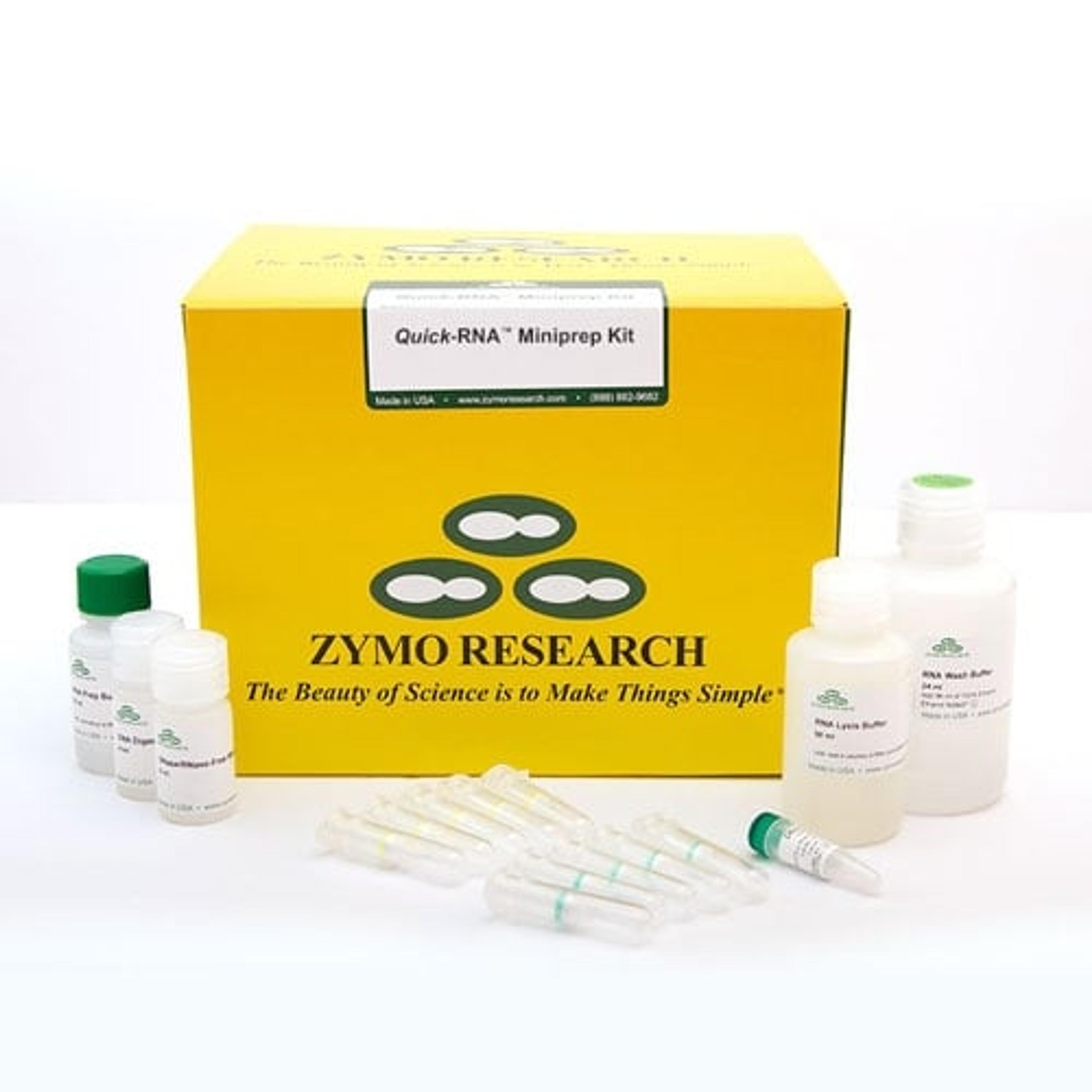
Quick-RNA™ Miniprep
Zymo ResearchThe Quick-RNA™ Miniprep kit is an innovative product designed for the easy, reliable, and rapid isolation of DNA-free RNA from a wide range of samples.