
Insights into the UK’s Largest Independent Integrated Drug Discovery CRO
Find out about Sygnature Discovery’s approach to custom assay development and learn the secrets to their success in accelerating the discovery of new therapeutics
11 Jul 2017
Editorial article

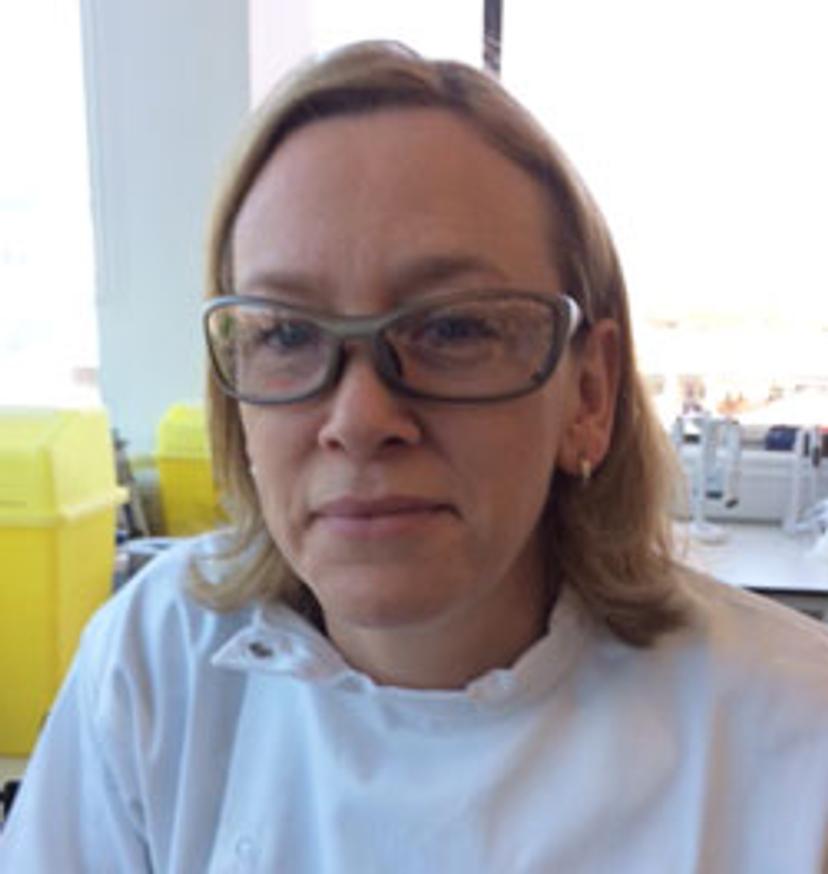
SelectScience spoke to Denise Swift, a Senior Bioscientist, Project and Team Leader at Sygnature Discovery (Nottingham, UK). Sygnature Discovery is a contract research organization (CRO) and is the largest independent provider of integrated drug discovery resources and expertise in the UK. Denise is responsible for evaluating new technologies to enhance the organization’s capabilities – in particular, screening technologies, instrumentation and automation.
The ultimate mission of Sygnature Discovery is to accelerate the discovery of new therapeutics and advance them along the development pipeline. Sygnature Discovery has delivered nine drug candidates since 2011 which have entered clinical trials, including drugs to treat prostate cancer, dry eye syndrome, ulcerative colitis and inflammatory bowel disease – a huge success on behalf of its clients.
The company has grown exponentially since it was founded in 2004, when it was a small team of just five medicinal chemists. Sygnature Discovery now employs over 150 lab-based scientists and has expanded to undertake integrated drug discovery programs for its clients by adding additional capabilities such as computational chemistry, drug metabolism and pharmacokinetics (DMPK) and in vitro screening all under one roof.
SS: Can you describe the work of the Bioscience Department?
DS:Clients can come to us at any point in the drug discovery process; we’re very fluid and flexible. Many of our projects are integrated with other disciplines across all departments, although some in vitro biology and screening projects we take on are run purely within the Bioscience Department.
At Sygnature, we initiate early projects with customized approaches that can involve virtual screens, focused screens and medium/high throughput campaigns. To facilitate these screening exercises, we can utilize Sygnature’s proprietary fragment library of over 1,000 compounds, and commercially-available, structurally-diverse libraries up to 20,000 compounds for MTS projects.
In addition, we offer custom assay development in collaboration with our clients’ requirements. These include biochemical assays, cell-based functional assays and a range of biophysical techniques to evaluate and progress small molecule activity at all stages of pre-clinical drug development.
SS: What instruments do you use for developing and running MTS and HTS assays?
DS: We predominantly use the PHERAstar® FSX from BMG LABTECH for running these assays. Due to the broad biology range of client projects, our work is extremely varied. The incredible flexibility of the FSX provides the ideal platform to meet the diverse and changing needs of our client projects.
We routinely run BRET (bioluminescence resonance energy transfer), NanoBRET™, HTRF (homogeneous time-resolved fluorescence) absorbance, fluorescence intensity, and AlphaScreen (amplified luminescent proximity homogenous assay) and FP (fluorescence polarization) – all in a number of different plate formats on the FSX.
SS: Why have you chosen the PHERAstar® FSX?
DS:In addition to the PHERAstar® FSX’s flexibility, the instrument is very sensitive. There have been instances where the sensitivity of the instrument has provided a unique solution during custom assay development, enabling projects to move forward. Another factor is BMG LABTECH’s great customer service. If we require a filter set, they generally supply the module within a week, an impressive turnaround. Finally, the FSX has a very good reputation in the drug discovery Bioscience business. When we mention that we use it to our clients, they often react very positively.

SS: Can you describe some of the challenges you face when developing assays for clients?
DS:A recent project involved developing a novel HTRF assay for which there were no suitable commercial reagents available. We had to work closely with our client and Sygnature’s protein crystallography affiliate company, Peak Proteins, to generate appropriate reagents suitable for assay development. We pride ourselves on consistent and clear communication with our suppliers and clients.
Another example we faced during the development of a NanoBret™ assay was poor reproducibility and a small assay window. This resulted in high assay repeat rates, which was overcome by transferring the assay to the FSX delivering a robust and time efficient assay format for our client.
However, I would say that one of the biggest challenges we face is anticipating what our new and existing clients will require in the future. The FSX offers sensitive multi-modality capable of high-throughput screening. This significantly contributes to our ability to provide a flexible, high-quality and reliable delivery to our clients.
It’s quite exciting to be able to add to our capabilities with new and state of the art instrumentation, as it means we keep ourselves ahead of the game.
SS: What are the future goals of Sygnature Discovery?
DS:Our global client base is growing all the time as pharma and biotech companies are increasingly outsourcing their drug discovery projects, rather than just running them in-house. Another reason we’re expanding is our growing reputation; we’re retaining a lot of clients through repeat business, as well as winning new business through referrals from satisfied customers.
To support this growth, we’ve just expanded into a new £30 million flagship research facility – the Discovery Building - in Nottingham, UK. This will give us more laboratory space, for scientific staff, and instrumentation. We’re considering using new technologies, such as plate reader-based technologies, to add high-throughput screening capabilities to our department, as well as integrating more automated approaches by introducing robotic liquid handling. It’s quite exciting to be able to grow our capabilities with new and state of the art instrumentation, as we strive to work closely with our clients to help deliver the next generation of medicines to patients.
Find out more about the PHERAstar® FSX and other BMG LABTECH instruments.
Do you use BMG LABTECH instruments in your research? Write a review today for your chance to win an Amazon voucher worth $400 or an iPad.
Related products
Request Quote for All Products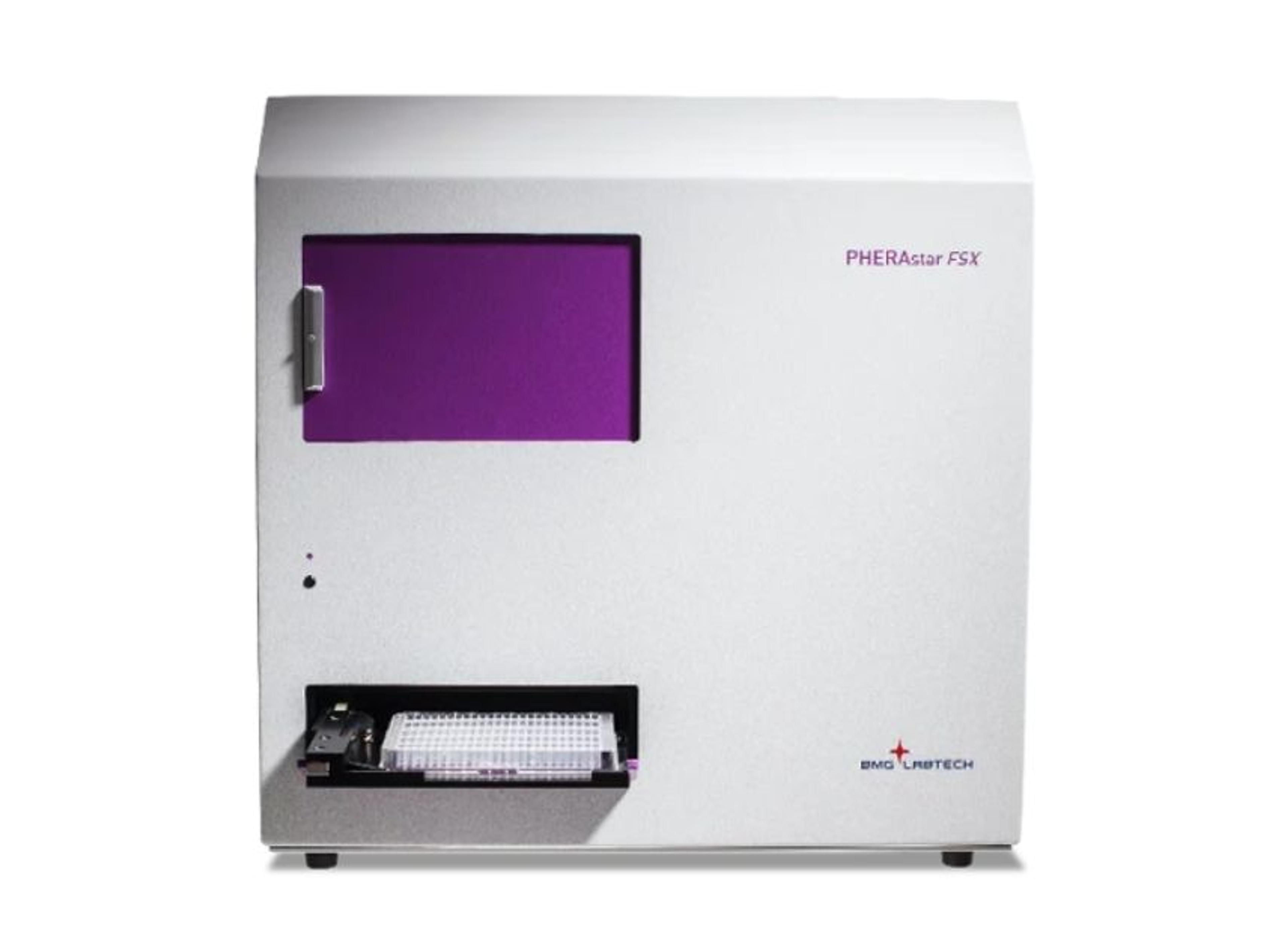
PHERAstar® FSX HTS Microplate Reader
BMG LABTECHThe most sensitive microplate reader for high-throughput screening