
Innovative Automated Cell Picker Opens Up High-Throughput Possibilities to Life Sciences Researchers
Discover how this game-changing instrument will impact the field and hear about the challenges in developing the next generation of automation technology
1 Oct 2017Editorial article
Automated, robotic instruments are revolutionizing scientific research, improving the productivity of many techniques, from high-throughput genomic library preparation to cell-based assays and protein crystallization. SelectScience® interviews Jens Eberhardt, Co-Founder and Co-Managing Director at ALS Automated Lab Solutions GmbH, to find out how the company is collaborating with high-quality microplate manufacturer, Kuraray Co. Ltd, to develop an automated cell picker.
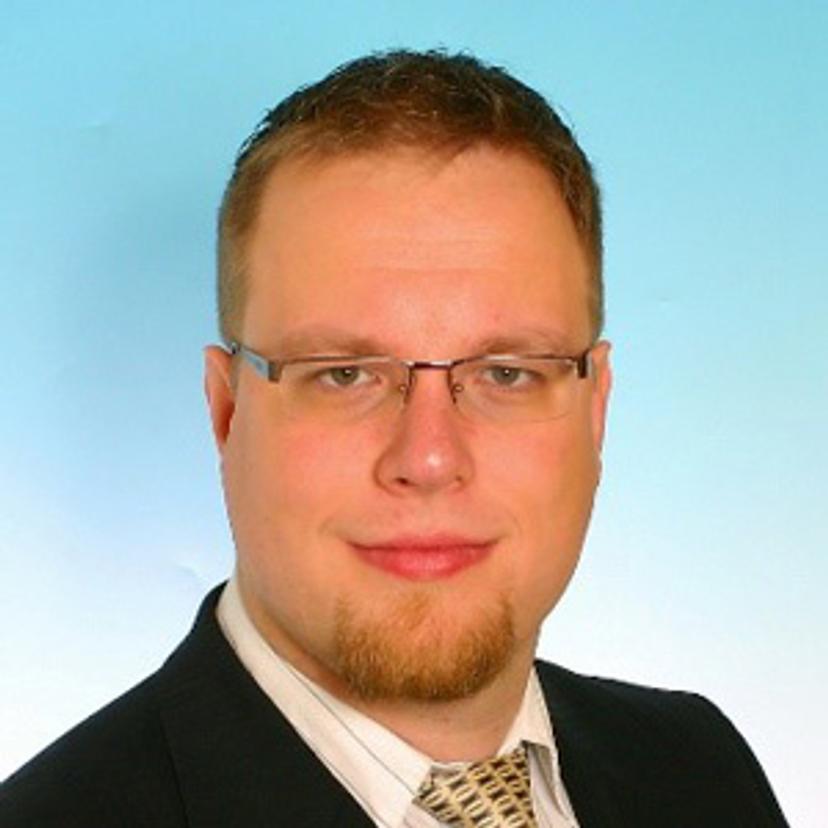
ALS Automated Lab Solutions GmbH is an innovative company which is designing a new generation of automated laboratory equipment for life scientists. ALS strives to streamline laborious manual procedures, giving researchers more time to answer the very latest scientific questions and to develop therapies and diagnostic tools.
SelectScience speaks with Mr. Eberhardt about the company’s flagship product, the CellCelector, which has the potential to revolutionize cell and colony picking over a range of fields.
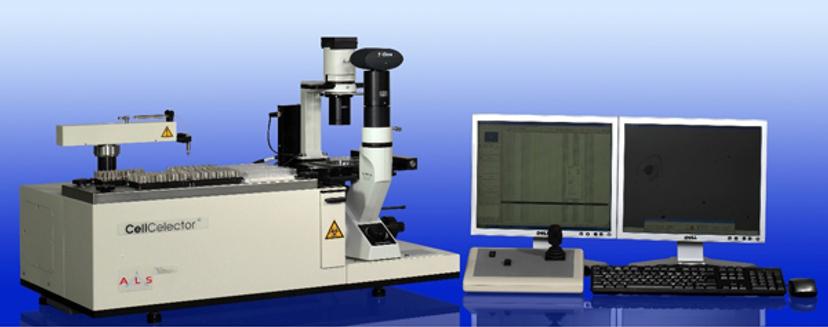
“The CellCelector is a fully automated system for the scanning of cell culture plates or dishes and identifying and picking target cells or colonies. The system uses imaging software to select cells based on the operator’s criteria,” Mr. Eberhardt explains. The unique ability of the system to recognize the target cells enables the instrument to be used in a range of research applications.
How does this technology work?
“The CellCelector consists of three major modules: an inverted fluorescence microscope, a high-precision robotic cell-picking system with high-precision fluidics and a PC workstation with powerful imaging software running the system,” explains Mr. Eberhardt.
The CellCelector can select cells or colonies based on their morphology as well as the presence and absence of fluorescence signals, enabling additional selectivity, such as protein expression, to be used to identify suitable cells. The software takes images of the whole sample area – for example the petri dish or microplate well – and analyzes those images, looking for cells and colonies that meet the criteria.
“The instrument’s picking module then goes to all the suitable target cells and aspirates them and then dispenses them into a destination vessel, such as a PCR plate. The whole process is fully documented: the CellCelector takes images throughout the process and cells are tracked from source to destination.”
What are the applications of automated cell selection?
It’s clear this technology could save hours of manually assessing and then picking target cells or colonies. Mr. Eberhardt describes three fields that he envisages the CellCelector impacting the most:
1. Rare single cell isolation
In cancer research and diagnosis, liquid biopsy is a growing trend. However, circulating tumor cells (CTCs) are extremely rare, making them hard to isolate from the liquid biopsy sample. “The CellCelector can be used for the identification and picking of individual circulating tumor cells, enhancing research into the very difficult-to-access cells,” explains Mr. Eberhardt.
2. Stem cell research
“The CellCelector can be used to pick iPS (induced pluripotent stem cell) colonies after genome editing, and split them into various replica plates,” says Mr. Eberhardt. Replica plates are vital to stem cell research, as one replica plate can be used for genetic testing and the other plates for further expansion of the cell line for use in cell-based assays and experiments.
3. Bioprocessing applications
The technology also has application in bioprocessing and cell line development as it can assess the monoclonality, vitality and productivity of the cells. “For example, the CellCelector can screen for CHO and Hybridoma and then pick the best clones for monoclonal antibody production,” explains Mr. Eberhardt. Using the technology like this could save biotheraputics manufacturers months when generating new production cell lines and proving monoclonality to meet regulatory requirements.
What are the challenges of developing automated technology?
“One of the biggest challenges has been the level of precision which is required for the system to select the target cells,” Mr. Eberhardt tells SelectScience. “This includes micrometer scale positioning of instrument components and liquid handling on a nanoliter scale. A lot of precision engineering as well as unique software has gone into the CellCelector’s design to allow it to achieve the required specifications quickly and reliably.”
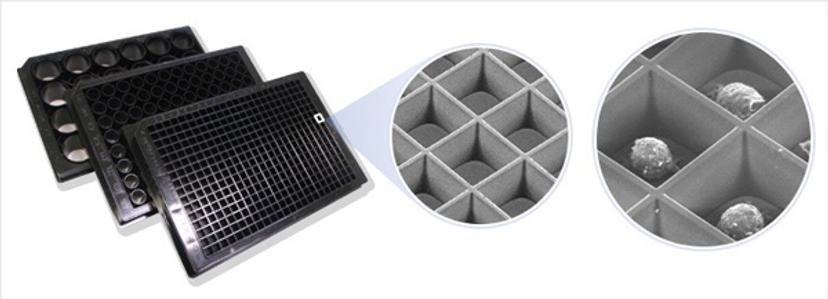
An important factor in the instrument’s precision are the plates used to culture the cell. Mr. Eberhardt explains that high-quality cell culture plates enable the CellCelector to accurately assess monoclonality, vitality and productivity of the clones; all in one plate.
“We chose to use the Elplasia plates from Kuraray Co. Ltd. as both source and destination plates in the CellCelector,” says Mr. Eberhardt.
Secure micro-spaces
“The manufacturing quality of the Elplasia plates is extremely high, which leads to great visibility within the wells”
“The Elplasia plates offer many advantages to us. Firstly, the plates have small micro-spaces at the bottom of the macrowells, which securely contain the cells and allow the robot to handle the microplate easily and at high speeds.”
Easy cell identification
“The manufacturing quality of the Elplasia plates is extremely high which leads to great visibility within the wells, allowing the imaging software to easily and accurately identify cells, improving the robustness of automated target cell identification.”
“The CellCelector software is able to match the micro-spaces with the cells inside the wells in a fully automatic manner. This allows it to identify wells which only contain a single cell, vital for the formation of monoclonal colonies.”
Improved cell growth rate
“Finally, the Elplasia plates allow the cells to be kept within the same media during the growth phase, enabling us to achieve outgrowth rates of over 90% in some cell lines. This shortens the overall screening time for researchers from several months to just a week.”
What impact will automation have on scientific progress?
“We hope that our technology will help researchers develop new therapies and diagnostic tools”
Automation is making its mark across many fields, giving previously time-consuming manual procedures high-throughput capabilities, and thus accelerating important discoveries.
Mr. Eberhardt hopes that ALS Automated Lab Solutions GmbH can play a significant role in life sciences research by offering end-to-end automation solutions to improve productivity, reduce human error and enable high-throughput research.
“ALS Automated Lab Solutions GmbH is constantly exploring new applications, continuing to push the boundaries of what is possible in the field of automated cell handling and screening. We hope that our technology will help researchers develop new therapies and diagnostic tools for the diseases of today, and tomorrow,” concludes Mr. Eberhardt.
Find out more about Elplasia microplates and how they could benefit your research.
Have you used Elplasia microplates? Write a review for your chance to win a $400 Amazon voucher or iPad.