Innovations in Immunoassay Techniques Used to Analyze Biopharmaceutical Drugs and Biomarkers

Find out how new immunoassay techniques are being used to analyze samples from preclinical and clinical trials

30 Jun 2016

Lucy Vass
Administrator / Office Personnel

Editorial article

Robin Longdin, Sector Manager of the Biologics Department within Drug Development Services at LGC

We are looking to increase our biomarker capabilities as that is becoming a much more important part of what our sponsors are looking for


Robin Longdin,Drug Development Services, LGC

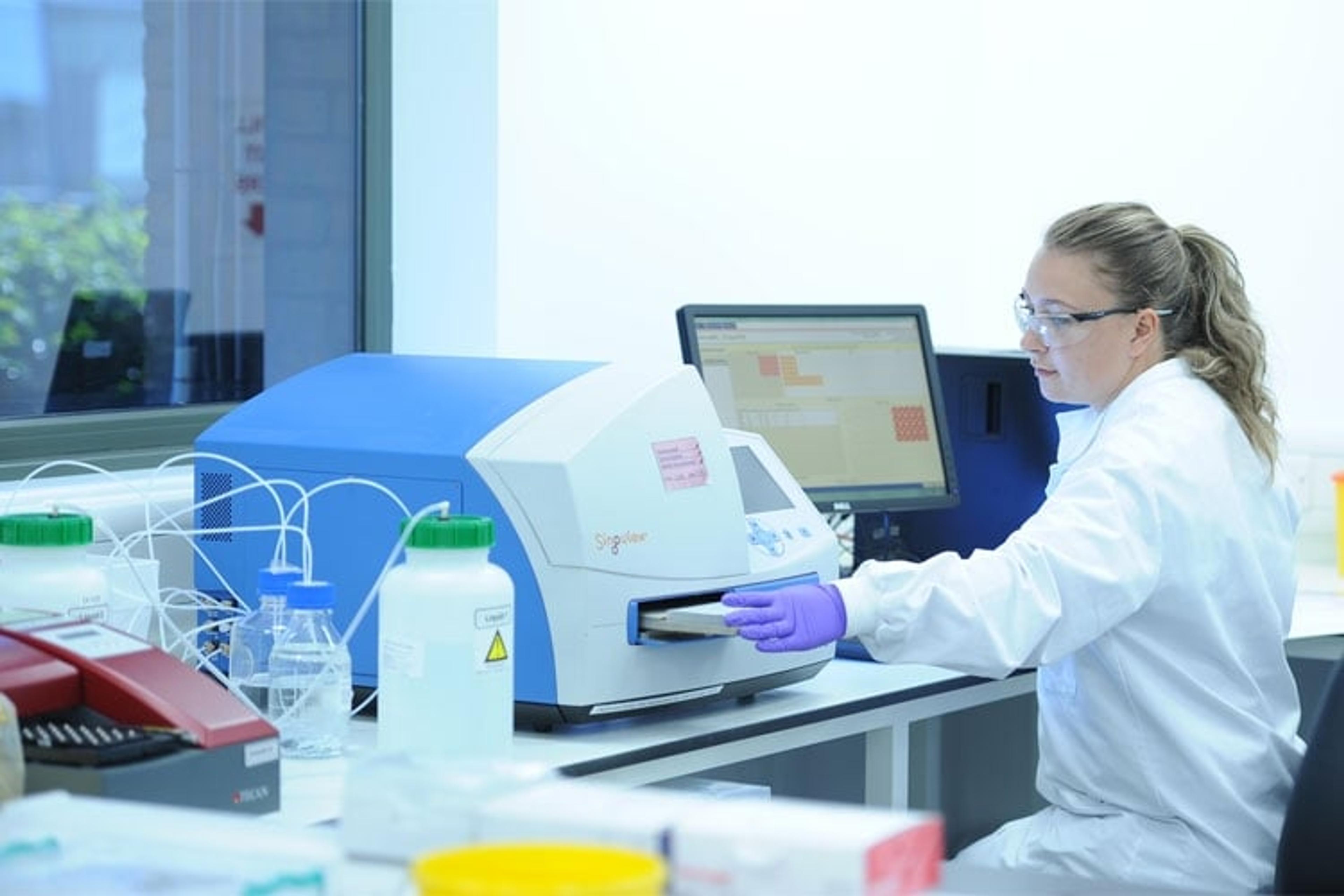
Robin Longdin, Sector Manager of the Biologics department within LGC Drug Development Services, told SelectScience how the lab analyzes samples from preclinical and clinical trials of biopharmaceuticals. The department offers both a Biopharmaceutical Development Service and Biomarker Testing Service.

Robin explained that immunoassay is the main method used in the Biologics department, with bespoke antibodies used to determine the pKa of the biopharmaceuticals, assess immunogenicity and test for the presence of biomarkers.

Robin commented on some of the new instrumentation being used which has helped to improve LGC's services. For example, the Singulex™ platform has enabled detection of soluble biomarkers down to the femtogram per milliliter level. Robin revealed that, "With the Singulex™ platform we are now able to track the reduction in concentration of disease progression biomarkers like we’ve never been able to do before.”

Watch the full interview here and visit LGC’s company profile to find out more about its services.

Leave a product review today to be entered into a prize draw for the chance to win an iPad or $400 Amazon voucher (or equivalent currency).

Biomarker testing service

Resolian

Biomarker strategy is critical to success. Our personalized biomarker solutions help drive your development to market.  The expert biomarker teams support non-clinical and clinical biomarker method development, validation, and sample analysis. 

(0)

Links

Tags

ELISAEnzyme-linked immunosorbent assays (ELISA), also known as enzyme immunoassays (EIA), are used for the detection and quantification of proteins, peptides and antibodies in a sample. ELISA often comes in kit format, with pre-selected antibody pairs to detect specific proteins or biomarkers of diseases such as diabetes and obesity, or cardiovascular and neurological disorders. Detection is made possible with chemiluminescent, fluorescent or colorimetric substrates and detection instruments such as microplate / ELISA readers. Other kits available include: Enzyme-linked immunospot (ELISPOT) assays for the quantification of protein-producing cells and chemiluminescent immunoassays (CLIA) kits. Find the best ELISA kits and products in our peer-reviewed product directory: compare products, check customer reviews and receive pricing direct from manufacturers.Protein PurificationProtein purification is a vital step in drug discovery, therapeutics, biotech and life science research. The purification process typically involves subcellular or membrane protein extraction with cell lysis kits, separation of proteins from cell debris by filtration or spin columns, and the isolation of proteins of interest from other proteins and impurities with affinity purification (including fusion protein tags and antibody binding proteins A, G and L), immunoprecipitation or chromatographic methods, such as ion exchange, size exclusion and immobilized metal affinity chromatography. All purification methods come in multiple formats for your laboratory needs, including agarose or magnetic beads, resins, columns and filter plates. Find the best protein purification equipment in our peer-reviewed product directory: compare products, check customer reviews and receive pricing direct from manufacturers.BiomarkersBiomarkers are biological markers which can be measured and evaluated to indicate a biological state. The use of biomarkers in research and diagnosis can indicate a normal or disease state or drug response of cells / tissues. Biomarkers include genetic markers, cell surface markers such as antigens, antibodies or receptors and secreted molecules such as cytokines. An assay system is required for identification of biomarkers. :Biopharmaceutical AdvancesBiopharmaceutical advances follow the development of pharmaceuticals derived from biotechnology, also known as biotechnology medicines. Biopharmaceuticals may be produced from cell lines, plants, or microbial cells. Important considerations of biopharmaceutical use include application, cost, production process and purification.Clinical TrialsClinical Trials, an essential part of drug discovery process, assess the safety and effectiveness of a new medication or device in the pharmaceutical industry. Clinical Trials are a phased process (Phase 0, Phase I, Phase II, Phase III and Phase IV) which begins after initial preclinical testing.ImmunoassayImmunoassays are laboratory tests that utilize antibody-antigen interactions to detect specific substances. They are widely used in diagnostics for detecting diseases, drug testing, and environmental monitoring. These assays offer rapid, sensitive, and precise detection of biomarkers, making them invaluable in clinical and research labs. Browse our peer-reviewed product directory to compare immunoassay systems, read user reviews, and get pricing directly from manufacturers.BiopharmaceuticalsBiopharmaceuticals are proteins and other compounds (such as nucleic acids) produced by living organisms that have uses as therapeutics or for in vivo diagnostics. The most well known example of a biopharmaceutical product, and the first to be approved for therapeutic use, was recombinant human insulin.BiotherapeuticsBiotherapeutics are proteins and other compounds (such as nucleic acids) produced by living organisms that have uses as therapeutics or in <i>in vivo</i> diagnostics. The most well-known example of a biotherapeutic product, and the first to be approved for therapeutic use, was recombinant human insulin.Drug DevelopmentDrug development refers to the process of bringing a new drug to market.