
Independent Study Reports V3 Western Workflow™ with Stain-Free Technology Yields Superior Western Blotting Results
17 Oct 2012Product news
Scientists at Flinders University in Bedford Park, Australia recently demonstrated the superiority of a method employing Bio-Rad’s stain-free technology to use total protein as a loading control in semiquantitative western blotting.
In their report in Analytical Biochemistry, published online on September 15, Dr. Alex Colella and his colleagues describe how the stain-free approach allowed them to assess the quality of both electrophoresis and western transfer before committing to subsequent steps of the western blotting procedure, providing more accurate blot data in fewer steps and less time in comparison with traditional loading control methods.
“Our research shows that Bio-Rad stain-free gels can improve the quality of data from semiquantitative western blotting experiments,” said Dr. Tim Chataway, head of the Flinders University School of Medicine Proteomics Laboratory.
To ensure accuracy in semiquantitative western blotting, one of the most important steps is the determination of the protein load in each gel. Loading controls are used to normalize for loading errors that can result from imprecise protein estimation, pipetting inaccuracy, or uneven protein transfer. Traditionally, researchers have relied on two loading control methods: reprobing of membranes with an antibody against a housekeeping protein such as β-actin, or the use of total protein stains such as SYPRO Ruby, Ponceau S, or Coomassie Blue.
To use a housekeeping protein as a loading control, it must be established that the level of this protein remains constant when the experimental variable of interest is changed. In some cases, the expression level of a housekeeping protein may be too high or low in comparison with the protein(s) being studied, or such controls are unavailable or inappropriate, for example, when comparing the abundance of a specific protein in different tissue extracts in which the protein concentrations differ. While membrane protein stains do not suffer the same issues as housekeeping proteins, the method still adds significant cost and time to western blotting experiments.
Dr. Chataway’s results indicated that the stain-free approach provides a superior alternative to existing loading control methods because the quality of electrophoresis and western transfer results can be confirmed before applying antibodies for detection. Identifying any problems at each step allows researchers to target troubleshooting efforts. Scientists also have more time to optimize their workflows, as the stain-free method can cut the time required for this protocol in half, from two days to one.
Chataway and his team, led by postdoctoral researcher Colella, conducted a series of western blots using purified protein from rat retinas in amounts ranging from 10–40 µg. The proteins were separated by electrophoresis, transferred by blotting, and visualized using Bio-Rad’s V3 Western Workflow, a portfolio of stain-free enabled western blotting products that allows researchers to visually monitor proteins throughout all steps of an experiment. Researchers can simultaneously image their protein(s) of interest and total protein on each blot for easy normalization. Because the V3 Western Workflow requires fewer handling steps, the probability of procedural errors is lower than in the SYPRO Ruby and antibody methods.
Dr. Chataway stated that stain-free gels and SYPRO Ruby staining yielded equivalent performance, but the use of stain-free gels reduced the time required to perform semiquantitative western blotting by 1.5 hours compared with SYPRO Ruby, and by one day compared with antibody detection of the housekeeping protein β-actin. The stain-free method also reduced overall costs by eliminating the use of expensive reagents.
“We found that stain-free technology provides a faster and more cost-effective alternative to traditional methodologies, producing an overall superior performance as a loading control compared with SYRPO Ruby or antibody,” said Dr. Chataway.
Related products
Request Quote for All Products
Criterion™ Cell
Bio-RadVertical midi-format electrophoresis cell, includes buffer tank, lid with power cables, 3 sample loading guides (12+2-well, 18-well, and 26-well)
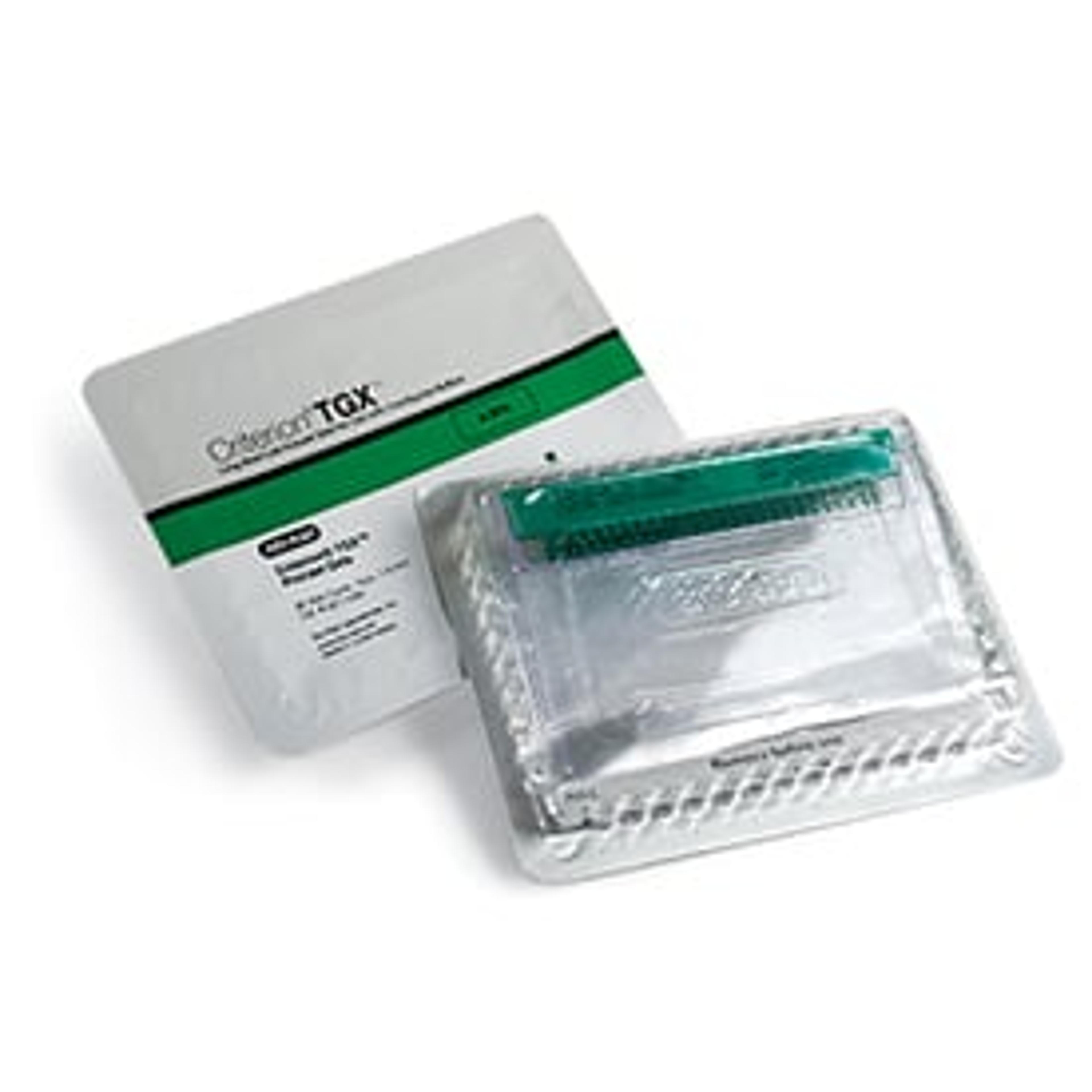
4–15% Criterion™ TGX™ Precast Midi Protein Gel, 12+2 well, 45 µl
Bio-RadPkg of 1, 4–15% precast polyacrylamide gel, 12+2-well, 45 µl, for use with Criterion and Criterion™ Dodeca™ cells

7.5% Criterion™ TGX Stain-Free™ Protein Gel, 12+2 well, 45 µl
Bio-RadPkg of 1, 7.5% precast polyacrylamide gel, 12+2-well, 45 µl, for use with Criterion electrophoresis cells and stain-free enabled imagers