Increase Pipetting Workflow Efficiency with INTEGRA

17 Aug 2015
Chelsie Phillips
Temporary Editorial Assistant

Product news

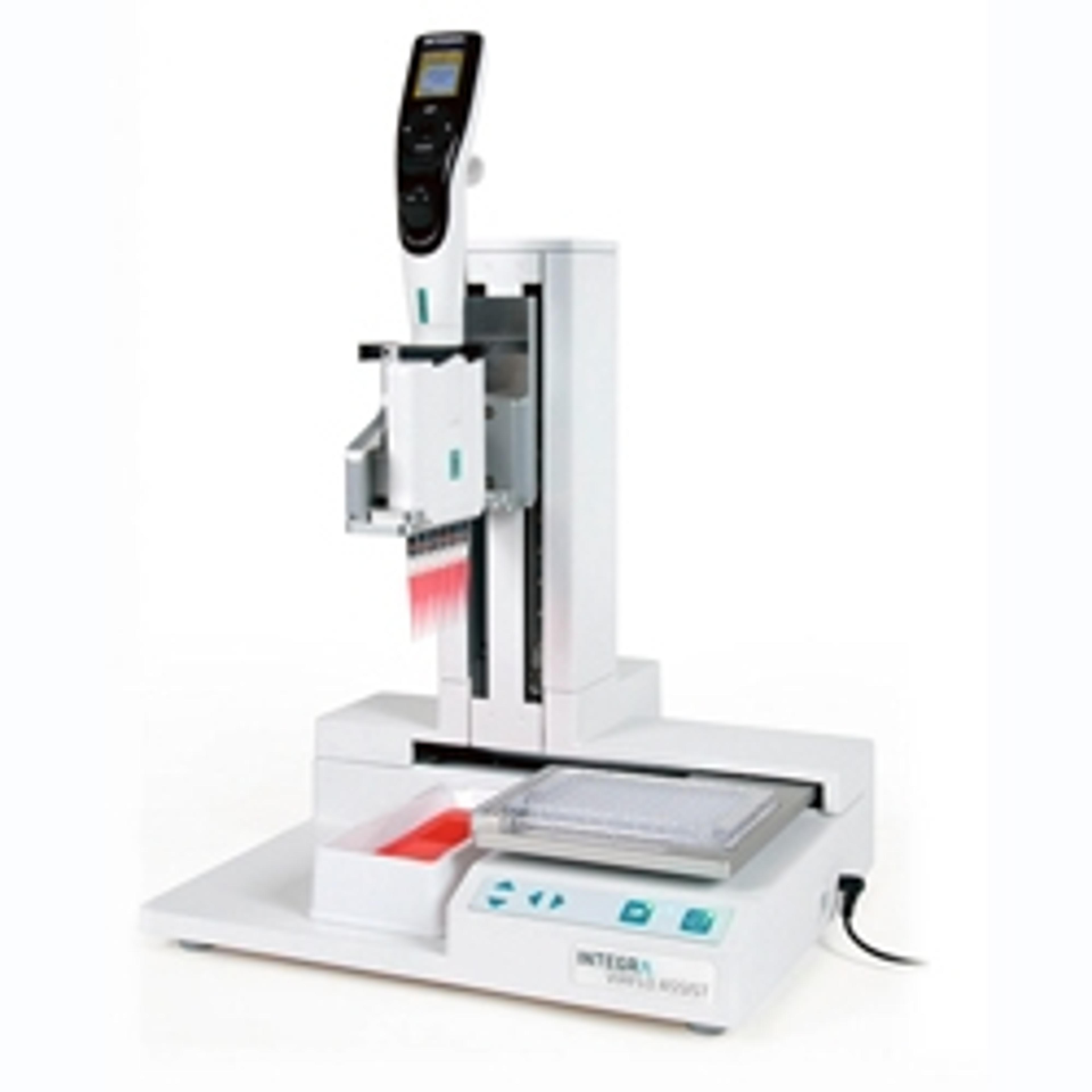
INTEGRA reports on how researchers at the renowned Forsyth Institute (Cambridge, MA) are using a VIAFLO Assist to enhance the efficiency while maintaining the accuracy of pipetting protocols related to the discovery, measurement, and validation of new biomarkers of disease that can be found in saliva.

Founded over 100 years ago, the Forsyth Institute has established itself as the leading independent research institute in America specializing in oral health and its impact on overall wellness. In addition to its affiliation with the Harvard School of Dental Medicine, Forsyth has collaborations with a vast array of academic institutions, hospitals, independent research institutes, and biotech and pharmaceutical companies. These interactions provide access to internationally acclaimed collaborators, graduate students, post-doctoral fellows, visiting, scientists, specialized facilities, and a wide range of technical and theoretical expertise. Forsyth maintains specialty Core Services that provide specialized equipment and expertise for its investigators and, on a fee-for-service basis, to researchers from other institutions.

Danielle Stephens, manager of the Forsyth Institute Luminex Core facility, commented "The accurate measurement of biomarker levels is essential for evaluating the utility of potential diagnostic molecules. The capabilities of the Luminex Core include ultra-sensitive, precise, high-throughput, automated assays for the quantification of biomarkers which may be present at low levels in saliva".

She added "As manager of the Luminex Core, I was looking for an automated pipet system to make our workflow more efficient, while maintaining accuracy. The VIAFLO Assist is a great tool for adding reagents across a 96-well plate, in either an 8- or 12-channel format. In conjunction with the 8-channel Viaflo II pipette, the Assist has enabled my lab to greatly reduce the amount of operator to operator variability in critical, low volume reagent addition steps for 96-well plate assays. The user interface is easy to follow, whether you are using a pre-defined program or completely customizing one for your specific needs. This pipet station is flexible in the lab and can be used for multiple applications including Luminex, ELISAs, PCR, or any other plate based assays. The pipet itself is also ergonomically friendly and the fact that it connects to the Assist by Bluetooth means fewer wires on the benchtop. The Viaflo Assist is a great tool for a high throughput laboratory looking to increase efficiency and precision to reach a higher capacity”.
Links

Tags

Pipettes and DispensersPipettes and dispensers are essential lab equipment used to dispense measured volumes of liquid accurately. Explore a range of manual and electronic pipettes, including single and multichannel, serological and volumetric pipettes, as well as a range of pipette tips. Bottle-top dispensers are also available for simple and fast solvent dispensing. Find the best pipettes & dispensers in our peer-reviewed product directory: compare products, check customer reviews and receive pricing direct from manufacturers.ImmunologyImmunological techniques measure and characterize immune responses. Immunology kits and analysis systems often use techniques such as ELISA, radioimmunoassay (RIA) and immunodiffusion assays, Immunohistochemistry, and flow cytometry. Immunologists use equipment such as flow Cytometers, plate readers, plate washers and fluorescent microscopes.BiomarkersBiomarkers are biological markers which can be measured and evaluated to indicate a biological state. The use of biomarkers in research and diagnosis can indicate a normal or disease state or drug response of cells / tissues. Biomarkers include genetic markers, cell surface markers such as antigens, antibodies or receptors and secreted molecules such as cytokines. An assay system is required for identification of biomarkers. :Clinical ChemistryBiochemistry (or clinical chemistry) involves the analysis of bodily fluids using chemical tests. Techniques used include HPLC, chromatography, spectroscopy, mass spectrometry, immunochemical, electrophoresis, turbidometric / spectrophotometric assay, MRI and ISE analysis. Tests are often carried out on plasma or serum but urine (urinalysis) and fecal specimens are also processed.Clinical MicrobiologyMicrobiology is the study of microorganisms including protists, prokaryotes, fungi, and, often, viruses. Microorganisms are a useful research tool as genetic vectors and, in immunology, for antibiotic susceptibility testing, cellular biology and genetics. Microorganisms commonly grow readily in incubators with microbial culture media; this can contain chromogenic supplements to differentiate between cell lines. Estimate your culture’s density of microorganisms with colony counters, or screen and select colonies for desirable clones with automated colony pickers. Additionally, equipment is available to monitor environments for the presence of microbes and identify with microbial identification instruments. Find the best microbiology products in our peer-reviewed product directory: compare products, check customer reviews and receive pricing direct from manufacturers.AutomationAutomation in laboratories and manufacturing processes enhances efficiency, precision, and scalability by reducing the need for manual intervention. It plays a critical role in improving productivity, minimizing human error, and accelerating workflows in fields like diagnostics, drug development, and industrial testing. Automation technologies include robotic systems, automated liquid handlers, and process control systems that streamline complex tasks and ensure consistent, reproducible results. Explore our peer-reviewed product directory to discover the best automation solutions, compare options, read user reviews, and get prices directly from manufacturers.Biomarker DiscoveryClinical biomarkers refer to substances related to known medical conditions that can be accurately measured <i>in vitro</i>. Biomarkers can be used to diagnose presence of a disease and indicate disease severity. The discovery of new biomarkers is incredibly valuable in the field of diagnostics.Electronic PipetteElectronic pipettes are precision instruments used to transfer measured volumes of liquid in laboratory settings. They offer high accuracy, ease of use, and ergonomic benefits compared to traditional pipettes, reducing the risk of repetitive strain injuries. Electronic pipettes are widely used in molecular biology, chemistry, and diagnostics. Browse our peer-reviewed product directory to find the best electronic pipettes; compare products, check reviews, and get pricing directly from manufacturers.Infectious DiseasesInfectious diseases are caused by pathogens such as bacteria, viruses, and fungi. Effective detection, prevention, and treatment are crucial to control outbreaks and improve public health. Diagnostic tools, vaccines, and antimicrobial treatments are essential components of managing these diseases. Research into emerging pathogens and resistance patterns continues to evolve. Browse our peer-reviewed product directory to find the best diagnostic tools, prevention solutions, and treatment options; compare products, read customer reviews, and get pricing directly from manufacturers.