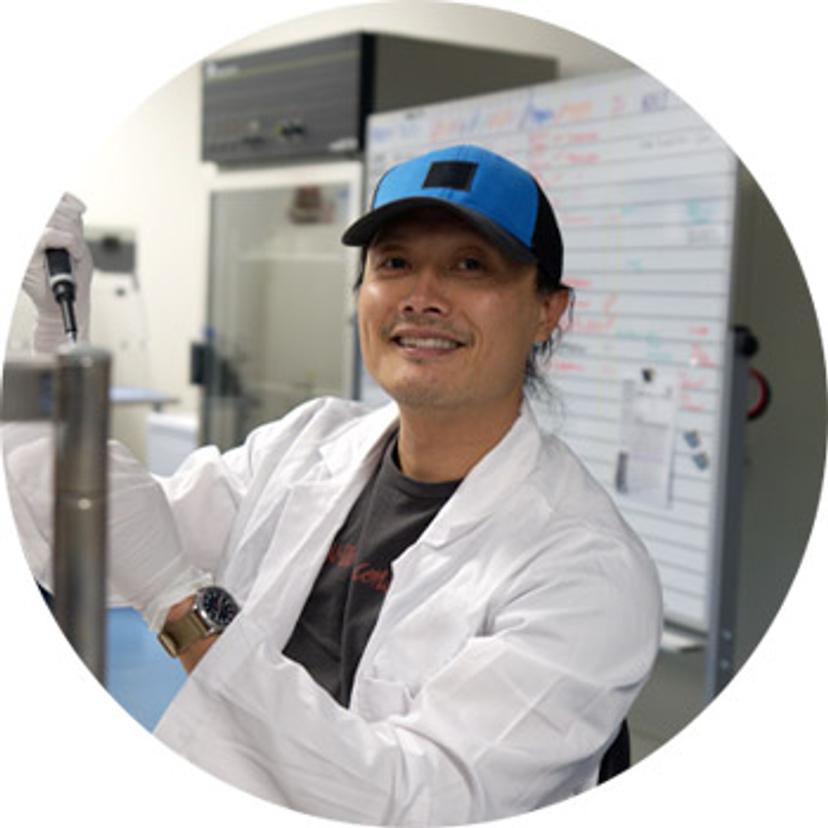
In the lab with Carl Tsang, Director of Laboratory Services at ARYTE Bioscience

16 Aug 2021

Charlie Carter
Life Sciences Editor

Industry news

ARYTE Bioscience tests for molecular and microbiological contaminants and performs analyses on plasticware for life science consumables, medical devices, molecular diagnostics, and forensics.

Rising to the occasion

Years ago, Carl developed the first RNase- and DNase-free certifications. Today, his benchtop breakthroughs are fighting the pandemic. Tests for SARS-CoV-2 must be certified RNase- and DNase-free; otherwise, there can be false positives.

“During COVID, all the different sciences came together to serve the public good. We did our part to perform testing for the industries that required our services,” says Carl. “I’ve always liked that we’re at the forefront of science. We’re helping ensure that at-home COVID tests are manufactured in the cleanest possible way.”

Growing in confidence

“As the company has grown, our use of reagents has increased, and a lot of them are held in Thermo Scientific™ Nalgene™ containers because of the high purity and also the durability,” says Carl.

“The Nalgene containers chosen for use in my lab can withstand autoclave temperatures. With other types of plastics, when you heat the containers and subject them to stress, you can have interference with your results.”

“Nalgene plasticware gives you confidence. You don’t want to have any false negatives. You don’t want to have any issues with your chemicals and reagents, so you want to start off with the highest quality of materials that you can,” says Carl.

Peace of mind for all

“We’re here to serve as quality control for our clients. Their end users can rest assured that what they’re receiving is clean and contaminant-free.”
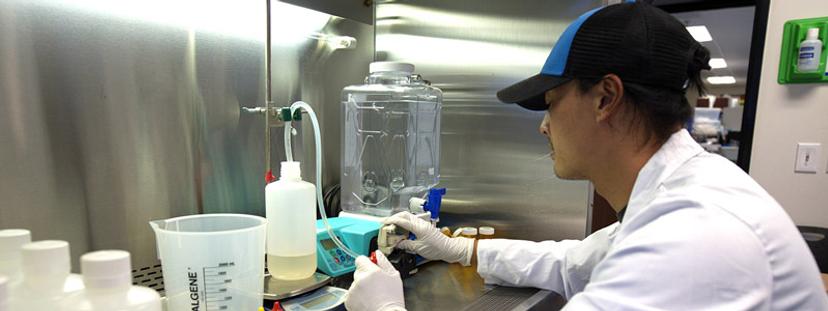
Carl Tsang, Director of Laboratory Services at ARYTE Bioscience

Share your wish with Thermo Fisher Scientific for your chance to receive special-edition Nalgene™ water bottles >>

Links

Tags

Autoclaves and SterilizersAutoclaves and sterilizers are commonly used to sterilize laboratory equipment, instruments and growth media using constant pressure and temperature. When choosing an autoclave or sterilizer consider medical or laboratory application, size, loading and sterilization method. Sterilization methods include flame (Bunsen burners), heat (steam or dry), chemical and UV.Labware and Lab SuppliesLabware and lab supplies include various forms of glassware, plasticware, reagents and personal protective equipment (PPE) and are used across all scientific laboratories, enabling daily tasks to be performed. Explore a range of flasks and beakers, petri dishes, carboys and storage bottles. Labware such as condensers, desiccators and burettes are also available for more specific tasks. Find the best labware and lab supplies in our peer-reviewed product directory: compare products, check customer reviews and receive pricing direct from manufacturers.MicrobiologyMicrobiology is the study of microorganisms including protists, prokaryotes, fungi, and, often, viruses. Microorganisms are a useful research tool as genetic vectors and, in immunology, for antibiotic susceptibility testing, cellular biology and genetics. Microorganisms commonly grow readily in incubators with microbial culture media; this can contain chromogenic supplements to differentiate between cell lines. Estimate your culture’s density of microorganisms with colony counters, or screen and select colonies for desirable clones with automated colony pickers. Additionally, equipment is available to monitor environments for the presence of microbes and identify with microbial identification instruments. Find the best microbiology products in our peer-reviewed product directory: compare products, check customer reviews and receive pricing direct from manufacturers.Contamination PreventionContamination prevention aims to control and minimize the risk of contamination during experiments. Biological safety cabinets and sterilization equipment are examples of technologies used to prevent contamination.Microbiology ConsumablesLab EssentialsLab essentials include laboratory consumables that are vital to the operation of all laboratories.Molecular DiagnosticsMolecular diagnostics use an individual’s genetic code and gene expression to diagnose and monitor diseases. The technique is used increasingly in the field of infectious diseases and oncology, as well as areas such as coagulation, HLA typing and pharmacogenomics. Molecular diagnostics plays a pivotal role in personalized medicine.Covid-19COVID-19, caused by the SARS-CoV-2 virus, has led to a global health crisis with profound impacts on societies and economies. Research into diagnostics, vaccines, treatments, and understanding viral mechanisms continues to evolve. The pandemic has accelerated innovations in healthcare and biopharmaceuticals, including novel vaccine platforms and rapid testing technologies. Browse our peer-reviewed product directory to find top COVID-19 testing kits, research tools, vaccines, and treatments, compare products, read reviews, and receive direct pricing from manufacturers.
In the lab with Carl Tsang, Director of Laboratory Services at ARYTE Bioscience