In Profile: EKF Diagnostics
Building an international diagnostics company
28 Jun 2015
Editorial article

CEO Julian Baines has been with EKF Diagnostics since 2009
Five years ago, EKF Diagnostics was a specialist manufacturer of a small range of blood analyzers with niches in diabetes, sport medicine and blood banking. Today, the company's expertise now extends across three core divisions, with recent studies highlighting the involvement of EKF's Molecular division in one of the most exciting clinical developments of the year, liquid biopsies for cancer diagnostics.
An essential mix of people
Heading the ship is EKF Diagnostics CEO, Julian Baines, a Welsh businessman whose career experience is ideally suited to building up EKF. Prior to EKF, Julian was Group CEO of BBI, the large global diagnostics company, which he grew from a dozen people in an office in Cardiff, UK, to a multi-million dollar business and ultimately floated on London's Alternative Investment Market (AIM) before negotiating a $135m (£85m) sale to Inverness Medical (now Alere).
Of his experiences at BBI, Julian says: “It taught me the importance of people. It's essential to have the right people in place so that we are able to deliver products and services that satisfy our customers.”
Julian joined EKF Diagnostics in 2009 and began bringing together the essential mix of people and technology that were necessary for him to build EKF into a business with significant international presence. The company immediately began to invest in developing a portfolio of analyzers and consumables in the near patient sector. Quotient Diagnostics and Argutus Medical were acquired in 2010, followed by the acquisition of Stanbio Laboratory in 2011.
Julian's business acumen was acknowledged in 2012 when he was awarded Best Use of AIM at the AIM Awards and also Entrepreneur of the Year at The Western Mail/Institute of Welsh Affairs Business Awards. Sitting on a strong portfolio of point-of-care and central laboratory products, Julian went on to orchestrate the acquisition of 360 Genomics in 2013, which led to the creation of the subsidiary firm EKF Molecular Ltd. EKF Molecular's proprietary PointMan™ technology is currently being used in a number of studies to develop liquid biopsies for cancer diagnostics, as highlighted in a recent poster published by Kanazawa University Hospital in Japan at AACR. Liquid biopsies could drastically reduce the need for invasive biopsies in monitoring cancer, as well as providing a more sensitive method for detecting tumor development.
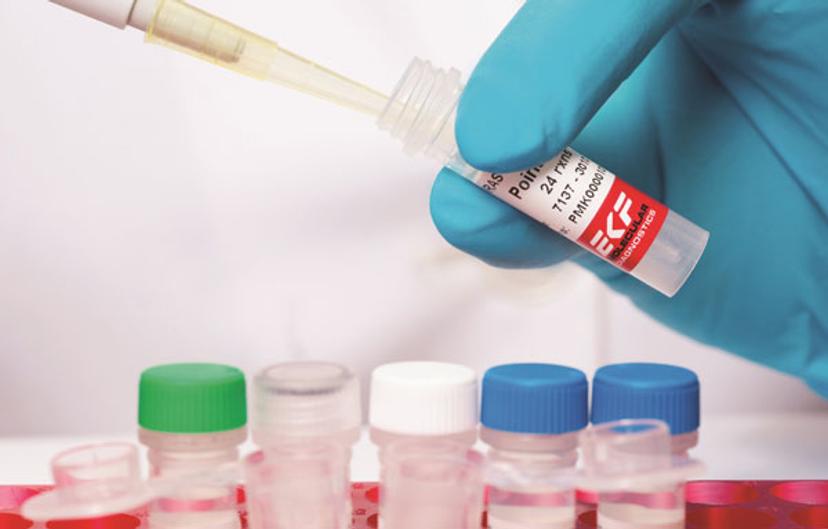
PointMan works by enriching the DNA sample for the point-mutated sequence, using a simple reagent set that combines with standard DNA extracts and runs on a real-time thermocycler platform
In 2014, EKF acquired Selah Genomics, extending its molecular diagnostics offering to support healthcare providers and the pharmaceutical industry with advanced molecular and genomic diagnostic services. That same year, Julian oversaw the acquisition of Separation Technology Inc. and DiaSpect Medical AB to further strengthen EKF’s product and services offering, positioning the company at the forefront of point-of-care hematology testing provision.
Benefitting the healthcare system
When asked how EKF makes a difference to healthcare, Julian believes the company makes a positive contribution to both patients and to the healthcare system. The point-of-care product portfolio is designed to take simple healthcare tests directly to the patient, improving the patient experience and allowing for rapid result analysis and action. The Molecular division's work on cancer diagnostics provides the possibility that in the very near future, cancer patients will be able to be monitored during treatment using a simple blood test. This has obvious benefits to the patient, and it would also significantly reduce the cost burden to the healthcare providers.
Planning for the future
Looking forwards, EKF is planning to grow further across the entire portfolio. The Central Laboratory division will focus on developing its ketosis, sepsis and blood sugar assays. The Point-of-Care division is looking forward to the commercial release of SensPoint, a lactate analyzer that promises to contribute in saving lives on the maternity wards by helping clinicians make real-time decisions in the birthing process. Maternal and Women's Health is a new business unit for EKF and very much in its infancy. The focus of this unit will be to address conditions and complications associated with pregnancy and childbirth.
Julian's personal priority for 2015 is to establish EKF as a pioneer in the molecular diagnostics sector. More work is required to fully demonstrate the clinical validity of PointMan™ technology; studies at Massachusetts General Hospital and with ANGLE Plc have gone a long way towards confirming this.
In fact, thanks to the direction of Julian Baines, EKF is at the forefront of some of the hottest areas in clinical diagnostics; personalized medicine and molecular diagnostics, as well as point-of-care diagnostics. If you didn't notice the company before, now might be a good time to take a look.