Improving Validated Analytical Method Transfer at LGC

Learn about the process behind transferring a validated analytical method from one lab to another

24 Jan 2017

Lucy Vass
Administrator / Office Personnel

Editorial article

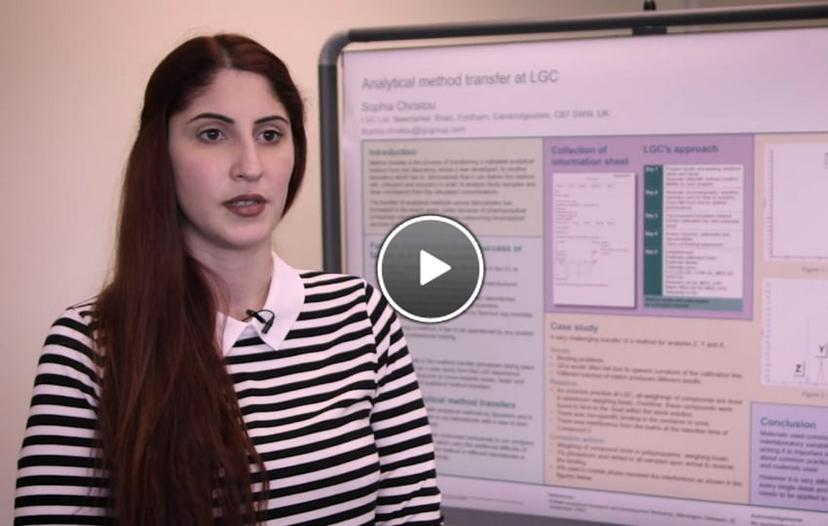
Sophia Christou presents her poster entitled 'Analytical Method Transfer at LGC'

The aim is to draw conclusions from LGC's experiences to move towards a quicker, easier and more robust method transfer

Sophia Christou,  


Drug Development Services, LGC

Sophia Christou, a scientist in the Bioanalysis Department within Drug Development Services at LGC, presented her poster, which described how LGC was working to improving analytical method transfer.

Sophia explained that validated analytical method transfer is becoming more common due to the increased outsourcing of bioanalytical services by pharmaceutical companies. Some of the factors that determine the success of the analytical method transfer include the instrumentation and chemicals used and communication of the method.

As part of its Biopharmaceutical Development Service, LGC often needs to establish methods that are provided by sponsors to support sample analysis. Sophia described the development of LGC's ‘5-day plan’, which ensures that the method is transferred accurately and efficiently. She went onto discuss some of the problems they have faced in method transfer and how they have tackled these.

Watch the full interview here and visit LGC’s company profile to find out more about its services.

Leave a product review today to be entered into a prize draw for the chance to win an iPad or $400 Amazon voucher (or equivalent currency).

Links

Tags

Protein PurificationProtein purification is a vital step in drug discovery, therapeutics, biotech and life science research. The purification process typically involves subcellular or membrane protein extraction with cell lysis kits, separation of proteins from cell debris by filtration or spin columns, and the isolation of proteins of interest from other proteins and impurities with affinity purification (including fusion protein tags and antibody binding proteins A, G and L), immunoprecipitation or chromatographic methods, such as ion exchange, size exclusion and immobilized metal affinity chromatography. All purification methods come in multiple formats for your laboratory needs, including agarose or magnetic beads, resins, columns and filter plates. Find the best protein purification equipment in our peer-reviewed product directory: compare products, check customer reviews and receive pricing direct from manufacturers.BiomarkersBiomarkers are biological markers which can be measured and evaluated to indicate a biological state. The use of biomarkers in research and diagnosis can indicate a normal or disease state or drug response of cells / tissues. Biomarkers include genetic markers, cell surface markers such as antigens, antibodies or receptors and secreted molecules such as cytokines. An assay system is required for identification of biomarkers. :RegulatoryPharmaceutical regulations impact on all areas of drug development, manufacture and control and supply. Services are provided from the early stages of drug development and clinical trials through to dossier submission, approval and marketing. Regulatory also includes submission of analytical studies from the pharmaceutical product and safety. Sample PreparationSample preparation can improve the quality and speed of separation techniques. Products to assist sample preparation include filtration equipment, evaporators, membranes and sieves.BiopharmaceuticalsBiopharmaceuticals are proteins and other compounds (such as nucleic acids) produced by living organisms that have uses as therapeutics or for in vivo diagnostics. The most well known example of a biopharmaceutical product, and the first to be approved for therapeutic use, was recombinant human insulin.BiotherapeuticsBiotherapeutics are proteins and other compounds (such as nucleic acids) produced by living organisms that have uses as therapeutics or in <i>in vivo</i> diagnostics. The most well-known example of a biotherapeutic product, and the first to be approved for therapeutic use, was recombinant human insulin.Method ValidationMethod validation is the process used to prove that the analytical procedure used for a particular test is capable of providing suitable data.Method Transfer