
Improving tissue models for drug screening and basic biology using 3D bioprinting
Discover how a laboratory in the US is harnessing extrusion- and light-based bioprinters to generate complex, anatomically accurate tissue models
5 Nov 2021
Editorial article
The replacement of animal models in medical and biological research by functional in vitro tissue models is one of the major ambitions of the life sciences, espoused by the long-standing replace, reduce, refine (3Rs) approach to animal use in research. The prospects for replacement in ever more stages of the drug development pathway might just be on the horizon thanks to the latest innovations in 3D bioprinting technology.
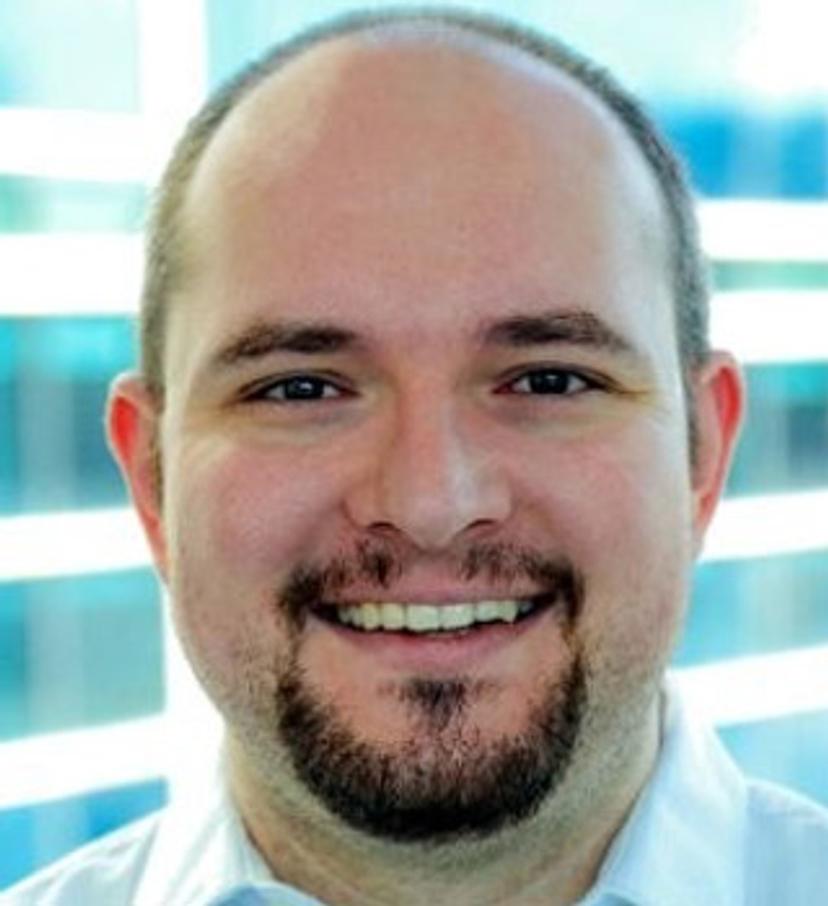
Working out of Emory University in Atlanta, Georgia, USA, Dr. Martin Tomov is an assistant scientist, focused on building bioprinted organs and tissues. His long-term goal is to improve both clinical interventions and our understanding of the basic science of human development, particularly in the cardiovascular and neurological areas. This work is made possible by the application of 3D bioprinting to answer complex biological questions, by using state-of-the-art bioprinters from CELLINK and Advanced Solutions.
Building functional tissue models
Stepwise improvements in the recapitulation of diseased states or developmental pathways in vitro have been a feature and a goal of the tissue engineering field since its inception. “We are now able to build better and more functional tissue models such as liver, kidneys and lungs, to allow us to do in vitro a lot of the assays that currently are done in animal models, but also in a more high-throughput and reliable manner,” Tomov explains.
This improved range enables drug developers to rely less on animal models throughout compound screening to develop novel drugs, especially in the earlier stages of drug development. To take that a step further, Tomov adds, “we want to be able to perform drug screening on a bioprinted platform that would allow us not only to look at the initial library of compounds and measure their toxicological properties, but also cover drug efficacy and potential side effects, thus reducing the need for animal testing without sacrificing rigor and thoroughness."
Tomov also points out that the lab partners with surgeons and other medical professionals to develop novel clinical tools, including the use of bioprinting and additive manufacturing as a potential training surgical tool, to understand disease states better, or to develop new disease treatments. All of which requires access to cutting-edge new technology which can be hard to utilize fully, or to find, unless you know where to look.
Extrusion-based and light-based bioprinters
Tomov’s lab relies heavily on CELLINK bioprinters, specifically its BIO X™ and Lumen X™ printers, as well as the BioAssemblyBot from Advanced Solutions, to generate both complex and anatomically accurate vascular tissue models as well as “anatomically inspired” versions of those tissue models where complexity is streamlined in favor of high throughput. The former are used for patient-specific clinical applications, whilst the latter are simplified for other uses, as Tomov explains: “These bioprinted models allow us to achieve very reproducible, very reliable, and very high-throughput biomimetic constructs that can then be used to model developmental pathways or look at how drug interactions and drug screens might be applied to bioprinted constructs to aid in translational applications.”
Tomov often uses CELLINK’s bioprinters to generate models of varying scales from gross anatomical structures to tissue-level vasculature networks. “And that’s where the CELLINK’s strength comes in,” he enthuses. “Their printers are very reliable and relatively easy to use, so it takes us very little upfront investment and troubleshooting to get these models bioprinted and prepared for downstream applications.”
That reliability and quality control in printer consumables aids Tomov in generating complex perfused and cellularized tissue models. “Usually, we can do physiological flow rates anywhere from less than a milliliter per minute all the way up to 200 milliliters per minute if we needed to do so,” he attests. Using CELLINK’s hardware and technical support in tandem, Tomov’s lab is also able to optimize specific bioinks or hydrogel formulations to accommodate developing goals in their regenerative medicine projects.
Challenges in bioprinting
There are many aspects of a living organism that are understandably difficult to replicate in an in vitro bioprinted model. These range from multiple cell types to long-term survival, and as Tomov points out: “Integrating multiple cells into the same bioengineered construct and then ensuring they can survive, talk to each other, and function similarly to an actual organ, is a big challenge. In addition, just keeping a cell alive long-term in a bioprinted construct is also non-trivial,” he says.
But even if he successfully generates complex bioprinted cultures, Tomov admits that quantifying and acquiring the data from them is far from easy. “Even when we successfully generate our perfused cellularized constructs, getting reliable imaging, bioinformatics, metabolites, cell-cell interactions is a challenge simply because it’s now more of a tissue, but not quite a tissue,” he explains.
The 2021 BICO Partnership Conference
The BICO Group brings together speakers from a variety of scientific disciples via an annual BICO Partnership Conference. The 2021 BICO Partnership Conference will be held virtually to offer participants with an opportunity to learn about novel technologies and applications advancing the field.
Tomov is helped through these challenges by dedicated support from CELLINK. “They have a lot of quality tools and consumables. The printers are great and their bioinks are also very good, and that’s supplemented with accessible and knowledgeable support”. He further adds that CELLINK, part of the BICO Group, is “a kind of mini-consultancy in some respects. They provide a lot of outreach and networking via talks, meetings, and just being active in the bioprinting and tissue engineering community.”
The fact that the company is engaged in active research and development also helps, according to Tomov. “They always would either have an improved printer, improved bioink, improved software, or they incorporate new technologies from their sister companies” he observes.
Future impacts
Tomov is ultimately looking towards improving treatments for cardiovascular disease and neurodevelopmental conditions but, in terms of broader technological advances in the additive manufacturing field, he adds: “We’re also looking to develop more reliable and functional multi-use platforms where, let’s say, a surgeon can come in and run a mock surgery procedure to train for the real one, test prototype tools, or work on developing novel clinical interventions. Our goal is to postpone going into animals by pulling critical parameters from these in vivo models and mimicking the critical functionalities into a bioprinted construct to allow us to do a lot more high-throughput analysis, training, and prototyping in vitro.”
Finally, Tomov expresses some thoughts on the potential combination of features from extrusion-based and light-based bioprinting. “It would be a paradigm change if, or when, we manage to combine the capability to use multiple bioinks from extrusion with the high resolution inherent in light-based bioprinting. This would allow for broader biotechnology fields to adopt this technology, improve it, and use it help them move from low-throughput and proof-of-principle applications into the high-throughput translational areas such as drug screening and regenerative medicine,” he predicts.