Improve high-content screening images with award-winning objectives from Olympus Life Science

Capture higher quality multicolor images more quickly and achieve better quantitative results over the full field of view

16 Jul 2020
Georgina Wynne Hughes
Editorial Assistant

Product news

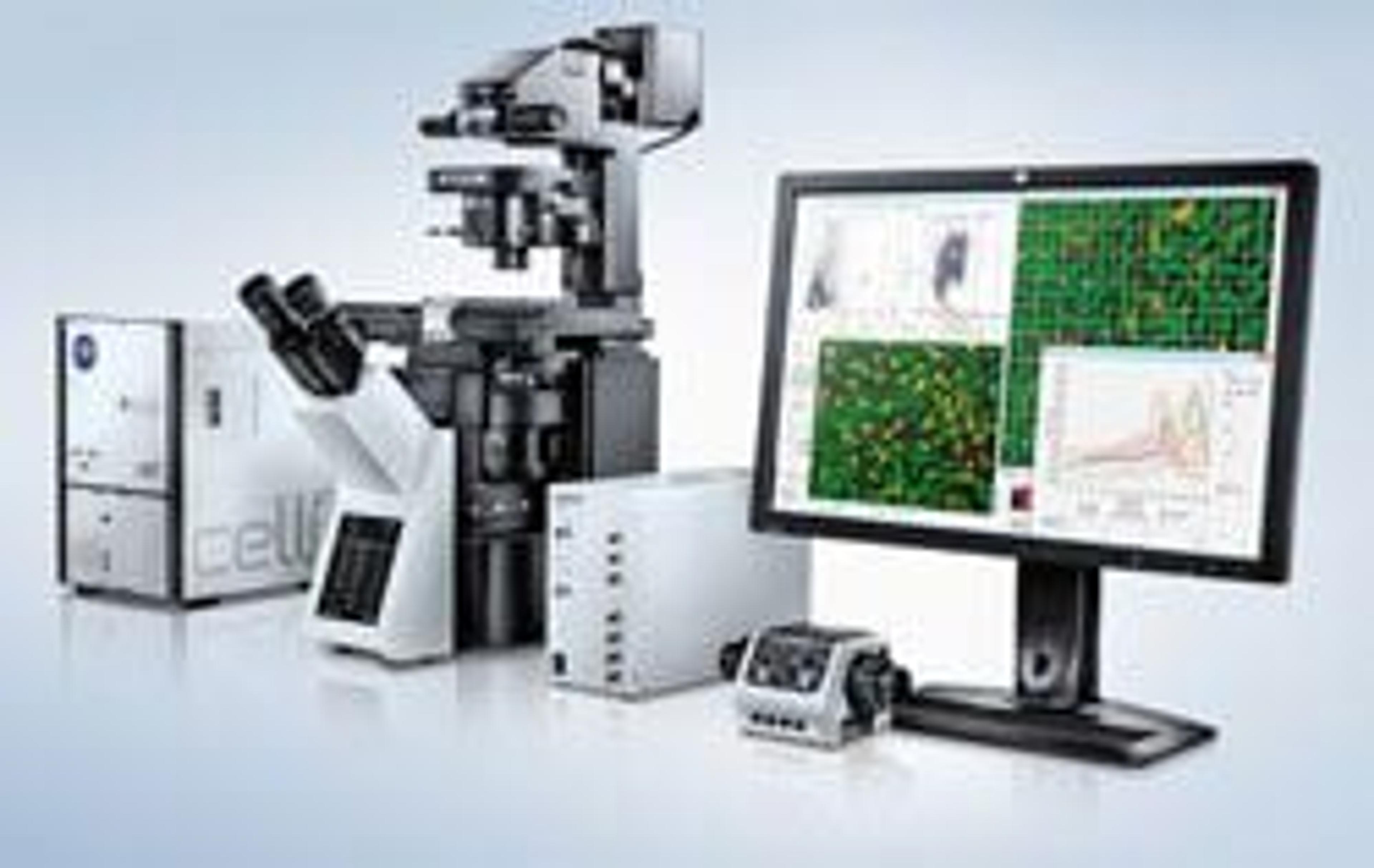
The scanR high-content screening (HCS) station** version 3.2 delivers improved image quality, better quantitative data, support for challenging segmentation and classification applications and increased speed to help life science researchers maximize the information they get from their samples.

Better images for better data

Key to these functionalities is Olympus’ breakthrough lens manufacturing technology. X Line™ objectives offer simultaneously improved chromatic aberration correction, image flatness and resolution. This combination enables the scanR system to more rapidly acquire higher-quality multicolor images while achieving better quantitative results over the full field of view. Since the ability to get quantitative data from the scanR system is directly tied to image quality, X Line objectives help the system extract more information from images.

High signal-to-noise images

The v. 3.2 update brings support for Hamamatsu’s ORCA-Fusion sCMOS camera. The camera’s large 21.2 mm (0.83 in.) sensor chip captures more sample information with high quantum efficiency and sensitivity. This results in higher-quality images with minimal noise.

Expanded deep learning functionality

Using a self-learning microscopy approach, the scanR system’s AI functionality automatically analyzes data by incorporating a learned analysis protocol into its assay-based workflow. This improved functionality adds support for multi-class semantic segmentation, which enables it to tackle some of the most challenging segmentation and classification challenges in life science microscopy. Brightfield analysis, ultra-low signal quantification, label-free mitosis assays and the classification of complex phenotypes are all possible using scanR deep-learning technology.

These improvements in optics, camera support and software make the new scanR 3.2 highly suitable for high-throughput imaging and image analysis across a range of life science disciplines. It helps ensure that researchers can analyze large studies quickly, efficiently and without compromising on image or data quality.

**The scanR system is not sold in Japan.

Want the latest science news straight to your inbox? Become a SelectScience member for free today>>

Links

Tags

Gel Doc / Image AnalysisGel documentation (gel doc) or gel imaging systems are used for the analysis of proteins, antibodies and nucleic acid immobilized in polyacrylamide or agarose gels, membranes or microarrays. Explore a range of a gel imaging systems, densitometers, scanners, transilluminators or UV lamp + CCD cameras for your image analysis solutions. Colorimetric, fluorescent and/or radioisotopic samples can be visualized and documented for further analysis. See gel doc / Image analysis software for quantitative 1D and 2D analysis of your samples. Find the best gel doc / image analysis products in our peer-reviewed product directory: compare products, check customer reviews and receive pricing direct from manufacturers.High-Content ScreeningHigh-content screening (HCS), also known as high-content analysis (HCA), is a high-throughput technique used in drug discovery to identify substances that alter the phenotype of cells. HCS uses fluorescent microscopic imaging and automated image analysis to investigate cellular events such as apoptosis, cell viability, GPCR activation, oxide production, neurite outgrowth, and cell signaling. Find the best fluorescent labeling reagents, cellular assays, and high-content imaging systems in our peer-reviewed product directory: compare products, check customer reviews and receive pricing direct from manufacturers.Light MicroscopyLight microscopes or optical microscopes are used to visualize microscale objects under magnification, including cells, clinical specimens and materials. Lab equipment for light microscopy includes confocal microscopes, fluorescence microscopes, zoom and stereo microscopes. Microscope slides and imaging reagents are available for visualizing samples, as well as various microscope stages and incubators for large or temperature-sensitive samples. Find the best light microscopes in our peer-reviewed product directory: compare products, check customer reviews and receive pricing direct from manufacturers.Image AnalysisImage analysis involves the extraction of meaningful information from images, often using software to quantify and interpret visual data. It is widely used in cell biology, material science, and diagnostics. Increasingly, AI is being used to streamline image analysis. Explore image analysis tools in our peer-reviewed product directory; compare products, check reviews, and get pricing directly from manufacturers.ImagingImaging techniques are essential for obtaining visual representations of samples to understand structures, processes, and function in biological, chemical, and physical research. These tools range from traditional light microscopy to advanced imaging modalities like MRI and electron microscopy, providing researchers with valuable data for diagnostics, drug discovery, and material analysis. Explore imaging solutions in our peer-reviewed product directory to compare products, check reviews, and get pricing directly from manufacturers.High ThroughputHigh throughput experiments allow the simultaneous processing of several samples. This parallelization reduces the cost per experiment and increases reproducibility and output volume of data.ScreeningUsing robotics, data processing and control software, liquid handling devices and sensitive detectors, screening allows a researcher to quickly conduct millions of chemical, genetic or pharmacological tests.