‘I love to read users' reviews before making a purchase decision’
Senior lecturer Asha Wijegunawardana reveals her passion for engaging with the community on vector-borne infectious diseases and emphasizes the importance of lab product reviews
14 Dec 2021
Editorial article

Lab product reviews can change the world by helping other scientists find the best equipment to accelerate their vital work. Here at SelectScience®, we are dedicated to promoting peer-to-peer communication that will make the difference - but we couldn't do it without our esteemed reviewers. In this regular feature, we put the spotlight on some of our most dedicated and impactful reviewers and find out what inspires them to keep sharing their knowledge with the global scientific community.
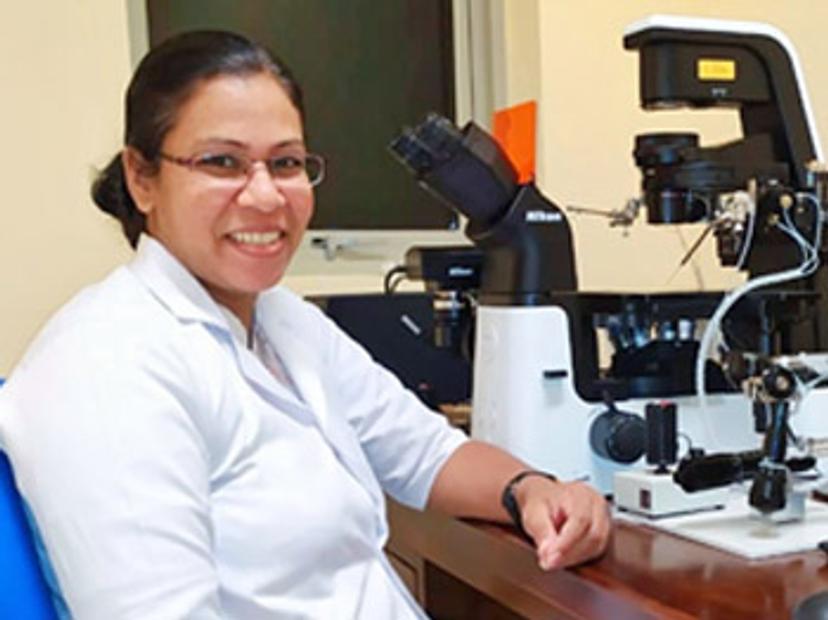
For this week’s ‘Reviewer in the Spotlight’, we speak with Asha Wijegunawardana, senior lecturer at Rajarata University of Sri Lanka, whose desire to help shape a better world is evident in her passionate approach to educating the public about vector-borne disease control. Here, Asha tells us about her current research work on infectious diseases and reveals her motivations behind reading and writing lab product reviews.
Tell me about your role and your current research
I am currently serving as a senior lecturer in animal biotechnology at the Department of Bioprocess Technology, Faculty of Technology, Rajarata University of Sri Lanka. The current research work I am involved in is mainly focusing on the control of vector-borne infectious diseases through a vector control approach, where I particularly work on infectious diseases such as dengue and leishmaniasis.
What inspired you to become a scientist?
I was aware of the demands and difficulties of a science-based career. The field of biological science has always attracted me and that is why I wanted to become a scientist. When I started my higher education, I thought that biological science is such a broad and interesting subject. Not only does the subject encompass many specialties but from these fields, but I can also choose from many different professions. Then I had the freedom to choose my specialism application of molecular biology tools in vector-borne disease control later on. So this helped me to choose a profession that I will undoubtedly enjoy for the rest of my life.
The pandemic has widened the communication channels and audience who want to be involved in science communication
What do you love most about what you do?
I love engaging with the community and educating them about vector-borne disease control. A very small portion of the research community focuses on vector control on dengue, chikungunya, lymphatic filariasis, malaria, and leishmaniasis like NTDs. I am passionate about being part of that small group committed to making a difference and helping the large number of poor people affected by this. Other than that, I love to identify new insect species and study them closely whenever possible.
Why is clear science communication essential post-pandemic?
This unexpected sudden pandemic situation made us aware of the essential need for clear science communication. Not only scientists but also all science-based industries and even the general public are eagerly waiting to hear science communications, especially related to vaccines, drug discoveries, diagnostics-related news, and lab product reviews. I think the pandemic has widened the communication channels and audience who want to be involved in science communication.

Why do you read and write lab product reviews?
As a scientist, whenever I am involved in the ordering or purchasing decision for laboratory reagents, consumables or equipment, I love to read users' reviews before making a decision. It always gives me a positive feeling about the product or equipment that I am interested in. As I am a user of lab product reviews, I love to share my reviews or experience with others. I feel that giving reviews for lab products can help purchasers make an informed decision about that product.
What is the most innovative piece of lab equipment you use?
The most innovative piece of lab equipment I use is the QIAcuity digital PCR instrument from QIAGEN. However, I am still learning about this piece of equipment and will use it for future research work for fast and more accurate molecular diagnostics research.

What are your future goals as a scientist?
One of my goals is to develop a simple and rapid diagnostic solution for leishmaniasis diagnosis in the field. This would help to reduce the disease spread and enable early treatment of the vulnerable rural communities most affected by this disease. The very next goal is to develop simple methods for manipulating vectors to reduce their potential of spreading human disease-causing pathogens such as dengue, leishmaniasis, and filariasis.
Would you like to feature in our Reviewer Spotlight? Write your review here to be in with a chance >>