HP are showcasing new life science solutions at ASMS 2023

New D100 Single Cell Dispenser leverages the company's proven digital technology for life science research

31 May 2023

Lawrence Howes
Editorial Assistant

Industry news

HP D100 Single Cell Dispenser HP Life Science Solutions
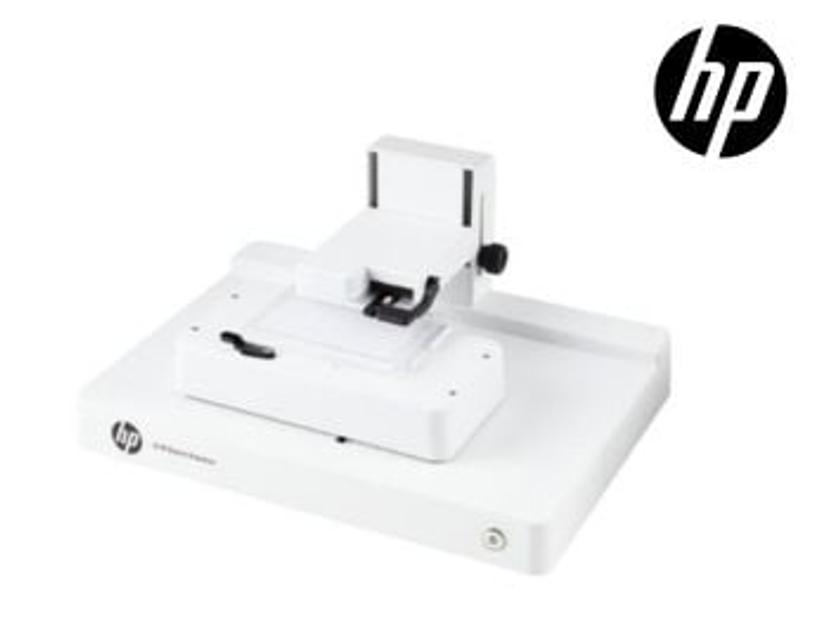
HP D100 Single Cell Dispenser

From June 4 – 8, HP Inc., will display its new D100 Single Cell Dispenser for life science and pharma research at the 71st American Society for Mass Spectrometry (ASMS) Conference being held in Houston, Texas.

Launched in Spring 2023, this accessible, high-performance HP Life Science Laboratory Solution leverages the company’s proven inkjet-based digital technology to help drug research labs effortlessly isolate and dispense single cells while miniaturizing experimental workflows. Paired with HP’s simple but powerful software, early-stage customers, including large pharma, biotechnology and academic research teams, are taking advantage of the high occupancy, viability, and precision the technology offers in their work across proteomics, cancer research, and more.

Researchers want single cells to develop better therapeutics for cancer and neurological disorders but it’s hard to isolate a single cell by hand or extremely expensive to use automated solutions. HP’s D100 Single Cell Dispenser is a cost-competitive alternative, and with the breadth and scale of HP’s network, single cell research is now accessible to more researchers than ever before.

The number of single-cell research applications has grown over the past decade thanks to technological innovations, and it is transforming the way industries identify and bring new drugs and vaccines to market. In this fast-paced field, leveraging microfluidics based on inkjet technology can help level-set the playing field and ensure even more patients and consumers see the benefits of next-generation healthcare.

The HP D100 Single Cell Dispenser is currently available in the U.S. with future plans to roll out globally.

Want the latest science news straight to your inbox? Become a SelectScience member for free today>>

Links

Tags

Cell / Tissue CultureCell culture or tissue culture is used to study the biology of cells or tissues and to isolate cellular products in an environment which can be manipulated and well defined. Accurately control your culture environment with bioreactors or culture incubators, bind your cells to a surface or together with an extracellular matrix. Distinguish cell types with differential media or proliferate cells with certain characteristics using selective media. Enrich your media with supplements such as growth factors, sera and vitamins. Find the best cell and tissue culture products, kits and equipment in our peer-reviewed product directory: compare products, check customer reviews and receive pricing direct from manufacturers.Cell Lines Stem Cells and Primary CellsPrimary cell cultures, established cell lines and stem cells are vital for <i>in vitro</i> and <i>ex vivo</i> experimentation. High-quality cells, optimized for your applications, alongside optimized cell substrates, growth medium and supplements, are critical for experimental success. Explore a range of cells suitable for your applications, including isogenic cell lines, competent cells, induced pluripotent stem cell (iPSC)-derived cell lines, fungal/bacterial/mammalian cell lines, stem cells and cancer cell lines. Find the best cells for your research in our peer-reviewed product directory: compare products, check customer reviews and receive pricing direct from manufacturers.Flow Cytometry / Cell CountingFlow cytometers are used to count, sort and examine multiple characteristics of cells. Other cell analysis equipment includes image cytometers, cell counters, fluorescence-activated cell sorters (FACS), magnetic-activated cell sorters (MACS), and a range of flow cytometry assay kits. Flow cytometers can reveal information on cell viability, cell proliferation, apoptosis and cell cycle progression, as well as identify cell populations and intracellular or cell-surface molecules. Additionally, some flow cytometers, known as FACS, have an additional sorting function after analysis. Cell counters and image cytometers count live and dead cell populations and can also conduct cell proliferation assays. Find the best flow cytometers, cell counters and cell sorters in our peer-reviewed product directory: compare products, check customer reviews and receive pricing direct from manufacturers.Cell ImagingCell imaging can be achieved using a number of techniques including confocal microscopy, transmission electron microscopy, atomic force microscopy, and light sheet microscopy.Cell AnalysisThe analysis of cells allows researchers to understand the factors which contribute to cell health and function. These influencing processes can then be predicted and altered, leading to the development of medication and disease treatments.Live Cell ImagingLive cell imaging is the study of living cells using microscopes and high-content imaging systems. This technique provides in-depth insight into fast and complex biological processes, by allowing dynamic imaging of living cells instead of acquiring an individual image at a single point in time.Cell BiologyCell biology studies the structure, function, and behavior of cells. Understanding cellular processes is essential for research in areas such as cancer biology, stem cell research, and neurobiology. Techniques like flow cytometry, microscopy, and cell culture enable researchers to explore cellular mechanisms in detail. Browse our peer-reviewed product directory to find the best cell biology tools and equipment, compare products, check customer reviews, and get pricing directly from manufacturers.ASMSThe American Society for Mass Spectrometry (ASMS) is an organization dedicated to advancing the science and application of mass spectrometry. ASMS supports professionals through events, publications, and research initiatives, promoting innovation in areas like proteomics, metabolomics, and environmental analysis.