How to Optimize Your Reversed Phase Chromatography
Have you got a separations problem? Perhaps chromatography can solve it. All you need is the right method!
14 Feb 2017
Editorial article

With a PhD in Analytical Chemistry and 17 years of experience in the pharma industry, Dr. J Preston is an expert in the field of separation sciences and has worked for the likes of Pfizer, Abbott and Amgen. Dr. Preston’s top tips for reversed phase method development
Know your target’s chemistry inside out. “Observe if it’s polar, if it’s aliphatic polar, aliphatic non-polar etc. and select a column to start with that seems most suitable”.
Always start fast. “Everybody wants to run 5-95 gradients as their screen, but I have almost always started at 90% isocratic. If you run at 90% isocratic and the peak is at the front, you can very quickly move down, whereas, if you run slow long gradients, you spend a lot of time waiting for these peaks that only come out at the end”.
Run the near-optimal flow rate or above. “The flow rate you pick should be one that you are comfortable working at”.
From peptides to lasagna, Dr. J Preston has analyzed it all. Working as a Senior Scientist and Mentor in Phenomenex’s PhenoLogix group, Dr. Preston looks after all non-clinical research chromatography and, during his time, he’s dealt with a wide variety of requests. The PhenoLogix group services both external customer requests and internal research projects, using a range of chromatographic techniques to get the best results, whether it’s searching for aflatoxins in peanut butter or looking for trace impurities between pharmaceuticals. “It’s an amazing range… I’m always amazed at what people are using chromatography to look at, whether it’s the sample matrix or the way in which they are trying to utilize the technique,” Dr. Preston remarked.
Effective method development is an essential process when undertaking any chromatographic analysis as it allows optimization of laboratory resources, whilst ensuring that the analytical objectives can be successfully achieved with precision, accuracy, and reliability. With a well-refined method, it is possible to get accurate detection of challenging target compounds and differentiate between highly similar compounds. Reversed phase chromatography (RPC) is a technique known for its resolving power and ability to quantify a variety of products, utilizing a hydrophobic stationary phase. SelectScience® spoke to Dr. Preston to hear his top tips for method development to get the most out of reversed phase analyses.
When starting any method development, Dr. Preston believes that it’s important to start with the chemistry itself. “Chromatography is all based on subtle differences between what you’re trying to look at,” he commented, so it is important to consider the target compound’s characteristics: e.g. is it polar, aliphatic or ionizable? Once these have been determined, he can then begin to pick the right stationary phase and play around with the ionization or the solvent matrix, where possible. He highlighted that the fine tuning of these factors enables you to capitalize on the subtle differences between the compounds that you are trying to separate.
Dealing with a broad variety of analytical requests, no two methods are exactly the same and some compounds can pose challenges to method development. Dr. Preston highlighted that some of the most problematic compounds he sees a lot of at the moment, are highly polar and hydrophilic. Due to this nature, they are typically difficult to retain using traditional HPLC methodology. There are ways around this however, and Dr. Preston explained that one method he regularly uses is ion pairing. Adding a compound such as an acid or salt can reduce the charge of the target compound, facilitating higher retention. But what about polar compounds that are uncharged? These cannot be influenced using ion pairing so Dr. Preston explained that his team employs hydrophilic interaction liquid chromatography (HILIC), which can be very effective, although admittedly, with varying success.
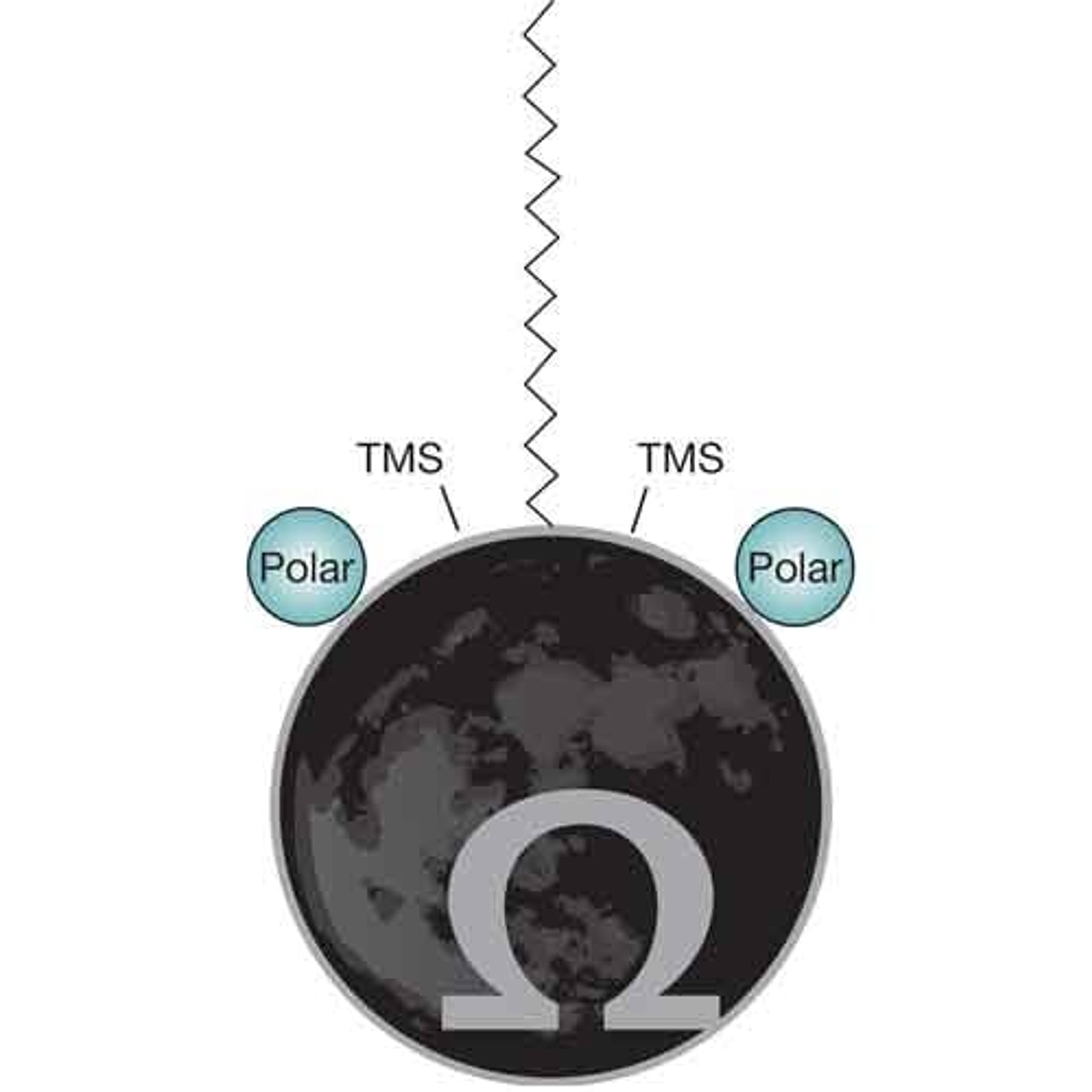
Selecting the right column is crucial and according to Dr. Preston, “even today, the C18 is the main ‘go-to’ for reversed phase”. However, column chemistries can be interchanged to suit the target compound in question. Dr. Preston typically utilizes core-shell particles over fully porous particles as he’s found that they generally give better results, but the different chemistries are not limited to these. He informed us that he has started to move more into phenyl based column chemistries, such as biphenyl or phenyl-hexyl, due to the increase in requests for analysis of more polar compounds. “These phenyl phases allow you to get a better handle on polar selectivity,” he added.
These old standard technologies are still considered to be the workhorses of the chromatography industry but Dr. Preston believes that, as they get old, they are likely to be replaced by higher pressure systems that can take advantage of the smaller particles and narrower columns. He remarked that the higher flows achievable through UHPLC “seem to be the way of the future”. As for analytical targets, Dr. Preston went on to say that he thinks that there is likely to be a move towards biomolecules such as peptides, and away from smaller molecules.
For additional information, download Phenomenex's Ultimate Guide to Reversed Phase HPLC/UHPLC Selectivity. To find out more about the unique team of scientific experts that make up the PhenoLogix group, read our interview with Senior Applications Scientist Seyed Sadjadi.