
How to develop next-generation SARS-CoV-2 immunotherapies at “pandemic pace”
Discover how a Canadian biotechnology company uses flow cytometry to facilitate the generation of high-affinity antibodies against infectious disease.
21 Feb 2022
Editorial article

Biologic drugs offer innovative ways of tackling infectious diseases and chronic conditions that have previously proved resistant or recalcitrant to treatment. In particular, combination antibody therapies have shown great promise as drug discovery companies look to focus on ever-more difficult targets. One company doing just that is Immune Biosolutions, a platform-driven company developing novel biologics based on recombinant antibody technology. This antibody discovery platform hacks the immune system of chickens—to develop unique immunotherapies against infectious diseases and cancer.
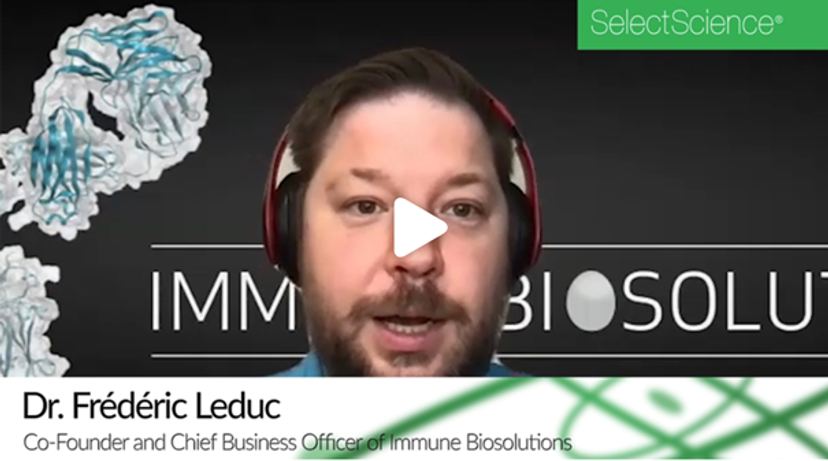
Working out of Quebec, Canada, Dr. Frédéric Leduc, one of the co-founders and now Chief Business Officer of Immune Biosolutions, has put together a series of technologies to tackle especially difficult targets, including the SARS-CoV-2 virus. In this SelectScience® article, Leduc shares the integral role of cutting-edge flow cytometry technology to fully validate Immune Biosolutions’ antibodies in terms of both specificity and affinity.
A three-pronged approach to SARS-CoV-2 immunotherapy
Immune Biosolutions has a series of new targets for lung cancer and inflammation, which range from RNA molecules to G-protein coupled receptors to viral proteins. Its most recent endeavour is the development of a combination immunotherapy for SARS-CoV-2 that combines three different antibodies derived from human patients.
“For SARS-CoV-2, we parallelized our discovery processes,” Leduc explains. “We immunized chickens and obtained B cells from convalescent patients, then used our discovery platform to find the antibodies and make sure they are able to recognize the viral spike protein.”
With the contribution of collaborators from the CHUM Research Center and the Research Centre of the Sainte-Justine university Hospital, the result is a cocktail of three antibodies with different modes of action capable of blocking the ACE2/spike protein binding, blocking fusion, and accelerating the shredding of the S1 part of the spike protein.
However, establishing the quality of these antibodies is not always straightforward. “For the viral variants, you want an antibody that is targeting the critical region where the virus binds to its target, but at the same time is not influenced by variants,” explains Leduc. “If there is one amino acid that is changing between variants, you want these antibodies to still work.”
It is a question of balance, finding antibodies specific enough only to recognize and neutralize the virus but at the same time not too specific to exclude potential variants. “I think that’s why we ended up choosing the antibodies that we did – they all have different modes of action and were all very good for all variants at a time,” Leduc adds. “In viral combat, you need to be able to match this ever-changing virus with competition that is too difficult to work around.”
Choosing the right cell sorting technology
An essential technique throughout this work is cell sorting, and Leduc and his team use this for target validation, for creating new cell lines, and for measuring the capacity of their antibodies to neutralize the virus. Cell sorting is also needed to purify the B cells obtained from patient serum which can then be selected for production of the most promising antibodies based on specificity and affinity determination.
Due to sorting’s integral role throughout Immune Biosolutions’ entire workflow, Leduc undoubtedly knows what they need from a cell sorter. “We want a technology that is simple to operate, that has as many channels as we require, and is fast,” he explains. “We have samples that aren’t very robust, and we play with cells that are sometimes very fragile, so we often cannot afford to rerun our analyses.”An essential technique throughout this work is cell sorting, and Leduc and his team use this for target validation, for creating new cell lines, and for measuring the capacity of their antibodies to neutralize the virus. Cell sorting is also needed to purify the B cells obtained from patient serum which can then be selected for production of the most promising antibodies based on specificity and affinity determination.
As a result, his preferred technology is Sony’s SH800 Cell Sorter. “Sony’s line of product is definitely built for our needs,” assures Leduc. “It’s very simple to operate, it’s up-and-running in a few minutes, and all of my scientists can operate this machine, from the technician to our VP.”
In addition to its ease of use, Leduc highlights the quality of data produced and the simplicity in which this data is presented. “This cell sorter is really straightforward and we always have an amazing graph,” he says. “I was able to easily show and explain what we were working on to a visiting Canadian Minister of Agriculture, which is a testament to how easy and simple this machine is, giving data so clear that even someone with no scientific background can understand.”
Leduc asserts how this simplicity enables his scientists to create increasingly complex experiments and still obtain the clear-cut answers they require.
Administration through inhalation: The future for COVID-19 immunotherapy
The use of three different antibodies in Immune Biosolutions’ combination immunotherapy provides three different mechanisms of action to fight the virus, but the company goes one step further by utilizing a unique approach to administering these antibodies. “The lungs are the primary site of SARS-CoV-2 replication,” notes Leduc. “So, by administering our antibodies directly into the lungs via inhalation, our aim is to neutralize the virus more rapidly and effectively.”
This inhalable combination immunotherapy is now in Phase 1 clinical trials and, if successful, offers a brand-new approach to directly delivering biologics to treat ailments from infectious disease to fibrosis to lung cancer.
For the future, Immune Biosolutions is looking to continue to address the complexity of disease, from COVID-19 to cancer, and develop next-generation immunotherapies for these conditions. “Saving patients is always our main goal,” Leduc concludes. “Using the lessons of COVID-19, we are hopeful that we can now address emerging disease complexity and develop novel immunotherapies, at pandemic pace.”
In early 2022, Immune Biosolutions announced that results have confirmed that its leading inhaled antibody, IBIO123, is capable of neutralizing SARS-CoV-2 and all the current variants of concern (VOCs), including the Omicron variant. IBIO123 is under evaluation in multisite Phase 1 and 2 clinical programs for the treatment of symptomatic SARS-CoV-2 patients.
Hear more about Dr. Frédéric Leduc’s research using flow cytometry in this exclusive video interview >>
Related products
Request Quote for All Products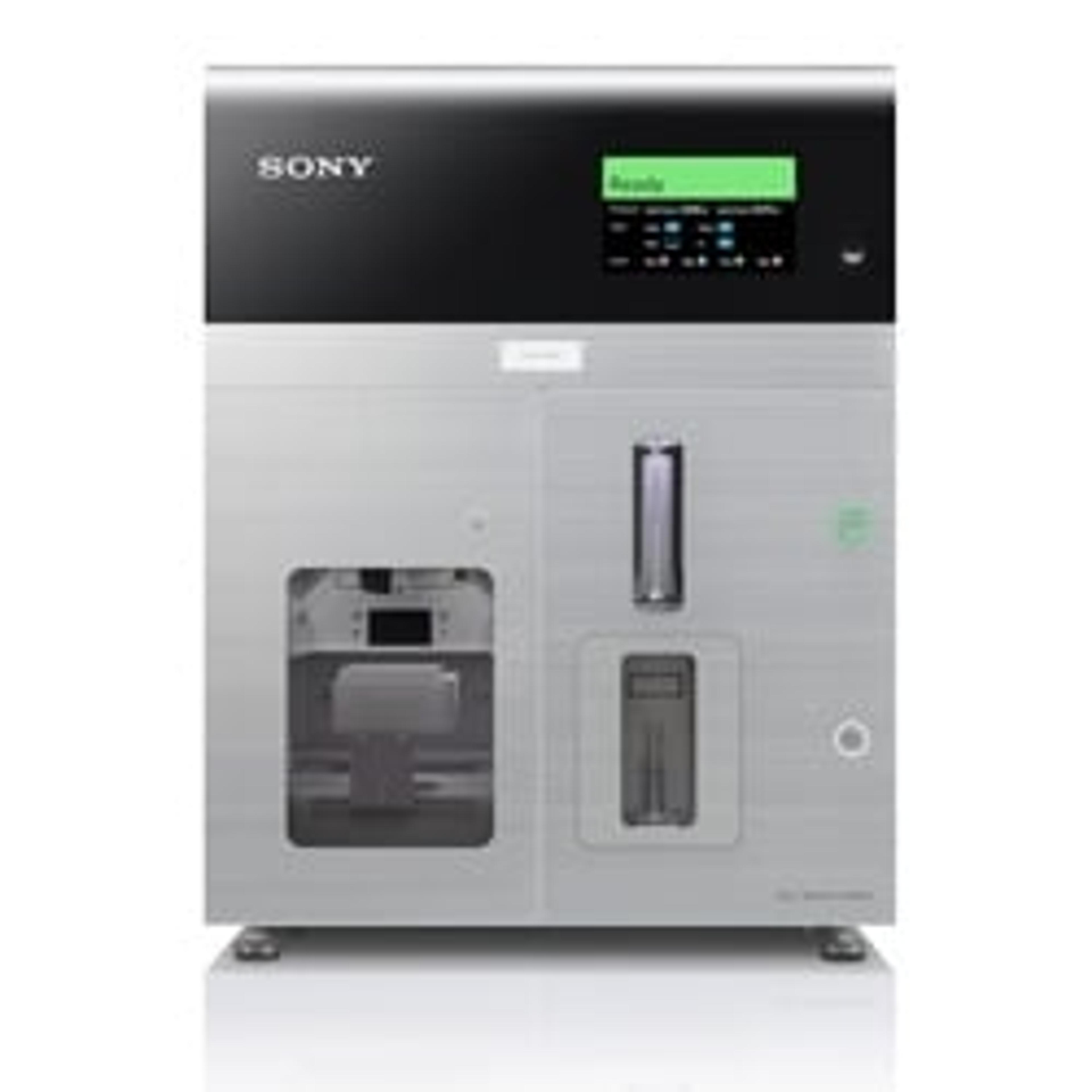
SH800 Cell Sorter
Sony BiotechnologyThe benchtop SH800 cell sorter permits sorting of a wide range of cell sizes for many applications using the 70-µm, 100-µm, and 130-µm microfluidic sorting chips. This novel, chip-based design is fully integrated with comprehensive fluidics controls and advanced automation for set-up, acquisition, sort and analysis to make sorting less subjective, more precise and easier to perform. System software is intuitive and supports sorting into tubes and 96- and 384-well plates.