
How Scientist Feedback is Shaping Versatile Centrifuge Technology for Multiple Applications
Learn how NuAire’s NuWind centrifuges can support the research or clinical applications of your lab
9 Jul 2017
Editorial article
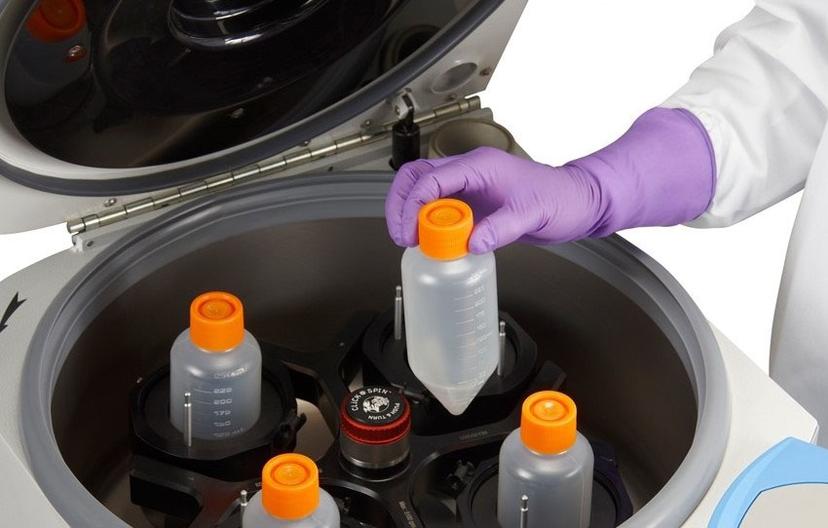
Hear Ryan explain how the NuWind centrifuge can meet the needs of most clinical and research applications.
When investing in new core technology for your laboratory, such as a centrifuge, it is important that such a significant outlay will support the applications you perform in your laboratory not just now, but for many years to come. SelectScience® interviews Ryan Rostkowski, Centrifuge Sales Manager for NuAire, to learn more about the applications that can be performed using the NuWind Multi-Application Bench Top Centrifuge and how it was designed to meet the needs of life sciences and clinical laboratories.
An important part of Ryan’s job is to work with scientists to identify their current and future centrifugation needs and to determine the best unit and application-based package for them. Ryan highlights that customers are “investing in capital equipment for their lab that should last 10-plus years.” It is therefore important that the unit is versatile and can meet the needs of any application that might come their way.
Diverse applications
The NuWind centrifuge is a very versatile unit, Ryan explains, that gives the user flexibility to shift between common uses — including cell culture, blood processing and bioproduction — and other more unusual applications, all within the same unit. Changing application is made simple by the use of Clickspin rotors, which enable the exchange of rotors with a simple twist, no tools required. This means that it takes only seconds to change from, for example, a swinging bucket rotor to a fixed angle rotor, saving researchers time as well as eliminating any risk associated with having to screw down a rotor.
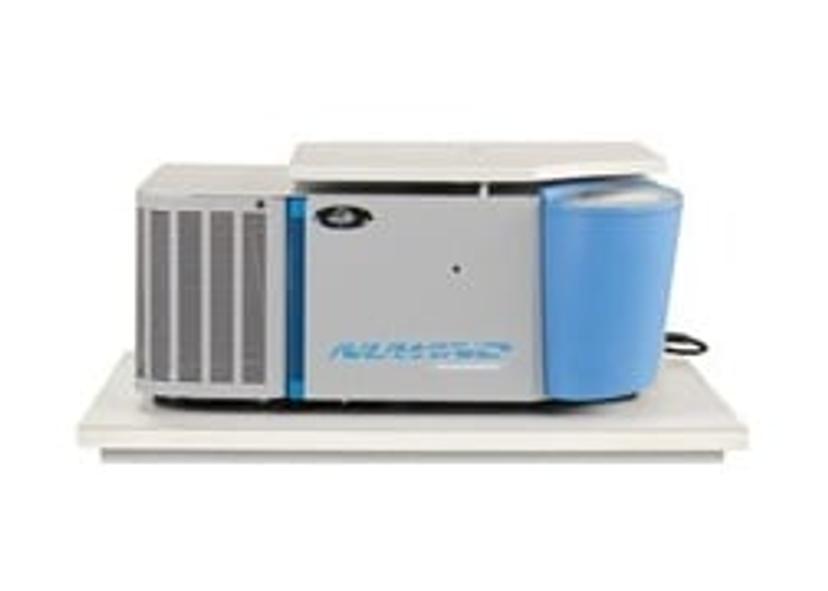
The NuWind Multi-Application Bench Top Centrifuge
Offering several rotor options, adapters, speeds, and temperature control, the NuWind is designed to meet the diverse needs of most research and clinical based applications.
What to look out for in the future
Currently the NuWind is available in a 2-liter refrigerated or ventilated model. Ryan explains that, “although this mid-size centrifuge fits many needs, some labs would like to process more samples and/or larger tubes or bottles”. To address this, NuAire will be coming out with a 3-liter unit in the near future, offering the same NuWind features in a larger capacity. “On the flip side, some labs are looking to process fewer tubes per run – we will also be coming out with a smaller version as well, with a lower price point and the ability to process fewer tubes. Once these units are available we will have a small, medium and large size centrifuge to allow the laboratory to select which size unit is best for their current and future centrifugation needs.”