
How new biophysical characterization technologies are advancing early screening strategies
An expert view on the latest trends in label-free biophysical characterization technology
5 Dec 2022
Editorial article

In-depth characterization of the interactions of molecules plays a key role in biopharma and pharmaceutical workflows – from drug discovery, identifying and engineering potential candidates that bind your target of interest, to supporting clinical evaluation and controlling the quality of your biotherapeutic product during manufacture. Binding data can be generated by a range of parameters using a variety of techniques that provide information on binding affinity, detailed binding kinetics, the concentration of active analyte and/or thermodynamics, amongst others.
In this SelectScience® interview, Dr. Tatiana Tiago, Product Manager at Creoptix (a Malvern Panalytical brand), highlights some of the latest trends in biophysical characterization technology and innovative applications.
What label-free biophysical characterization technology trends have you seen and what impact have these had on research?
The introduction of new technology has led to a complete revolution in the way binding kinetics and characterization is undertaken in today’s lab. One key trend has been the bringing forward of characterization (i.e., kinetics) studies to earlier in the discovery process. The development of technology like grating-coupled interferometry (GCI) – a fairly new biophysical characterization method for label-free molecular interaction analysis – has allowed this. This approach avoids bringing non-specific binders forward into the development pipeline and helps save time and costs. Modern methods are also meaning that researchers can scale their analyses with interactions measured in hours instead of days.
What trends have you seen in the applications of this technology in the past year?
Speed-to-market is a constant challenge and an ideal early screening strategy encompassing high throughput and high-quality hits helps by providing a larger pool of candidates and minimizing time spent progressing sub-optimal candidates.
The insight needed to drive hit quality requires sensitivity and performance that isn’t available with many current instruments and methods and extracting such insight at scale generates huge volumes of data. Modern methods, such as Creoptix waveRAPID®, helps by providing binding kinetics information in a single method at the initial stages of screening, allowing earlier and deeper insight into how candidates might behave in a biological system. Data analysis is now also being streamlined with machine learning introduced into kinetics analysis increasing accuracy and reproducibility. These automated tools are improving speed-to-market by reducing the impact of skilled labor shortages and mitigating the risk of later-stage issues from unreliable analysis.
What challenges remain for the use of label-free biophysical characterization methods/what do you see for the future of this technology?
With the move towards personalized medicine and an increased focus on exploring new therapeutic areas, partnering with an experienced CRO allows for access to expert knowledge and technologies that can be applied across both small molecule and biologics. These partnerships are crucial to increasing throughput and utilizing the technology needed for increased sensitivity and reliability.
The adoption of AI will accelerate data analysis in the future with the management of the data generated through these systems becoming more complex. More sophisticated AI systems will allow the integration of data generated with other research systems, increasing speed and reducing costs in early drug discovery stages.
Learn more in the Creoptix AG guide to binding kinetics with the WAVEsystem.
Related products
Request Quote for All Products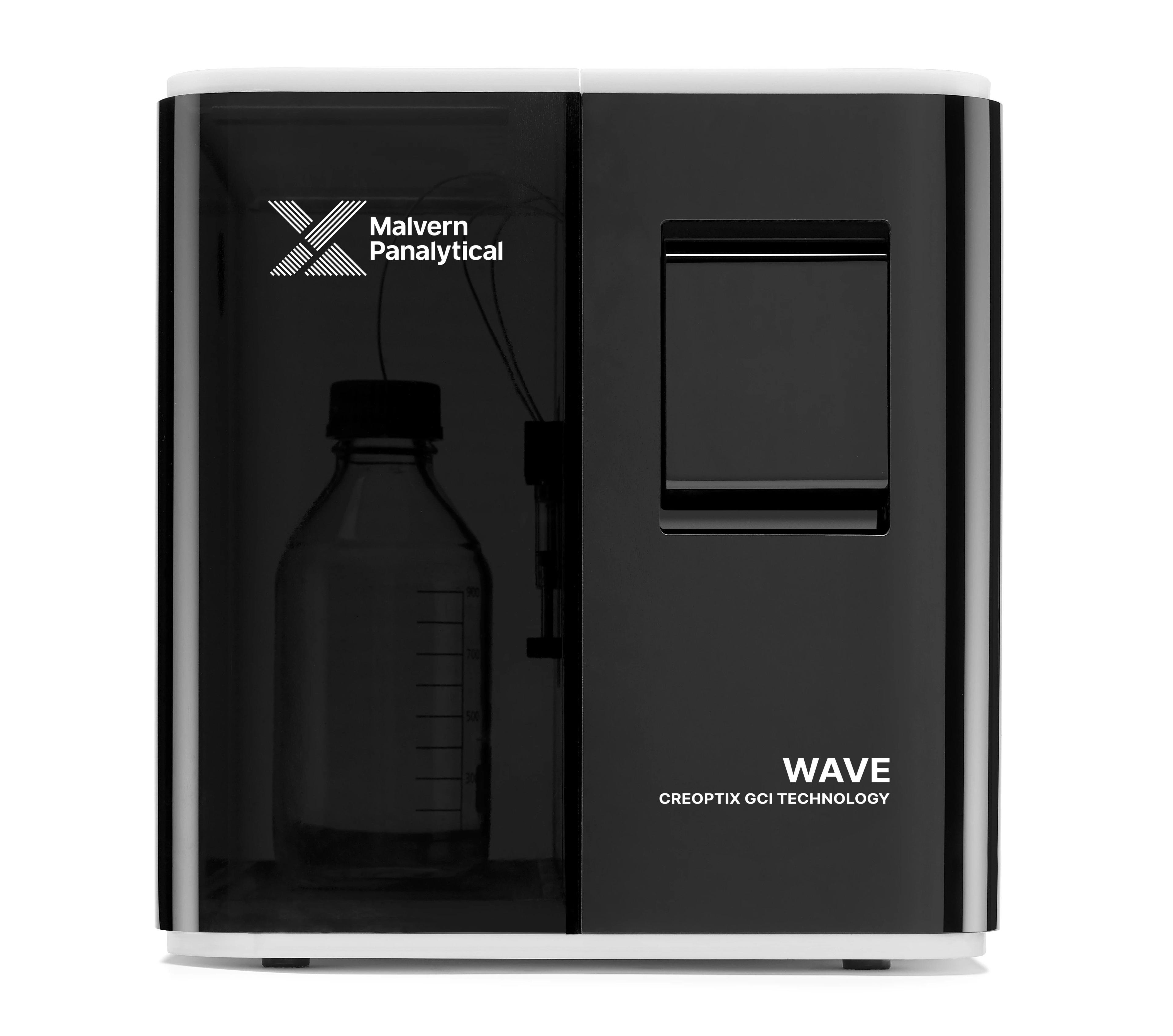
WAVEsystem - Bioanalytical System
Malvern PanalyticalKeeping kinetics real: label-free data like you've never seen before