
How mass cytometry is driving COVID-19 research: Your questions answered
Watch this on-demand webinar to discover how mass cytometry can be used to monitor immune responses to new therapeutics
9 Jun 2020
Expert insights

The COVID-19 public health crisis affects everyone in our global community. Crucial questions about how SARS-CoV-2 affects our immune system and how to monitor the response to newly developed therapeutic interventions need to be answered quickly.
In an on-demand SelectScience® webinar, Dr. Andrew Quong, Chief Science Officer at Fluidigm, describes the important role of mass cytometry when it comes to monitoring the immune response to COVID-19. Hear how the Maxpar® Direct™ Immune Profiling System, a fast, reliable cytometry assay designed for CyTOF® systems, can offer a standardized solution to achieve a comprehensive immune profiling view.
Also hear from Dr. Roberto Spada, Senior Market Development Manager at Fluidigm, as he shares results of a multi-site study with the Maxpar Direct Immune Profiling System that illustrates the inter-site and intra-site reproducibility of the assay.
Read on for highlights of Spada’s insights from the live Q&A session or register to watch the webinar at any time that suits you.
Watch Webinar NowQ: How much sample is needed for CyTOF?
RS: The amount of sample needed depends on the biological question that you are trying to answer. With the Maxpar® Direct™ Immune Profiling Assay™, our validated requirements are just under 300 microliters of whole blood, or 3 million peripheral blood mononuclear cells (PBMC). As mentioned, it depends on the lowest cell frequency that you want to measure, and to get enough events for that to be statistically reproducible.
Q: How long can a sample be saved, and do you freeze the sample before or after staining?
RS: With the Maxpar Direct Immune Profiling Assay, you can stain a fresh sample of whole blood and then freeze it down. We have done testing that shows you can store the frozen sample for up to 120 days. This application note can be found on our website. We do have some users who are testing additional timepoints, extending the cryopreservation time beyond 120 days.
Q: Are the Maxpar kits easy and suitable to use for clinical research applications?
RS: Yes. The Maxpar Direct Immune Profiling Assay is for research use only. However, it is being used in clinical research projects worldwide. Since the assay is so robust, it lends itself well to standardizing the results that you can get within these clinical research studies for both longitudinal and multi-site studies. A lot of people are starting to collaborate, and they want to get the comprehensive immune profiling view that was not easy to do before. The workflow that the Maxpar Direct Immune Profiling Assay can offer is a simplified solution that can standardize clinical research questions.
Q: Is there a COVID-19 ready-made panel available?
RS: For CyTOF technology, there is not yet a COVID-19 specific ready-made panel. Nonetheless, by being able to look at the different immune populations simultaneously during one specific run, it allows our users to be able to get a comprehensive view of what is going on within patients. In addition, the assay can be customized to address specific research questions by adding markers from Fluidigm’s extensive catalog of preconjugated antibodies. Since there are still so many unknowns regarding how the disease progresses within patients, it is important to be able to track many cell types simultaneously. The Maxpar Direct Immune Profiling Assay offers a standardized solution to do so.
If you have questions regarding specific cell populations or a custom immune profiling panel, we are happy to help you quickly design the best panel to suit your needs.
Q: Can the assay be used for immune monitoring in a vaccine program to study antigen-specific T cell responses?
RS: Mass cytometry and even the Maxpar Direct Immune Profiling Assay can be used for immune monitoring in vaccine trial programs. Detecting antigen-specific T cells is also possible via mass cytometry and is supported by several published papers. You can also implement sample barcoding, which enables pooling of many samples in a single tube in order to increase throughput.
Q: Is it possible to stain cellular suspensions from a tissue such as intestinal mucosa with a few leukocytes inside? How many cells do you need for something like that?
RS: That is possible. There is a wealth of literature on how to look at different tissue samples that have been digested into single-cell suspensions. With the ability to look at multiple markers, one can look at both leukocyte populations and stromal populations simultaneously within the same sample. In terms of the minimal number of cells required, that depends on the biological question that you want to answer.
One of the advantages of CyTOF is that fewer controls need to be run when constructing large panels, enabling the use of precious samples with a small number of total cells. We have cases of users having samples of 10,000, 15,000 or 20,000 cells, and using those with CyTOF to get the highest content view of the sample of interest. This can be used directly on tissue samples by using Imaging Mass Cytometry™ (IMC™) with our Hyperion™ Imaging System, where you do not have to do the digestion step. If you have a sample that has been fixed, either in formalin or frozen, you could just take a part of that sample and analyze it via the immunohistochemistry-like workflow of IMC, which provides high-multiplex antibody staining of up to 37 markers simultaneously.
Q: What metal isotopes are typically used in mass cytometry?
RS: Most of the metal isotopes used in mass cytometry are part of the lanthanide series of metals. The beauty of using these metals is that they are not naturally found in biological systems, and that is what allows CyTOF technology to have a significant resolution advantage: with mass cytometry there is nothing analogous to autofluorescence to contend with. Any cell that is not positive for antibody will give out a close-to-zero signal. That enables the users of our technology to resolve positive signals versus negative signals more efficiently.
Q: Do the steps of fixation and permeabilization affect the metal-labelled antibodies?
RS: When working with fluorescent antibodies, you must be careful of the effects that fixation and permeabilization can have on fluorophores. Metals are not impacted by these steps, allowing for efficient intracellular staining using Maxpar labelled antibodies. This means you can easily include antibodies to intracellular proteins such as cytokines, phosphoproteins and transcription factors as well as DNA probes for cell cycle analysis, etc., in your panel. It gives a significant resolution advantage versus high-parameter fluorescence-based flow cytometry.
Q: Can we sort cells using mass cytometry?
RS: Unfortunately, you cannot sort cells by CyTOF technology.
Q: How can you distinguish between dead and live cells?
RS: There are two main ways that CyTOF can distinguish live and dead cells. You can use our Cell-ID™ Cisplatin-196Pt reagent, which can be used to identify live versus dead cells. You can also use Cell-ID Intercalator-103Rh for this purpose. You can find these reagents and their associated protocols on our website.
Q: Could you outline the advantages and disadvantages of mass cytometry in comparison to spectral flow cytometry?
RS: The main advantage for mass cytometry versus flow cytometry (or spectral flow cytometry) is that the metal signals are very distinct and do not overlap with one another. Flow cytometry uses fluorescent tags, which have spectral overlap issues that must be compensated. With mass cytometry, we can create ready-to-use panels for 30 markers easily, and due to the specific signal of the metal tags, we can easily slot in additional markers to enlarge the panel. Another important aspect of mass cytometry is that you do not lose sensitivity when building larger panels. With flow cytometry, you must be careful when choosing markers to avoid signal overlap and sensitivity loss. With mass cytometry, there is no reduction in sensitivity when adding more markers to your panel. This means that not only can we easily look at many markers simultaneously, we can do this without having any impact in terms of sensitivity.
Q: Can the Maxpar Pathsetter™ software be used to analyze the assay when additional markers have been added?
RS: Yes. Not only can the assay be extended with extra antibodies, you can also add those new markers when you are performing the analysis using the Pathsetter software. You need a few runs for the software to be able to recognize the different markers that you have added, but it is something that can be directly done within the software itself.
Q: Are the mass cytometry panels you are using available to others? Are you able to do projects with collaborators as well?
RS: All the markers, panels and clones that we use are publicly available. You can view them by going to our website and looking at the details that we have for each individual assay. In terms of opening for collaborators, Fluidigm has just launched Therapeutic Insights Services, which offers sample-to-answer mass cytometry and Imaging Mass Cytometry services for your research needs. If you are interested in this service, please visit our website to request more information.
Learn more about how mass cytometry can be used to monitor immune response to COVID-19: Watch this webinar on demand >>
For Research Use Only. Not for use in diagnostic procedures.
Information in this publication is subject to change without notice. Patent and License Information: fluidigm.com/legal/notices. Limited Use Label License: The purchase of this Fluidigm Instrument and/or Consumable product conveys to the purchaser the limited, nontransferable right to use with only Fluidigm Consumables and/or Instruments respectively except as approved in writing by Fluidigm. Trademarks: Fluidigm, the Fluidigm logo, Cell-ID, CyTOF, Direct, Hyperion, Imaging Mass Cytometry, Immune Profiling Assay, Maxpar and Pathsetter are trademarks and/or registered trademarks of Fluidigm Corporation in the United States and/or other countries. ©2020 Fluidigm Corporation. All rights reserved. 06/2020
Related products
Request Quote for All Products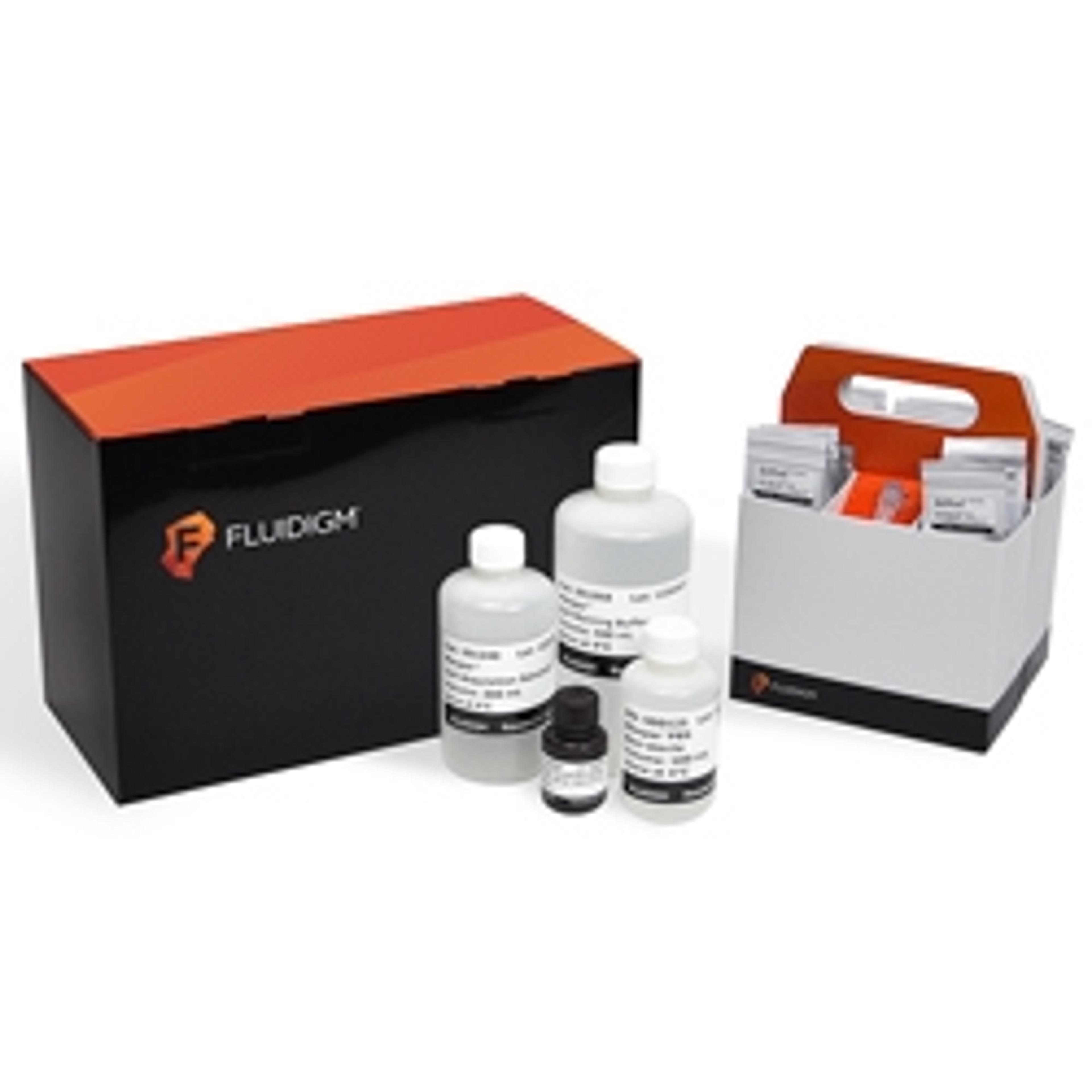
Maxpar® Direct™ Immune Profiling Assay™
Standard BioTools Inc.The Maxpar Direct Immune Profiling Assay™ sets a new standard for comprehensive immunophenotyping of human PBMC and whole blood by enabling simultaneous identification and enumeration of 37 immune cell subsets. 30 markers. 1 tube. 5-minute data analysis.

Hyperion™ Imaging System
Standard BioTools Inc.A transformative imaging solution that enables comprehensive analysis of cellular phenotypes and their interrelationships.