
How Leading Scientists in Italy are Performing State-of-the-Art Cell-Based Assays to Help Push Boundaries in Anticancer Drug Discovery
Aiding access to automation in cancer research
22 May 2017
Editorial article
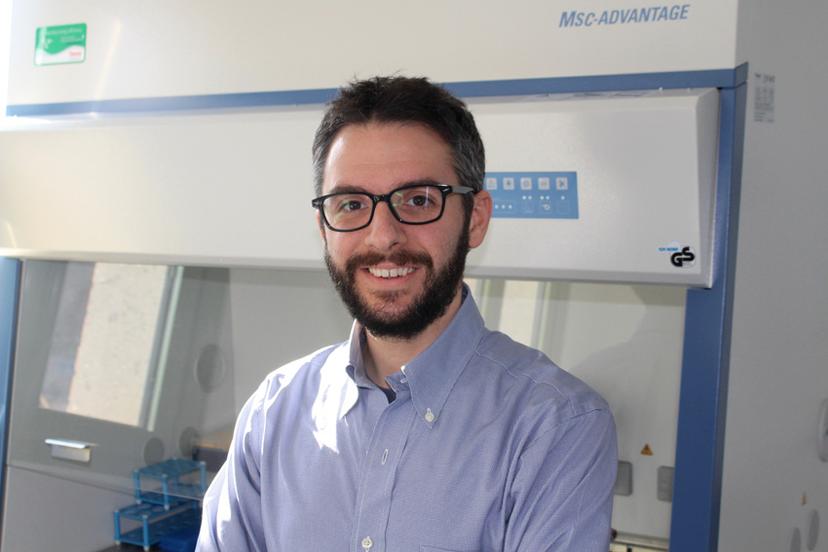
Dr Francesco Paolo Fiorentino is a postdoctoral fellow in the Department of Biomedical Sciences at the University of Studies of Sassari, Italy, where he is investigating potential therapeutics for the treatment of small cell lung cancer. He is also co-founder and chief scientific officer of Kitos Biotech, a contract research organization for anticancer drug discovery.
Dr Francesco Paolo Fiorentino had long dreamed of starting his own company; two years ago, this dream became a reality when he and a colleague applied for and won funding to set up Kitos Biotech. Inspired by a talk from a researcher who had already made the leap from postdoc to entrepreneur, Francesco saw the opportunity to use his expertise in cell biology and preclinical research, whilst also embracing the technological shift from traditional manual methods to automation. Cell-based assay services at Kitos Biotech use the latest automated technologies to test anticancer compounds on a considerably larger scale than traditional manual methods, addressing the need for academic researchers, biotechs, and pharmaceuticals to access costly high-throughput technology.
In an interview with SelectScience®, Dr Fiorentino discussed the technology advancing cell-based assays for anticancer drug discovery and how he is improving services at Kitos Biotech.
SS: Tell us about your current postdoctoral research.
FPF: In my role as a postdoc at the University of Studies at Sassari, I am working on a project financed by the Fondazione Umberto Veronesi. I study several classes of compounds for the therapy of small cell lung cancer and recently published a journal paper about the therapeutic potential of BET bromodomain inhibitors, a new class of drugs used in cancer research. I’m now looking to combine bromodomain inhibitors with other classes of inhibitors and treat cell lines of small cell lung cancer with combinations of several different categories of inhibitors.
SS: How did you come to set up Kitos Biotech?
FPF: Immediately after graduation, I had the dream to set up my own company. However, I lacked the experience and the right partners. So, I started the typical scientific career of PhD and postdocs moving around the world, which let me get in touch with excellent researchers, acquiring knowledge and experience. Two years ago, I, along with a colleague with a similar professional background, Irene Marchesi, applied for and were funded by the Smart&Start program of the Italian Ministry of Economic Development, to develop a highly technological start-up. After finishing our postdocs, we came back to Italy and set up Kitos Biotech.
SS: Describe the work of Kitos Biotech.
FPF: We provide services to our customers for the experimental design, execution and analysis of cell-based assays that are needed for their projects. We have available in-house cell lines, a cell culture facility with automation systems and cutting-edge equipment, and ten years of experience in the field of preclinical cancer research, to support our customers in setting up the experimental plan and analyze obtained data.
SS: What types of projects are you working on?
FPF: At Kitos Biotech, we optimized a proliferation and cytotoxicity cell-based assay for 3D tumor spheroids in live-cell imaging, which is able to monitor tumor spheroid growth and survival over time. This assay is validated in some of our in-house cell lines for high-throughput analysis, but we want to validate it for high throughput screening in the majority of our cell lines. We are also working to validate cell-based assays in 96-well plates for cell cycle profiling or migration using live-cell imaging.
SS: Which methods do you use for these projects?
FPF: We perform both classic cell-based assays, which take advantage of luminescence to quantify a cell’s metabolite or enzyme, and estimate a cell functional activity and assays which take advantage of live-cell imaging techniques and time-lapse technology to directly measure cell phenotypes. For the latter assays, we use the BioTek Cytation 5. We customized our Cytation with phase contrast and brightfield objectives and with various LED/filter combinations for fluorescence-based methods. We also incorporated the CO2/O2-temperature control to perform assays in time-lapse.
For cell biologists, automation is a windfall.
Dr Francesco Paolo Fiorentino Kitos Biotech
SS: How does automated technology help you to improve results?
FPF: For cell biologists, automation is a windfall. For cell plating, serial dilutions and compound addition to cells, we use an automated liquid handler. This greatly improved the technical quality of assays by elimination of manual errors and reduction of liquid variability in each sample. Automation of assay readings using the Cytation 5 means we can now perform readings with very short intervals to monitor cell conditions over time. This provides very useful information about the phenotypes we observe and more robust data. Kinetics analysis of compound efficiency allows more appropriate choice of the best drug candidate for in vivo studies. It is both of technical and biological value for next steps in the drug discovery process.
SS: What do you see for the future of services offered at Kitos Biotech?
FPF: The preclinical cancer research community awaits new methods which provide more molecular mechanistic insights about therapeutic compound actions. This would be beneficial to develop more tailored and potent drugs towards personalized medicine. Furthermore, the majority of the compounds that show strong potency in cell lines, do not show similar properties in tumors in vivo. For this reason, the scientific community is asking for more biologically relevant cell-based assays. Our service for cytotoxicity assay in 3D cultures was validated and is available to address this need. Moreover, we are willing to further improve our culture methods towards an in vitro system which mimics cell conditions in the real cancer conditions as much as possible. There are many excellent scientists working in this field and developing new culture systems, and we want to continue to provide our customers cutting-edge methodologies for their research over the next years.