HORIBA Scientific Announces New Software for Its ICP-OES Spectrometers

NEO Software will facilitate method development, sample measurements and results management

18 Mar 2016
Alex Waite
Editorial Assistant

Product news

HORIBA Scientific, global leader in ICP-OES spectrometry systems, announces its newest software release for their ICP-OES spectrometers.

ICP Neo delivers powerful tools for samples measurement with a new HDD mode (our unique and patented High Dynamic Range Detection System) integrated for standard measurement, advanced quality control protocols and retrospective analysis with respect to the integrity of raw results to match with good laboratory practices requirements.

For improved ease of use, NEO displays all information on a single screen allowing plasma and safeties monitoring at the same time than method development and acquisition. All the information can be viewed at a glance.

“We’ve given the NEO interface one of the most user-friendly GUIs on the market, as well as user-friendly tools,” says Matthieu Chausseau, Applications Manager at HORIBA Scientific. “It offers a multiple user capability with individual passwords, logoff and logon without stopping the sequence, a contextual tool bar to adapt the content with the window selected, user defined window display on the screen, user defined maintenance warnings, and diagnostics with real-time information on instrument status with filter selection, slits positions, grating position and PMT selection, along with zero order and reference acquisition with graphic display.”

Method development features include a visual display of interference free lines using S3 wavelengths database, a unique wavelengths database developed especially for ICP-OES by HORIBA Scientific. This database gives information not only on wavelengths but also on detection limits and is the only one to give reliable relative intensities between emission lines.

Full automation of the analysis is possible with a Smart Rinse feature for automatic monitoring of rinse efficiency between 2 samples, automatic control of the quality with limits on correlation coefficient and recalculated concentrations, and the automated Quality Control procedures that are fully US EPA compliant with ICV, CCV, LCS, Interference check, Paired samples, Spikes, etc.

ICP Neo is available for all of HORIBA Scientific’s Ultima family ICP-OES spectrometers. It is compliant with the latest Microsoft® platform, as well as Windows® 7 and 8. CPU05 electronics are required for communication with ICP Neo. For all instruments not equipped with CPU05 electronics, a field upgrade is available.

In addition to the basic software training given during the upgrade, dedicated advanced software training will also be available in the application lab in Edison, NJ, or on-site.

During installation, a basic training will be performed by the service engineer who will have been trained in the application laboratory. You will be able to use the software and perform your samples analysis as soon as installation is completed.

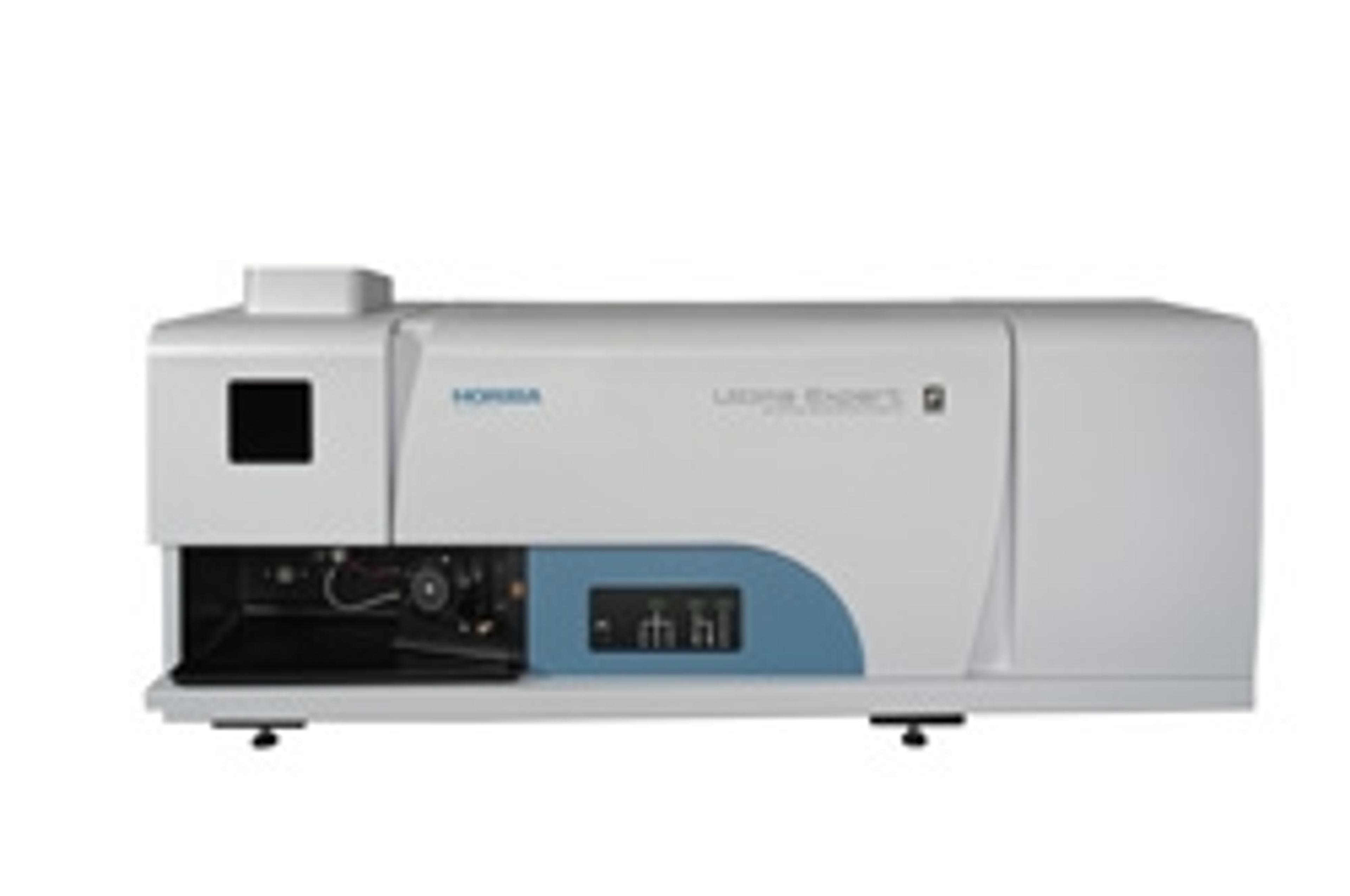
ULTIMA Expert ICP-OES

HORIBA Scientific

ULTIMA Expert is designed with a unique plasma torch that offers a radial viewing mode far superior to competitive systems, thanks to the measurement of the entire normal analytical zone. The vertical torch, the original sheath gas device and the wide injector make the ULTIMA Expert more tolerant to difficult matrices, and offer the benefits of robust operation with minimal maintenance. High resolution and excellent sensitivity allow elements with high, low and trace concentrations to be measured accurately. ULTIMA Expert delivers the highest resolution with less than 5 picometers for the UV range and less than 10 picometers for the visible range, all due to its unique optical design which integrates a high density holographic grating and one meter focal length optics. Thermally stabilized optics ensure excellent long-term stability of the measurements. Full wavelength coverage from 120 to 800nm satisfies all the requirements for elemental analysis, including far UV capability for halogen analysis. Powerful software, with unique comprehensive tools offers advanced user guidance from sample to results. Image Navigator software provides qualitative and semi-quantitative analysis of unknown samples based on full spectrum acquisition, S3-base and MASTER for facilitated method development, and an uncertainty calculation tool for calibration quality improvement. The Analyst software provides full instrument control and advanced features for method development, analysis and results management. The robustness of the ULTIMA Expert makes it ideal for demanding applications such as mining, salt production, wear metals in oil analysis, petrochemical, metallurgical and chemical manufacture. The ULTIMA Expert comes with accessories for multiple demanding applications to further enhance its automation and functionality. For more information, please go to: http://www.horiba.com/scientific/products/atomic-emission-spectroscopy/icp-oes-spectrometer/

(0)

Tags

AutosamplersAutosamplers are automated sample loaders used with a number of separation and analytical techniques. HPLC autosamplers use automated partial or full-loop injection systems and place samples in vials or microplates for analysis. Autosamplers can also be used for elemental analysis. Features to consider include repeatability, syringe capacity, footprint and temperature controls.  Sample PreparationSample preparation can improve the quality and speed of separation techniques. Products to assist sample preparation include filtration equipment, evaporators, membranes and sieves.Atomic Absorption / Emission SpectroscopyAtomic absorption spectroscopy (AAS) and atomic emission spectroscopy (AES) — also called optical emission spectroscopy (OES) — are used to detect the elemental constituents in samples. Both techniques involve the atomization of a sample. Atomic absorption spectrometers may use a flame or furnace to create an atomic vapor of the sample before irradiation with spectral light. Optical emission spectrometers may use a flame, inductively coupled plasma (ICP), microwave plasma (MP) or spark arcs to atomize and excite the sample. At higher excitation energies, electrons can be emitted instead of photons, which can be useful for samples that can’t be atomized and for surface analysis. Explore electron spectroscopy equipment such as Auger spectrometers and photoelectron spectrometers for surface elemental analysis of samples. Find the best atomic absorption, photoelectron and optical emission spectrometers in our peer-reviewed product directory: compare products, check customer reviews and receive pricing direct from manufacturers.Mass SpectrometryMass spectrometry (MS) is a powerful analytical technique used to identify and quantify molecules based on the mass-to-charge ratio of gas-phase ions. It provides detailed information about the structure, composition, and properties of compounds and is widely used across fields such as environmental monitoring, materials science, drug discovery and development, food and beverage testing, and wider chemical research. Key MS techniques include tandem mass spectrometry (MS/MS), liquid chromatography–mass spectrometry (LS-MS) and inductively coupled plasma (ICP-MS). Choosing from these wide range of techniques and technologies can be a daunting task, so keep up to date with scientific applications, performance expectations, and customer reviews here all in one place. Visit our product directory to receive quotes direct from the manufacturer. Data AnalysisData analysis hardware and software is available to make data processing straight-forward yet powerful. Data software can be used for math and stats, technical graphing and image analysis. In addition, software is available for specific data analysis of electrophoresis, densitometry, ELISA and DNA sequencing.Chem / BioinformaticsCheminformatics and bioinformatics are computational techniques used in chemistry and biology, respectively, for data acquisition, processing and storage. Cheminformatics focuses on compound information, whereas bioinformatics is mainly applied to analysis and modeling of genomics, genetic and sequencing information. Hardware and software is available for data acquisition, analysis, management and storage.Molecular Recognition SoftwareMolecular recognition software is widely used to analyze DNA, RNA, proteins and chemicals. The software can be useful for graphical viewing, comparative analyses, high-throughput screening, genomics, proteomics and phylogenetics. Molecular recognition software uses bioinformatics tools and analyses such as BLAST searches and generates structural predictions, 3D structures and sequencing information.Software PlatformsSoftware platforms are useful for various stages of laboratory experiments from data collection to data storage and processing. For instance lab software is available for system control, data management, data analysis and qualification / validation.GC-MS GC-MS (gas chromatography-mass spectrometry) instruments and equipment are used to separate, quantify and identify mixtures of small and volatile compounds, such as polycyclic aromatics, fatty acids and alcohols. Often used in drug detection, forensic investigation and environmental analysis for pesticides and contaminants, GC-MS is a powerful addition to your lab’s analytical capabilities. GC-MS/MS instruments equipped with a qTOF or triple quadrupole analyzers can give greater sensitivity and resolution to your analysis. Find the best GC-MS instruments and equipment in our peer-reviewed product directory: compare products, check customer reviews and receive pricing direct from manufacturers.Method DevelopmentMethod development is the process of creating and optimizing experimental techniques and protocols to achieve reliable, reproducible results. This is essential in various fields, including pharmaceuticals, environmental science, and diagnostics. Browse our peer-reviewed product directory to find the best method development solutions, compare products, check reviews, and get pricing directly from manufacturers.SpectrometrySpectrometry is a technique used to measure the mass-to-charge ratio of ions. It provides valuable information about the composition, structure, and molecular weight of compounds. Used across a variety of fields, including chemistry, biology, and environmental science, spectrometry is essential for identifying substances, analyzing mixtures, and developing new products. Explore the best spectrometry tools in our peer-reviewed product directory; compare products, check reviews, and get pricing directly from manufacturers.