
Hamilton Robotics Validates Artel MVS® on MICROLAB® STAR and NIMBUS Automated Liquid Handling Workstations
9 Feb 2010Product news
Hamilton Robotics and Artel have announced that the Artel MVS® (Multichannel Verification System) has been successfully validated for use with Hamilton’s MICROLAB STAR and NIMBUS automated liquid handling workstations.
Using Artel’s proprietary ratiometric photometry technology, which measures light absorption by two specially formulated dyes in order to verify volume, the MVS provides volume measurements on a tip-by-tip basis, verifying the accuracy and precision of each dispensing channel, up to 384 channels. Able to rapidly provide NIST-traceable volume measurements and automatically document the results, the MVS is widely used in a variety of laboratories for quality assurance of automated liquid handlers. Now, Hamilton customers who want to use the Artel MVS can access preprogrammed software methods to perform volume verification and confirm the liquid handling performance of their workstations.
Central to the validation effort is the development of optimized liquid-class settings. Each liquid class defines specific pipetting parameters to be used for each MVS reagent under various conditions to enhance accuracy and precision. STAR and NIMBUS users can access optimized liquid classes for quality assurance from the Hamilton Robotics website.
“The Artel MVS is quickly becoming the industry standard for automated liquid handling quality assurance,” said Rick Luedke, product manager for Hamilton Robotics. “Compatibility with the Artel system allows us to speak the same volume verification language as our customers, enabling them to streamline their QA processes.”
“We are pleased to add Hamilton to the list of systems for which we provide verification kits,” said Barry Godowsky, vice president of sales at Artel. “Our verification tools will help to further demonstrate the accuracy delivered by the unique Hamilton liquid handling technologies.”
At last month’s LabAutomation 2010, Artel and Hamilton Robotics presented a workshop on validating and optimizing Hamilton automated liquid handling workstations using the MVS. The full presentation will be available in March on both the Hamilton Robotics and Artel websites.
Related products
Request Quote for All Products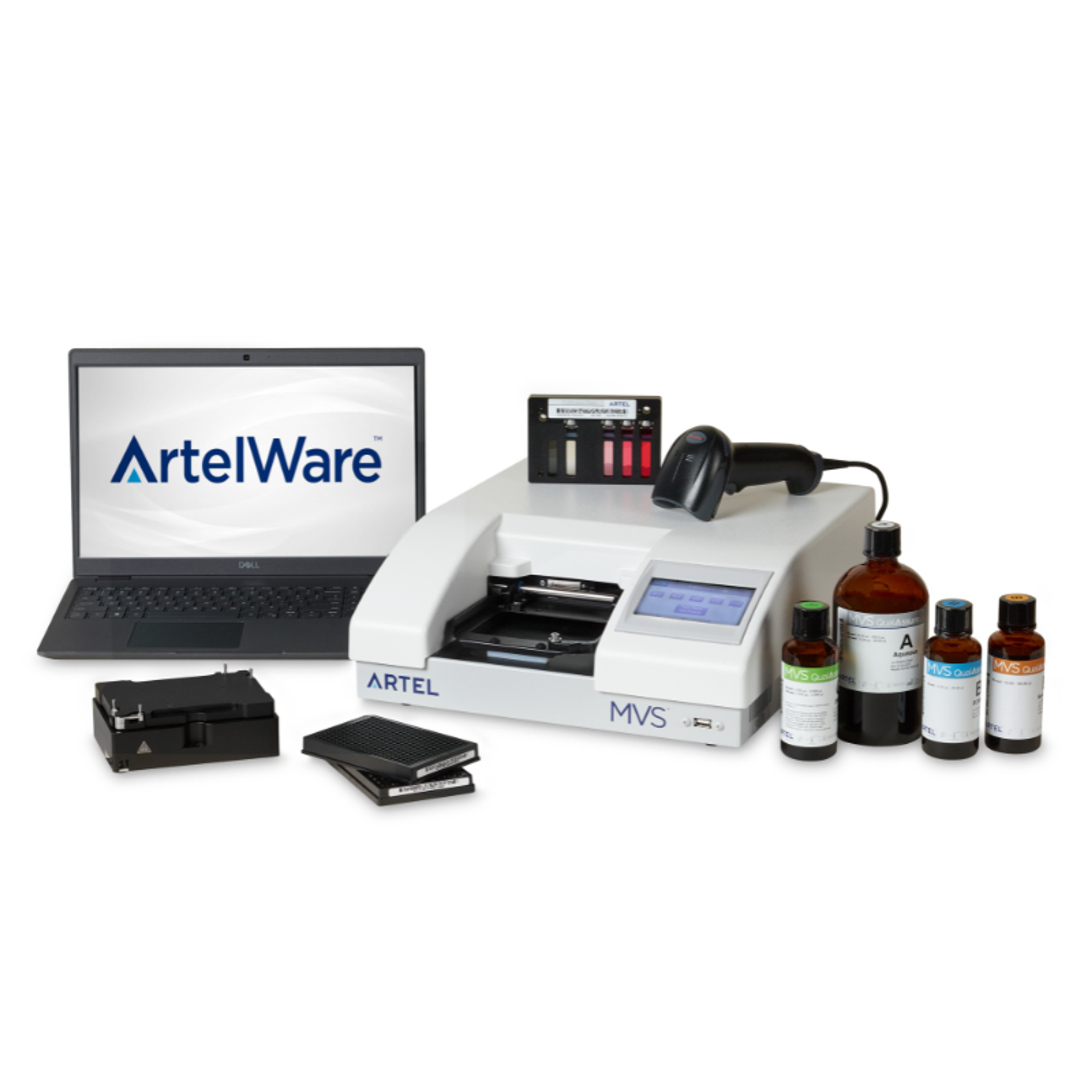
Artel MVS® Multichannel Verification System
Nova Biomedical OsmometersUnderstand and manage the performance of your automated liquid handlers, multichannel pipettes, labware, operators, and more.