
Guest Editor Blog: Testing One, Two, THC: Hair Drug Analysis Using GC-MS
Guest Editor, Lisa Thomas, Thermo Fisher Scientific, discusses the advantages of hair drug testing
6 Sept 2016
Editorial article

Recent studies have shown an increase in the number of American workers testing positive for drug use
Image: Shutterstock
A report published last year by Quest Diagnostics provided an analysis of more than 10 million workplace drug test results that showed an increase in the percentage of American workers who tested positive for drugs such as marijuana, cocaine, and methamphetamine. According to the findings, American workers tested positive for drug use in increasing numbers across numerous workforce categories and drug test specimen types.
Several years earlier, a similar report found that more American workers were testing positive for prescription opiates, with an 18% jump in positive urine tests from the previous year and more than a 40% jump over a four-year period, with post-accident drug tests finding opiates as much as four times more often than pre-employment screening tests.
Employer Drug Testing
Many companies in the United States have enacted drug testing programs in order to reduce absenteeism, accident rates, workers’ compensation expenses, and turnover costs. Urine drug tests, the least expensive and most frequently used form of drug tests, can generally detect marijuana use within approximately one week while detecting cocaine and heroin use within two days. Saliva drug tests are often used to detect recent drug use, especially in post-accident testing to assess what was in the employee’s system at the time of the accident.
In addition to the limitations of saliva and blood tests to detect drug use within more than one week after use, most recreational drugs are quickly excreted from the body’s fluids (blood, saliva, and urine), which leads to a very short drug detection window. (Innovative Technology Helps Combat Drug Use). Urine test results can also be influenced by a change of habits within a week leading up to the test. For employers who are looking to identify employees who are repeat or chronic drug users, hair follicle testing provides a wider window of detection.
The Benefits of Hair Drug Analysis
In contrast to alternative drug testing methods that use bodily fluids, hair acts like a drug historian, documenting evidence of drug ingestions over time as the hair grows, thus providing a much longer detection period. The typical hair sample (1.5 inches cut close to the scalp) identifies drug use as far as three months back, while body hair may go back even further, as opposed to urinalysis, which typically detects drug use from the past 48 to 72 hours (Hair Drug Testing – Facts and Myths).
While urine tests look for just a single use, hair tests look for multiple uses over time. In addition, collecting hair from the head is less intrusive and less embarrassing than other drug tests such as saliva and urine collection. Also, hair doesn’t require refrigeration and can be stored indefinitely.
While regular shampooing, dyeing, or bleaching may have an adverse effect on drug concentrations in the hair, hair drug tests are much more difficult to prepare for and, short of shaving off all the hair on your head and body, are much more difficult to cheat.
Because of these factors, hair analysis is becoming more popular among testing for THC, heroin, and other drugs as it provides more definitive evidence of deliberate drug consumption while dispelling doubts of passive contamination. This is accomplished through the detection of metabolites: the products of metabolic reactions catalyzed by various enzymes that naturally occur within cells.
Primary metabolites are synthesized by the cell because they are indispensable for their growth. Secondary metabolites are compounds produced by an organism that are the by-products of a substance after it has run through your system. Identifying and measuring metabolites is the focus of drug testing analysis, which helps to distinguish deliberate drug consumption from passive exposure.
GC-MS Technology
Gas chromatography-mass spectrometry (GC-MS) is a tandem technology used to identify different substances within a test sample. The gas chromatograph (GC) separates mixtures into individual components using a temperature-controlled capillary column, while the mass spectrometry (MS) is used to identify the various components from their mass spectra.
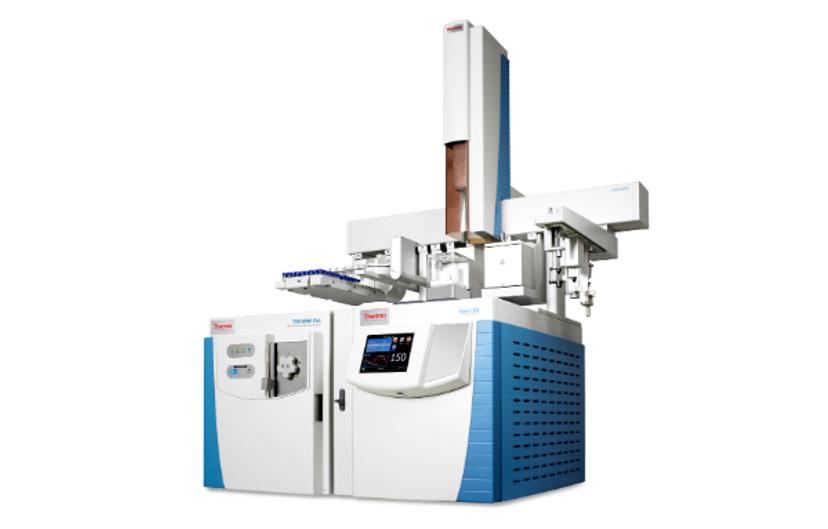
The Thermo Fisher Scientific TSQ™ 8000 Evo Triple Quadrupole GC-MS/MS
GC-MS is ideal for forensic drug testing targeted screening because it can positively identify the presence of a specific substance in a given sample. It is shown to be a highly sensitive technique for the detection of low concentrations of drugs in hair and supports detection cutoffs limits set by the Society of Hair Testing.
There are several types of hair tests available, including a 5-panel, 9-panel, and 12-panel hair follicle drug test. The five drugs of abuse groups analyzed in a hair test include:
- Cocaine
- Opiates (including heroin metabolite 6-MAM, morphine, oxycodone, hydrocodone, hydromorphone and codeine)
- Phencyclidine (PCP)
- Amphetamines (including methamphetamine, amphetamine, MDMA-Ecstasy, MDEA-Eve, and MDA)
- Marijuana (carboxy-THC)
Other Applications of Hair Testing
In addition to drug testing for job applicants or employees to help reduce the risk of loss associated with an employee under the influence, the role of hair testing is used for various forensic toxicological purposes. Samples of hair are routinely collected during criminal investigations that include drug-related death, drug-facilitated crime, and child protection services. Hair drug testing is also used to monitor individuals in drug rehabilitation programs and by probation courts to drug test parolees.
While hair drug testing has been around since the 1980s, the technology has become more widely used due to its level of accuracy. According to an article from Occupational Health & Safety, today thousands of organizations in more than thirty countries rely on hair drug testing in order to identify periodic and habitual drug use by applicants or employees. The use of hair analysis has steadily increased in private sector workplace testing, with many Fortune 500 companies using hair for pre-employment drug testing for more than a decade.
In addition, an increasing number of police departments in the United States utilize hair testing for drugs. With numerous courts also making use of hair drug tests as part of parole and probation programs, the results from these tests are often admissible in a court of law. Because of the significant advantages it offers in identifying, not only specific drug metabolites, but how long they have been in the system, it appears that the use of hair testing will only continue to increase.
Written by Lisa Thomas, Thermo Fisher Scientific
Learn more at the Forensic Resource Library
Visit: Thermofisher.com/DrugTesting
Free application note download: Sensitive Determination of THCCOOH in Hair to Regulatory Requirements Using Triple Quadrupole GC-MS/MS