
Groundbreaking Genetics: How First-Class Consumables are Enabling Rare Disease Research
Scientists from the esteemed Institute for Genetic Medicine, Newcastle, UK, are using sophisticated consumable technologies to advance research into rare mitochondrial diseases
22 Jan 2019
Editorial article
Newcastle University’s Institute for Genetic Medicine (IGM), in collaboration with the Wellcome Trust Centre for Mitochondrial Research, conducts pioneering clinical research into mitochondrial diseases. In early 2017, the center received the UK’s first license to create ‘three-parent babies’. In this exclusive SelectScience interview with Debra Jones, technical manager at the IGM, find out how experts at consumables company STARLAB are helping to lay the foundations for innovative science research at the bench, that improves infant lives at the bedside.

1 in 4,000 babies suffer from mitochondrial gene disorders. Image source 123rf.com
After many years spent in medical research, Debra Jones now works in management for the IGM. The institute houses state-of-the-art facilities for genome sequencing and analysis, fostering world-leading research that helps to improve the lives of infants with inherited mitochondrial disorders, and other rare diseases. The IGM and Wellcome Trust Center work in close collaboration with the Fertility Center at Newcastle Upon Tyne Hospitals NHS Foundation Trust, for access to rare tissues and patient samples.
Approximately 1 in 4,000 babies suffer from mitochondrial gene disorders and they’re a hugely heterogenous group of diseases. So far, they’re incurable, with patients often suffering from acute neurological or muscular symptoms from birth. However, some of the great work conducted at the University has now progressed into the clinic, enabling clinicians to offer better treatments to manage and alleviate symptoms.
Newcastle’s Fertility Center holds the first, and only, license in the UK to offer mitochondrial donation IVF therapy: a radical treatment generating three-person embryos with donor mitochondria. The concept behind three-person babies is that the mother’s nucleus is removed and replaced inside a donor egg with healthy mitochondria, before fertilization.
This type of groundbreaking work is the result of healthcare professionals, academics, and our technology suppliers all working together.

Debra Jones, Technical Manager, Newcastle University
When conducting research with tissue samples from terminally ill adults and infants of limited number, she tells us why it’s imperative for researchers to take steps to eradicate the chance of sample degradation and cross-contamination: “Human tissue is precious, so it’s absolutely vital that we get it right first time. What’s more, our molecular assays are so sensitive that even the slightest amount of aerosol contaminants can distort results — results that dictate diagnostic and treatment decisions. We really can’t afford to get it wrong.”
With sample quality and assay sterility at the heart of its work, the University has focused efforts on ensuring the highest quality of consumables are used for sample and reagent handling in the lab. STARLAB is one of the University’s core suppliers and has been for almost as long as the company has existed – 20 years, this year.
Providing some perspective on the matter, Jones says: “To put it into context, some of the Institute’s high-end Illumina machines consume in the region of £27,000 per run. That’s how important it is to get our sample handling right first time, and STARLAB are true specialists in tip and consumable technology. We have a duty of care to look after the human tissue that is donated for research purposes, and they work with us to achieve that. We use their refillable TipOne® filter tips and nitrile gloves extensively.”
To add to this, the disposable nature of pre-clinical research translates into vast quantities of plastic waste, explains Jones. Passionate about the importance of reducing plastic consumption, she is pleased with the sustainability strategies that STARLAB has implemented in synergy with the University: “There’s a major cost in waste management; the University produces vast amounts of clinical and plastic waste, so wherever we can reduce that, we benefit the University as well as the environment.”
Looking forward, Jones believes the center will continue to have a major impact on the personalization of medicine in mitochondrial and other rare diseases, as well as in cancer, Duchenne muscular dystrophy and an array of neurodegenerative disorders.
Do you use STARLAB products? Write a review to be in with a chance of winning a $400 amazon voucher >
Related products
Request Quote for All Products
TipOne® Filter Tips
StarlabNothing goes through! Protect your samples against unwanted contamination by using TipOne® filter tips.
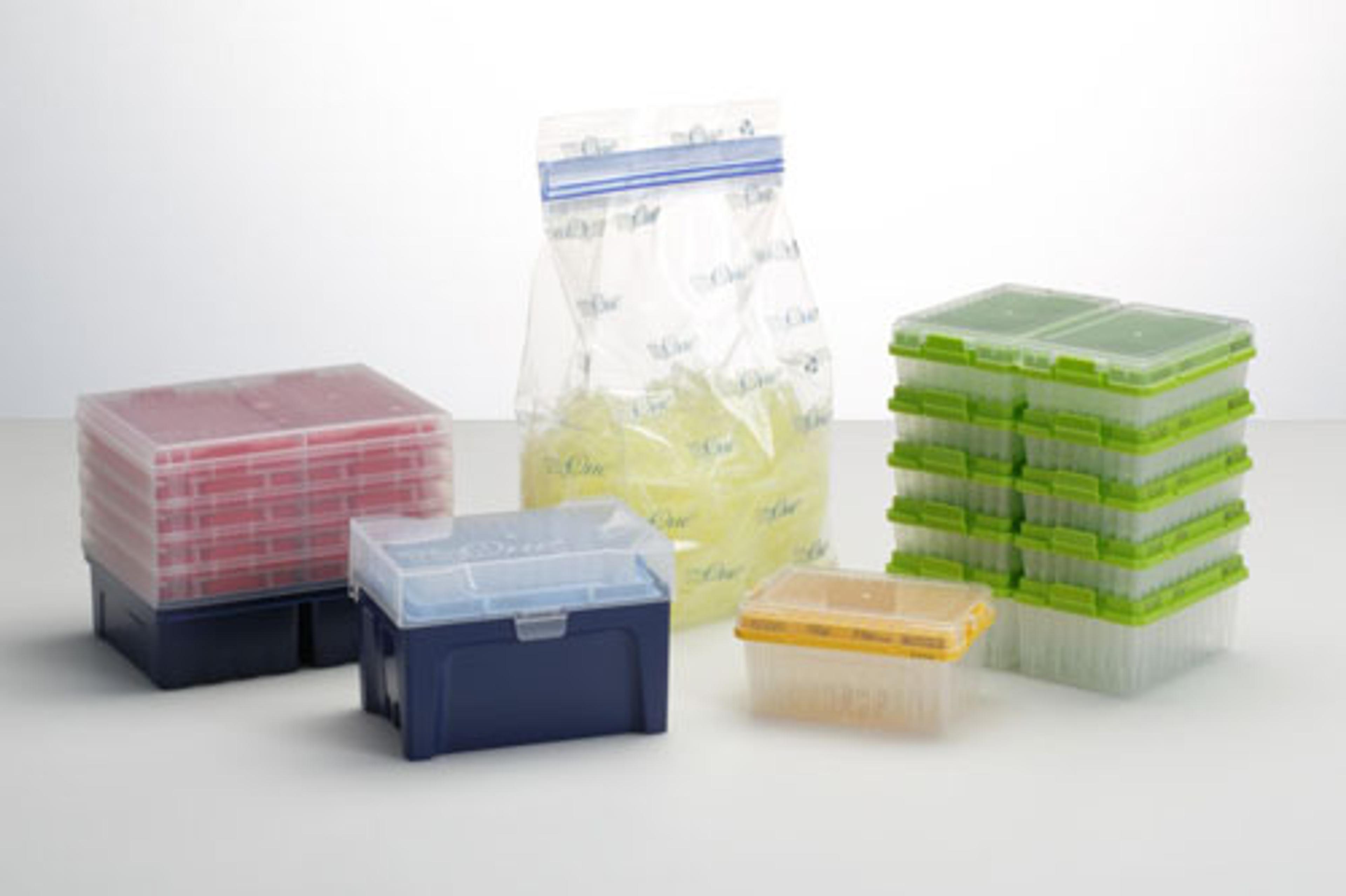
TipOne® Pipette Tips
StarlabA system with a system! Every part of the system is interchangeable with the rest. The system is reusable, refillable and recyclable.