Gilson Launches EXTRACTMAN® Magnetic Bead Extraction Platform

EXTRACTMAN® from Gilson enables isolation of new drug targets with an innovative protein extraction technology

30 Aug 2016
Weylan Kiam-Laine
Microbiologist

Product news

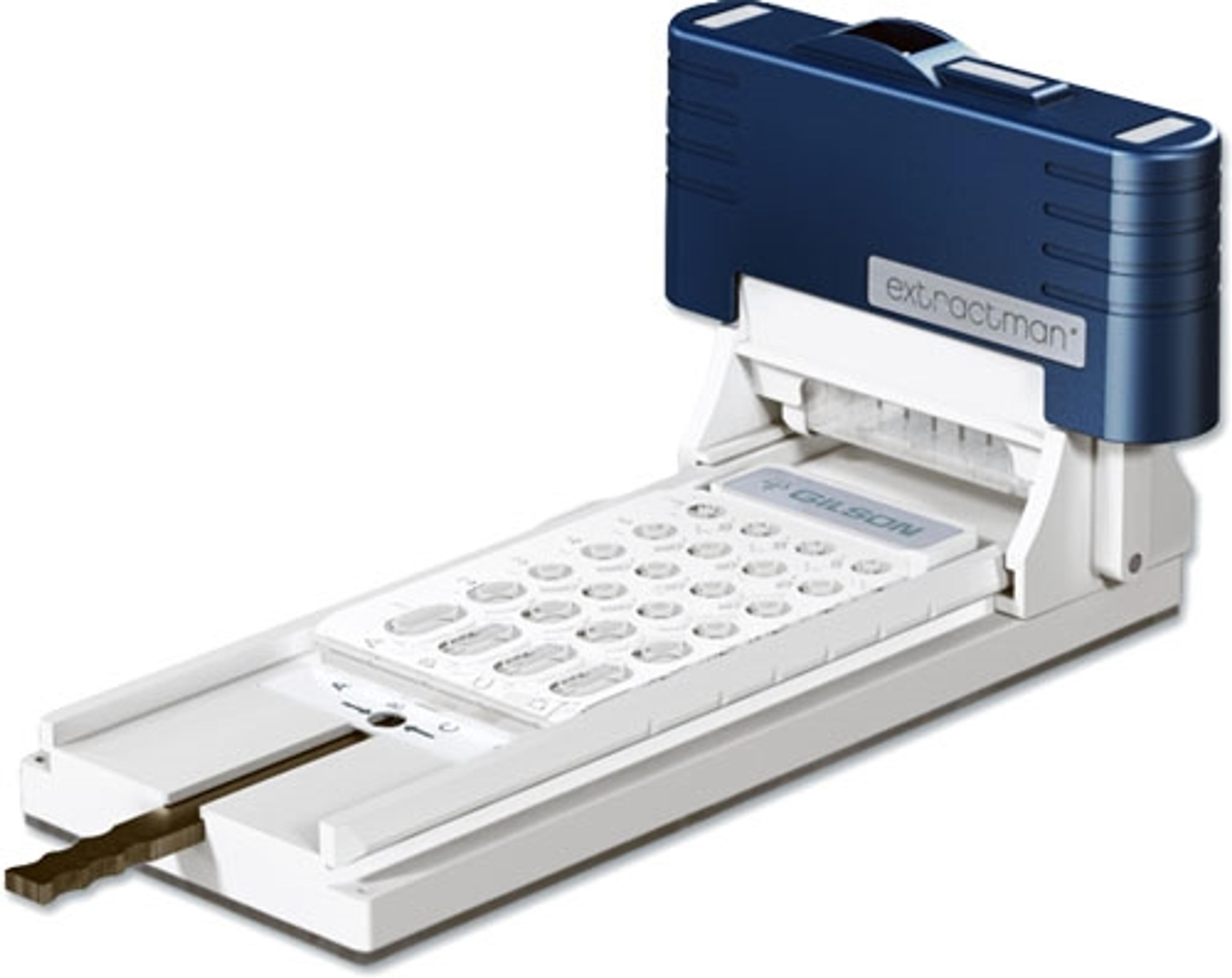
Gilson announces the launch of EXTRACTMAN®, an innovative biomolecule extraction platform that enables researchers to better study complex protein interactions that are critical for drug target identification and a wide variety of topics in proteomic research. EXTRACTMAN® is ideal for protein interaction studies because it can isolate weak interactors and transiently bound complexes that traditional isolation techniques leave behind. These weak interactors represent potentially unseen targets that are integral to fully understanding protein functions, molecular mechanisms, post-translational modifications and cell signaling cascades.

Protein isolation using EXTRACTMAN® can be performed in significantly less time compared to more traditional tube-based magnetic bead procedures, with up to four samples isolated in parallel in as little as 30 seconds. The EXTRACTMAN® protocol is also ideal for capturing weakly bound protein-protein and cell-protein complexes because they are not exposed to the high shear forces generated by multiple pipette-based wash steps and require less time in pro-dissociating wash buffers.

EXTRACTMAN® leverages Exclusion-based Sample Preparation™ (ESP™) technology developed by Salus Discovery. ESP™ technologies replace the multiple wash and transfer pipetting steps of current paramagnetic bead separation products with a single pass of the magnetic slide of the EXTRACTMAN® device. After paramagnetic beads are allowed to bind the target protein in a sample, an upper magnet captures the beads. They are then moved through a series of wash wells on the single-use bead capture strips. A second, lower magnet can temporarily disengage the upper magnet, allowing beads to gently move through each wash solution. Ultimately, the paramagnetic beads are collected in a final elution well. The innovative design and setup of the single-use bead capture strips and microplates prevent carryover and cross-contamination as the paramagnetic beads are processed.

EXTRACTMAN® uses many commercially available paramagnetic beads, making it easy to adapt existing protocols. EXTRACTMAN® allows for up to four protein isolations to be run in parallel for even more speed and sample preparation consistency, and can be adapted to multiple wash steps.

Links

Tags

ProteomicsProteomics is the systemic bioinformatics study of proteins and amino acids, including their structure, size, function and identification. Tools used in proteomics include chromatography, blotting and gels, protein arrays, mass spectrometry and ELISA and associated analysis software. Analyzers and proteomic systems should be sensitive, high resolution, fast and may be automated for high-throughput.Cell-Based AssaysCell-based assays are used to monitor the presence, quantity and activities of a desired cellular analyte including drug molecules or biomarkers. This can reveal information on cell health (apoptosis, cytotoxicity, viability and proliferation assays), cell metabolism, cell migration and cell signaling mechanisms. Find the best cell-based assay products, kits and equipment with our peer reviewed product directory: compare products, check customer reviews and receiving pricing direct from manufacturers.Protein PurificationProtein purification is a vital step in drug discovery, therapeutics, biotech and life science research. The purification process typically involves subcellular or membrane protein extraction with cell lysis kits, separation of proteins from cell debris by filtration or spin columns, and the isolation of proteins of interest from other proteins and impurities with affinity purification (including fusion protein tags and antibody binding proteins A, G and L), immunoprecipitation or chromatographic methods, such as ion exchange, size exclusion and immobilized metal affinity chromatography. All purification methods come in multiple formats for your laboratory needs, including agarose or magnetic beads, resins, columns and filter plates. Find the best protein purification equipment in our peer-reviewed product directory: compare products, check customer reviews and receive pricing direct from manufacturers.Gene Expression and Molecular CloningMolecular cloning is a set of techniques that utilizes vectors to transfer recombinant DNA into host cells and is an essential tool for investigating the expression of genes and proteins in bacterial or mammalian cells. A variety of vectors optimized for gene cloning and expression in a range of host organisms are available, alongside competent cells for genetic replication. Here, you can explore a range of molecular tools, high-quality genomic and cDNA libraries, premade clones, transformation and transfection reagents and mutagenesis or gene expression detection assays and expression arrays. Find the best gene expression and molecular cloning products in our peer-reviewed product directory: compare products, check customer reviews and receive pricing direct from manufacturers.Bioprocessing / FermentationBioprocessing is the use of biological materials to perform commercial, scientific or medical research processes. Biological materials used include cells, enzymes and organisms. Usually bioprocessing requires a batch or continuous bioreactor such as a fermentor or cell culture system. The advantages of using a reactor include high productivity, easy configuration, adjustable values and automation.Magnetic BeadsProtein InteractionsProtein interactions are essential for understanding cellular processes, as proteins work together to carry out biological functions. Studying protein interactions can provide insights into disease mechanisms, drug development, and cell signaling pathways. Explore the best tools for protein interaction research in our peer-reviewed product directory; compare products, check reviews, and get pricing directly from manufacturers.Post-Translational ModificationsDrug DiscoveryDrug discovery is the process of identifying potential new medications, involving stages such as target identification, compound screening, and preclinical development. It relies on cutting-edge technologies like high-throughput screening, artificial intelligence, and molecular modeling to accelerate the identification of drug candidates. Drug discovery plays a pivotal role in developing new therapies for diseases ranging from cancer to rare genetic disorders. Browse our peer-reviewed product directory to find the latest drug discovery technologies, compare options, check customer feedback, and get pricing directly from manufacturers.Cell Signaling
Gilson Launches EXTRACTMAN® Magnetic Bead Extraction Platform