Genedata automates biopharma R&D with seamless integration of lab equipment
Thermo Fisher Scientific–Genedata collaboration aims to accelerate the discovery and development of next-generation biotherapeutics
14 Jul 2020
Industry news
Genedata, the leading provider of enterprise software solutions for biopharmaceutical R&D, have announced a collaboration with Thermo Fisher Scientific, a leading international pharmaceutical and laboratory equipment supplier, to integrate the two platforms to provide seamless automation of biopharma R&D operations.
The combined platform directly imports raw instrument data from Thermo Fisher Scientific instruments into the Genedata platform, where the data can be processed and interpreted with all other data collected along the entire biopharma R&D workflow. The centralized platform makes it possible for scientists to integrate and digitalize automation systems for sample handling, lab operations, and testing, and digitally trace all results for every sample to make data-driven decisions that expedite R&D breakthroughs.
“Our collaboration with Genedata will enable biopharma companies to fully integrate R&D automation platforms for the direct capture, processing, and analysis of the large amount of data being produced by today’s high-throughput robotic systems. Scientists can now do more experiments in a shorter time and maximize their lab automation investments,” said Hansjoerg Haas, Senior Director, Lab Automation, Thermo Fisher Scientific. “By bringing together Thermo Fisher’s automation systems and the Genedata Biopharma platform, all molecule, sample, assay, and analytics data across both instruments and processes are fully integrated, enabling traceability for molecules, samples, results, and processes. This gives researchers the power to make data-based decisions and uncover insights not possible before.”
Thermo Fisher and Genedata are implementing standard integration interfaces to easily set up and operate Thermo Fisher’s lab equipment and robotics with the Genedata Biopharma platform, which acts as a workflow backbone connecting all information from early discovery to development. The newly integrated platform supports complex sub-workflows such as cherry picking, plasmid construction, antibody expression and expansion, and plasmid and antibody purification, and drives significant efficiency gains along the full biopharma R&D workflow. The integration includes both Thermo Fisher laboratory instruments and Thermo Fisher Momentum software.
“We are pleased to welcome Thermo Fisher as our latest lab automation Ready-to-Run™ partner,” said Othmar Pfannes, Ph.D., CEO of Genedata. “Biopharmaceutical and biotech companies already automate complex laboratory workflows using our seamless integration with lab equipment from many major instrument providers. Our customers expect data traceability across the entire biopharma R&D workflow and by further automating integration of lab instrument data, we are providing a central and structured database for every experimental sample, result, and process. This supports the growing demand for data-driven drug discovery.”
Do you use Genedata or Thermo Fisher Scientific products in your lab? Write a review today for your chance to win a $400 Amazon Gift Card>>
Related products
Request Quote for All Products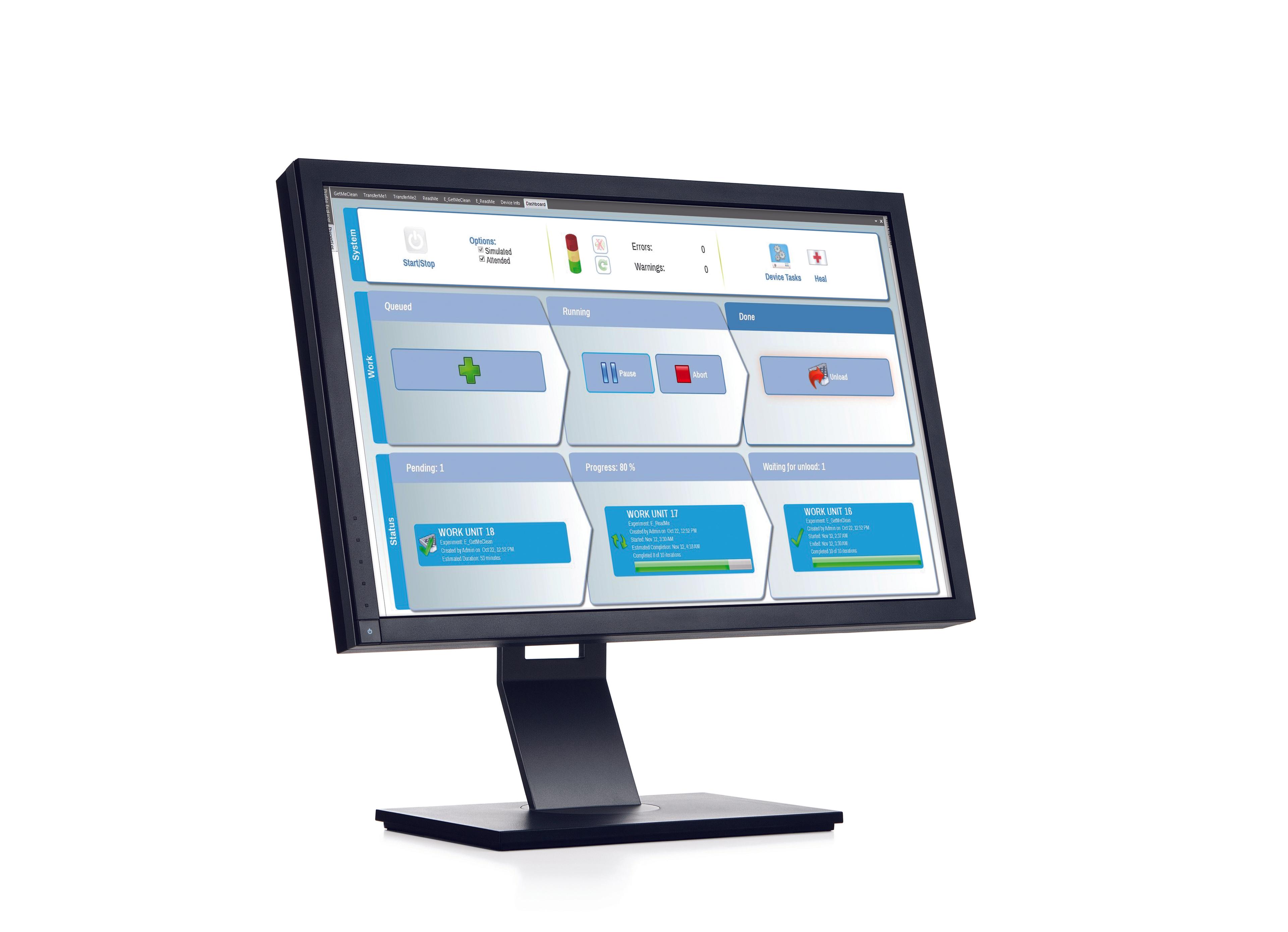
Thermo Scientific™ Momentum™ Workflow Scheduling Software
Thermo Fisher ScientificAchieve new levels of automation performance with the Thermo Scientific™ Momentum™ Workflow Scheduling software- an industry-leading software platform that enables users to define, execute, and monitor scientific processes and workflows in a powerful yet easy-to-use visual environment. Its intuitive scheduling interface, intelligent data-driven decision-making capabilities, superior connectivity and flexible simulation modes helps attain superior performance