
Gene therapy: Reliable capsid titer quantification for AAV-based therapeutics
Guest editorial: Technology to meet the challenge of efficiency in the regulated AAV vector space
22 Mar 2021
Editorial article
In this guest editorial, based on a blog post by Gyros Protein Technologies, learn how scientists at AstraZeneca developed a reliable method for adeno-associated virus (AAV) capsid titer quantification.

Vectors based on AAV are used widely in gene therapy for in vivo gene delivery. The success of AAV-based therapeutic production depends on the availability of laboratory tools that can efficiently deliver reliable data, including the determination of virus particle titer (physical titer). To achieve this, a team at AstraZeneca searched for an immunoassay platform that could improve on ELISA in terms of dynamic range, sample volume, and productivity. Its evaluation showed that Gyrolab® system met its needs for AAV process development, with a more reliable measurement of AAV capsid titer for in-process and purified samples.
AAV and the gene therapy explosion
Gene therapy has seen a massive explosion in activity since the first clinical trial in 1989, and, by the latter half of 2020, had engaged 536 advanced therapy developers, with 373 clinical trials ongoing1. There are currently three gene therapy products approved by the US Food and Drug Administration (FDA), and the field continues to expand with more than 900 investigational new drug (IND) applications for ongoing gene therapy clinical studies2.
Recombinant vectors based on the non-pathogenic AAV are currently one of the most widely used vehicles for delivery in gene therapy. Different serotypes of AAV can be used to specifically target certain tissues and organs and are the subject of intensive research to improve their properties. AAV has also been used in a vaccine against COVID-19.
The challenge of being efficient in the regulated AAV vector space
Regulatory authorities are increasing their support for initiatives in cell and gene therapy, resulting in new guiding documents on gene therapy manufacturing and clinical development of products3, but there are issues with inconsistent directives that are confounding manufacturing efforts4.
Some of the biggest challenges in manufacturing AAV therapeutics concern chemistry, manufacturing, and control (CMC). Gene therapy drugs often target rare diseases with trials involving only 10–20 participants, and yet organizations must conduct all the CMC operations normally required for product commercialization in much larger manufacturing batches.
The search for analytical tools to meet regulatory needs
Advances in AAV-based therapeutics range from vector engineering to increasing transduction efficiency, to fine-tuning tissue tropism, and the avoidance of host immune response activation, as well as optimization of the small- and large-scale vector production. Support of bioprocess development relies on the availability of fit-for-purpose analytical tools to assess potential critical quality attributes (pCQAs) that are relevant to characterization and lot release testing. In the case of AAV-based therapeutics, this includes the ability to determine the concentrations of viral genomes (genome titer) and viral particles (capsid titer). Genome titer can be determined by PCR, but determining the capsid titer is more of a challenge.
How to quantify AAV capsid titer over a broad analytical range and with low sample volumes
In a recent webinar on capsid titer quantification for AAV-based therapeutics, AstraZeneca scientist Dr. Tomasz Witkos talks about how miniaturized immunoassays can be used to measure purified AAV vector as well as in-process samples and how the immunoassay experimental setup can be modified to measure several AAV serotypes.
He describes the need for a method to measure titer that could meet several criteria:
- Detects intact capsids only (full or empty)
- Does not detect free proteins associated with capsids
- Uses a minimal sample volume (especially in early drug development)
- Large dynamic range to avoid repeat analyses
- Low matrix interference to be able to handle a range of bioprocess samples
- High specificity resulting from the combination of capture and detection antibodies
- Automation to reduce hands-on time and improve productivity
The drive to engineer recombinant AAVs to improve their properties can make capsid titer determination a challenge. The few commercial kits available for measuring capsid titer did not meet AstraZeneca’s needs in terms of dynamic range and accuracy. The team also needed a kit that could handle small sample volumes, preferably on an automated platform to save time.
In the webinar, Witkos presents an immunoassay developed on Gyrolab platform with AAV serotype-specific antibodies that can reliably measure AAV capsid titer in purified and in-process samples, delivering accurate and precise data suitable for AAV process development. The assay is versatile, with an antibody pair comprising a capture antibody that recognizes a broad range of AAV serotypes and another that is serotype-specific.
This assay setup can be readily adapted to titer measurements of various AAV serotypes and has a broader quantification range (3 – 3.5 logs) compared to a commercially available capsid ELISA kit (1 – 1.5 logs). The Gyrolab assay could be used to test neat samples and at low dilutions, which increases reproducibility compared to ELISA, which requires greater than 1,000x dilutions. Throughput was estimated at 50 samples in four dilution series in a 5-CD run, with reproducibility in the range of 10–15 % CV. The team also appreciates Gyrolab Viewer as a very valuable tool to spot any issues with AAV particle aggregation.
Find out more about how Gyrolab system is improving the productivity of gene therapy efforts at AstraZeneca, by watching the Gyros Protein Technologies webinar, Capsid titer quantification for AAV-based therapeutics.
Discover the new Gyrolab AAVX Titer Kit – when used in combination with Gyrolab system, this kit is designed to quickly deliver high-quality titer data for AAV serotypes 1–8 and AAVrh10 using smaller sample volumes compared to ELISA.
References
Alliance for Regenerative Medicine, Q3 2020 Trend Talk.
FDA Continues Strong Support of Innovation in Development of Gene Therapy Products — Guidances issued today provide regulatory clarity for product developers. FDA News release 2020
FDA's Efforts to Advance the Development of Gene Therapy. Marks, P., Center for Biologics Evaluation and Research, 2019.
Petrich J, Marchese D, Jenkins C, Storey M, Blind J. Gene Replacement Therapy: A Primer for the Health-system Pharmacist. J Pharm Pract. 2020
Related products
Request Quote for All Products
Gyrolab® AAVX Titer Kit
Gyros Protein TechnologiesThe Gyrolab® AAVX Titer Kit determines AAV serotypes 1-8 and AAVrh10 titer in samples from process development and in the manufacturing of AAV viral vectors
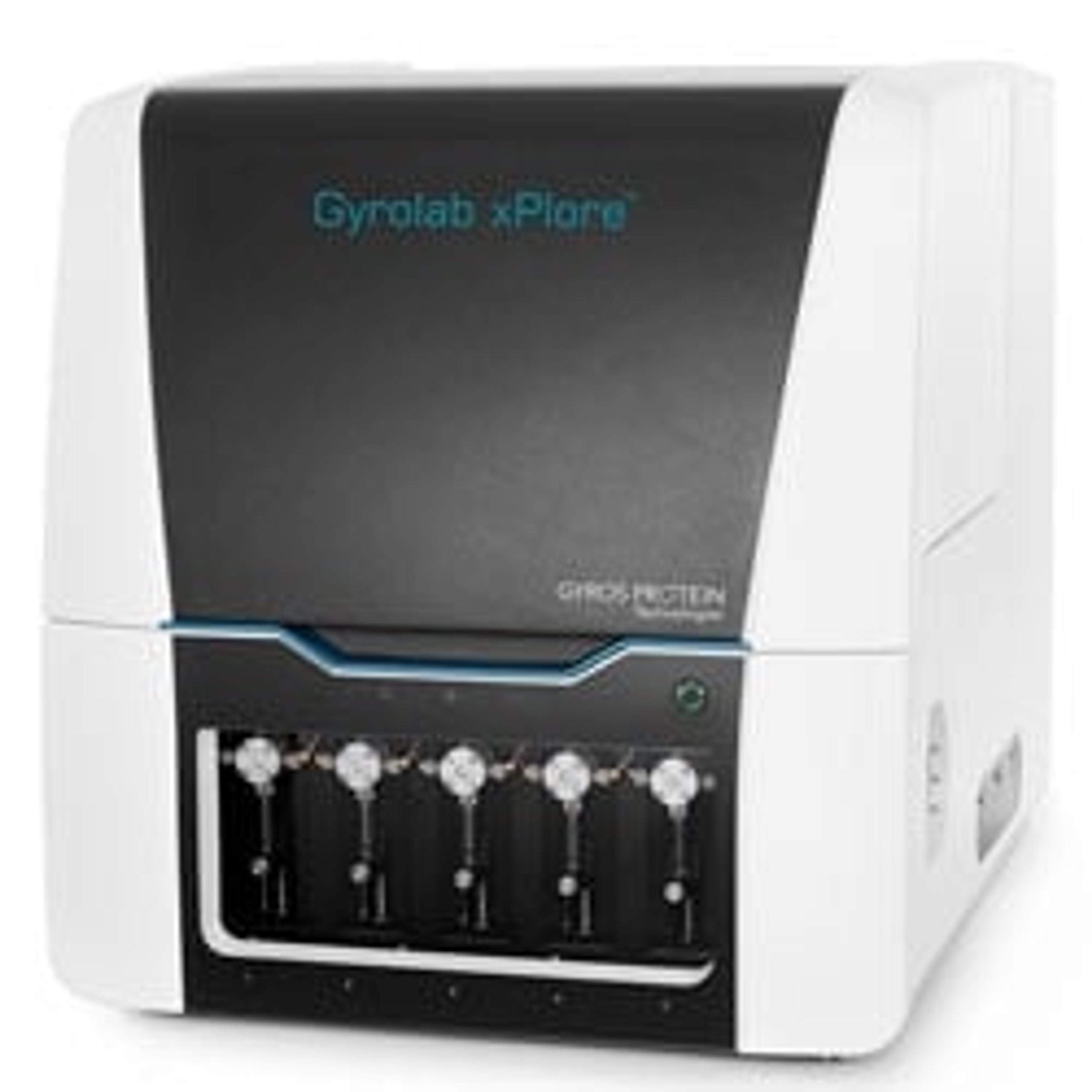
Gyrolab xPlore™ immunoassay system
Gyros Protein TechnologiesGyrolab xPlore is a single-CD, cost-effective microfluidic immunoassay platform for unattended parallel processing of 96 or 112 data points in one hour.
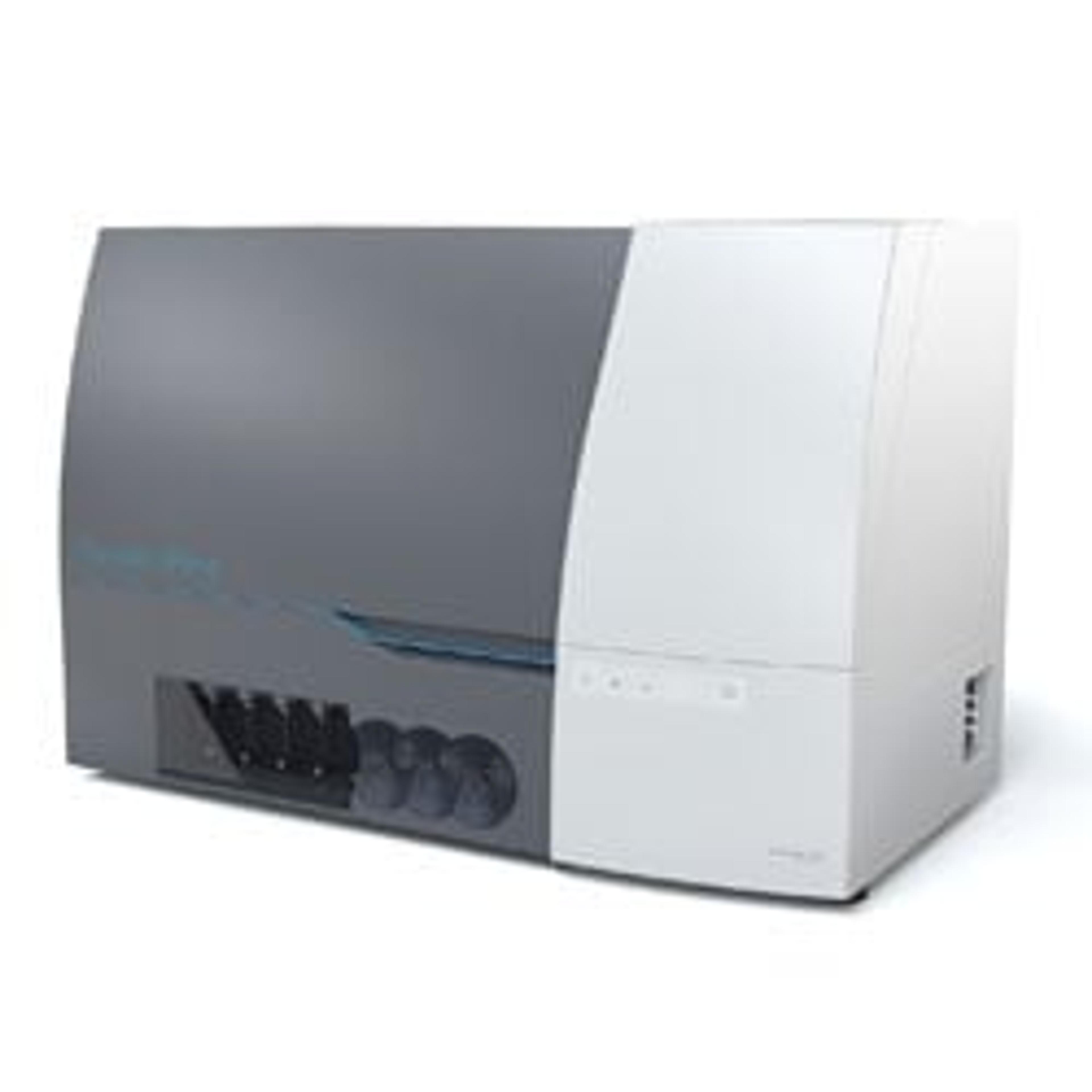
Gyrolab® xPand immunoassay system
Gyros Protein TechnologiesGyrolab xPand is a high-throughput, compact disk (CD) based microfluidic immunoassay platform for unattended parallel processing of up to 5 CDs, generating 560 data points in 5 hours.