Gamry Partner Protochips Advances Liquid in situ Electron Microscopy

8 May 2016
Alex Waite
Editorial Assistant

Industry news

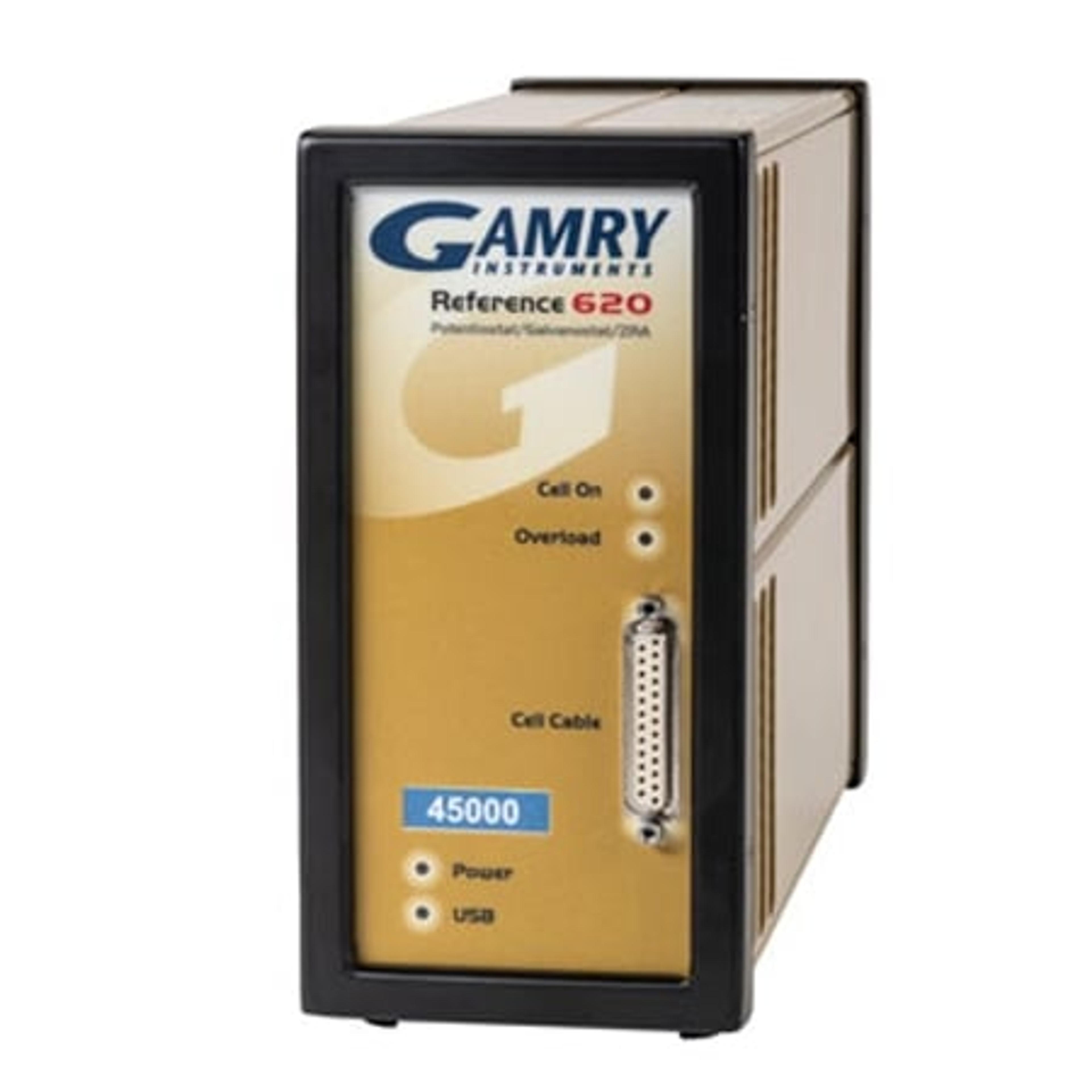
The Poseidon Select electrochemistry system partnered with a Gamry Reference 600+ potentiostat facilitates the study of dynamic nanoscale processes in the transmission electron microscope (TEM).

Researchers can probe complex processes, such as lithium-ion batteries, fuel cells, and corrosion in order to better understand the fundamental mechanisms and develop new materials. The Poseidon system includes a dedicated in situ microfluidic TEM holder, Gamry Reference 600+ potentiostat and syringe pump. Samples are contained in a liquid environment between a large and a small microchip (called E-chips™). In order to simultaneously acquire electrochemical data and images in the TEM, a three electrode circuit, which includes a working, reference and counter electrode, is integrated into an E-chip loaded in the tip of the TEM holder.

In partnership with Gamry, the Poseidon system has been designed with a number of unique elements that resolve the small currents expected in a miniature cell while maintaining imaging and analytical data collection. Contacts in the TEM holder and a protective coating on the E-chips both prevent the electrolyte from reacting with any parts of the cell except the electrodes.

An example of true quantitative electrochemical studies in an electron microscope has been accomplished by L. Mehdi and N. Browning at the Joint Center for Energy Storage Research at Pacific Northwest National Lab in Richland, WA used the Protochips Poseidon system to observe the charge/discharge process of lithium-ion batteries in solution using scanning TEM (STEM). The Poseidon system enables researchers to image and quantify the growth and evolution of the SEI layer as well as the resulting formation of lithium dendrites on the surface of the anode during successive charge/discharge cycles.

A series of real-time STEM images of the working electrode (WE) was acquired as the electrochemical potential of the cell was simultaneously cycled from 0 to -4 volts. At the start of the first cycle, the surface of the platinum working electrode is pristine and all the lithium is dissolved in the electrolyte solution. As the battery is charged, lithium is deposited on the surface of the working electrode and surface roughening is observed as the lithium is not deposited in an even layer. Discharging of the battery during the first cycle leads to a reduction in lithium on the electrode surface, however lithium dendrites remain on the surface of the electrode and do not redissolve in the electrolyte. This process is continued in cycles two and three, and each subsequent cycle leads to an increase in the number and size of the lithium dendrites on the electrode surface.

Links

Tags

Atomic Absorption / Emission SpectroscopyAtomic absorption spectroscopy (AAS) and atomic emission spectroscopy (AES) — also called optical emission spectroscopy (OES) — are used to detect the elemental constituents in samples. Both techniques involve the atomization of a sample. Atomic absorption spectrometers may use a flame or furnace to create an atomic vapor of the sample before irradiation with spectral light. Optical emission spectrometers may use a flame, inductively coupled plasma (ICP), microwave plasma (MP) or spark arcs to atomize and excite the sample. At higher excitation energies, electrons can be emitted instead of photons, which can be useful for samples that can’t be atomized and for surface analysis. Explore electron spectroscopy equipment such as Auger spectrometers and photoelectron spectrometers for surface elemental analysis of samples. Find the best atomic absorption, photoelectron and optical emission spectrometers in our peer-reviewed product directory: compare products, check customer reviews and receive pricing direct from manufacturers.pH Meters and ElectrodesIon and pH meters are electrochemical equipment used to measure the pH (acidity or alkalinity) or specific ion concentration of a solution. Other meters can also measure the conductivity or dissolved oxygen content of a solution. pH meters, specific ion meters, conductivity meters and dissolved oxygen meters can come as benchtop or portable equipment. A meter’s electrodes can be replaced with easy to clean electrodes or electrodes for difficult media. pH, ion and conductivity meters are typically used in life science research, pharmaceutical testing, food and beverage, environmental and water analysis. Find the best pH meters and electrodes in our peer-reviewed product directory: compare products, check customer reviews and receive pricing direct from manufacturers.Sample ManagementSample management systems include sample storage devices such as freezers and plate storers, sample environment enclosures and sample organization, retrieval and sorter systems. Useful system features include high-throughput, automation, robotic arms, automated liquid handling and associated database systems. Accessories in sample management include barcode scanners, heat sealers and tubes.NanotechnologyNanotechnology, or nanotech, is an engineering technique using molecular scale functional systems. Applications of nanotechnology include medicine and medical devices, electronics, air and water purification, food science and energy production.Robotic InstrumentsRobotic instruments can be used for high-throughput automation of many lab processes. Such processes use instruments for assays like cell based assays and ELISA, for sample preparation like shakers, centrifuges and incubators, and for analysis such as sequencing and western blot analyzers. Useful features of robotic instruments include speed, reproducibility, barcode readers, software and automation.Software PlatformsSoftware platforms are useful for various stages of laboratory experiments from data collection to data storage and processing. For instance lab software is available for system control, data management, data analysis and qualification / validation.Electron MicroscopyElectron microscopes (EM) are used to create high-resolution images of samples at the nanoscale by means of an accelerated beam of electrons as a source of illumination. Types of electron microscope include scanning electron microscopes (SEM), transmission electron microscopes (TEM), scanning transmission electron microscopes (STEM) and cryo-electron microscopes. Focused ion beam (FIB) microscopes are useful for modifying or milling a sample surface with nanometer precision, as well as imaging. Find the best electron microscopes in our peer-reviewed product directory: compare products, check customer reviews and receive pricing direct from manufacturers.Sensor ChipImagingImaging techniques are essential for obtaining visual representations of samples to understand structures, processes, and function in biological, chemical, and physical research. These tools range from traditional light microscopy to advanced imaging modalities like MRI and electron microscopy, providing researchers with valuable data for diagnostics, drug discovery, and material analysis. Explore imaging solutions in our peer-reviewed product directory to compare products, check reviews, and get pricing directly from manufacturers.ElectrophysiologyMicroscopyMicroscopy is a technique used to observe small objects in detail, from cells to materials, using light or electron microscopes. It enables researchers to examine structures with high resolution, aiding in fields such as biology, medicine, and materials science. With advanced microscopy techniques, scientists can gain insights into cellular processes, tissue structures, and material properties. Explore the best microscopy solutions in our peer-reviewed product directory, compare products, read customer reviews, and get pricing directly from manufacturers.NanostructuresSEMScanning Electron Microscopy (SEM) is a technique that uses a focused electron beam to scan a sample and create high-resolution images. It is widely used in materials science, nanotechnology, and biological research. Explore SEM systems in our peer-reviewed product directory; compare products, check reviews, and get pricing directly from manufacturers.Digital ImagingDigital imaging is a technique that captures images of biological and chemical samples in high resolution, often using advanced cameras and sensors. This technology is crucial in microscopy, diagnostics, and quality control. Explore digital imaging systems in our peer-reviewed product directory; compare products, check reviews, and get pricing directly from manufacturers.TEM