Future Focus: Next Steps for Preventing the Antimicrobial Resistance Apocalypse

How research at the AMR Centre, UK, is accelerating the fight against antimicrobial resistance

2 Mar 2018
Lui Terry
Administrator / Office Personnel

Editorial article

Dr. Peter Jackson, Executive Director of the AMR Centre An experienced life sciences entrepreneur, Dr. Jackson has founded six life sciences ventures over the past 10 years. Before that, he had over 15 years’ experience in the sector, previously holding senior executive roles as a commercial director and then head of Avecia’s Pharmaceutical Products business unit, following senior commercial and R&D positions at Zeneca and ICI. Dr. Jackson was also a founder director of the National Skills Academy for Process Industries.

Antimicrobial resistance (AMR) is the ability of a microorganism to prevent an antimicrobial agent - such as antivirals or antibiotics - from working effectively against it and is considered a growing threat to human health. Scientists around the world are working hard to find ways to fight the challenge posed by this phenomenon, through the development of new drugs, vaccines and infection diagnosis. In this SelectScience® interview, Dr Peter Jackson, Executive Director of the AMR Centre, UK, explains how his team is helping to lead the response to this complex global issue.

What is the AMR Centre?

The AMR Centre is a UK public-private partnership focused on antimicrobial resistance research and devlopment and an alliance member of the transatlantic CARB-X initiative. Based at Alderley Park, Cheshire, the AMR Centre aims to support and accelerate the development of new antibiotics and diagnostics through a fully integrated development capability.

Why does the centre work on antimicrobial resistance, rather than just antibiotic resistance?

We have adopted the internationally recognized acronym AMR and are currently focused on the World Health Organisation’s (WHO) critical target microbial pathogens. We’re not just working on conventional antibiotic medicines - new approaches to breaking resistance mechanisms are equally important and will be a key part of our work going forward.

Tell us about some of the projects you are working on at the AMR Centre

The AMR Centre has already signed its first deals. One is a partnership with Massachusetts clinical-stage drug development company, Microbiotix Inc. The centre has also reached an agreement with Stockholm-based Medivir to take part in a key research program to tackle the threat posed by an enzyme that makes bacteria resistant to widely used antibiotics such as penicillin. Its latest collaboration, with the UK’s EligoChem, will see the development of antimicrobial peptides to target the most critical drug-resistant organisms.

The AMR Centre team is accelerating the fight against antimicrobial resistance

Which laboratory technologies and methods are most important for advancing antimicrobial resistance research?

We are focused on pre-clinical development which requires advanced microbiology and medicinal chemistry, as well as related disciplines such as DMPK, formulation science and in vivo pharmacology.

We are seeing the need for a multi-disciplinary approach as some of the new technologies targeting AMR involve combinations of drugs. For example, the metallobetalactamase inhibitor (MBLI) program from Medivir that we are working on aims to knock out a critical resistance mechanism and will be used in combination with a conventional antibiotic to overcome AMR.

Alongside this, we are also striving to introduce new technologies to speed up the development process and minimize the use of in vivo models. A good example of this is the hollow-fibre DMPK models developed by our collaborator and SAB member, Professor William Hope, from Liverpool University.
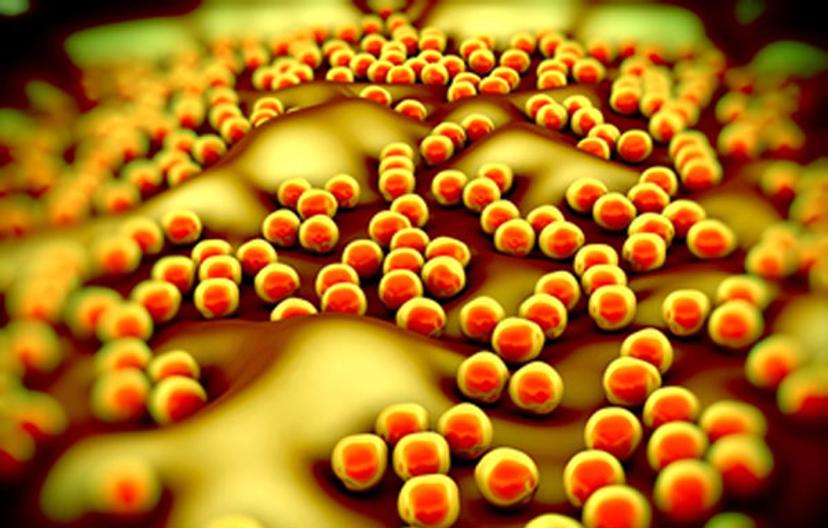
The spread of drug resistant superbugs poses a global threat image: royaltystockphoto © 123RF.com

What do you see for future research at the AMR Centre?


Microbes will continue to evolve to challenge us, so we need to have the brightest and best people engaged and prepared for whatever the future throws at us.

Dr. Peter Jackson  Executive Director of the AMR Centre


Our current focus is working with our SME partners to bring their programs to clinical trial as quickly as possible.

In 2018, we will be scaling this up to accommodate more programs at the ‘lead optimization’ stage. We will also be adding a specialist clinical project management team to prepare programs for clinical trials, including obtaining the required regulatory approvals for first-in-human (phase 1) clinical testing.

What do you think will be the biggest achievements in antimicrobial resistance research in the next 20 years?

The most important objective shared by all the international initiatives will be to make sure that we have new drugs, diagnostics and vaccines to prevent the AMR apocalypse forecast by the O’Neill Review.

My personal objective goes beyond this: we need to make sure that we have developed a new generation of scientists in universities and industry who will continue to work on new treatments. AMR is not a one-time phenomenon. Microbes will continue to evolve to challenge us, so we need to have the brightest and best people engaged and prepared for whatever the future throws at us.

Visit the SelectScience Future of Science special feature to find out what leading scientists worldwide have to say about the next 20 years of science and how it will affect our lives.

Links

Tags

ProteomicsProteomics is the systemic bioinformatics study of proteins and amino acids, including their structure, size, function and identification. Tools used in proteomics include chromatography, blotting and gels, protein arrays, mass spectrometry and ELISA and associated analysis software. Analyzers and proteomic systems should be sensitive, high resolution, fast and may be automated for high-throughput.MicrobiologyMicrobiology is the study of microorganisms including protists, prokaryotes, fungi, and, often, viruses. Microorganisms are a useful research tool as genetic vectors and, in immunology, for antibiotic susceptibility testing, cellular biology and genetics. Microorganisms commonly grow readily in incubators with microbial culture media; this can contain chromogenic supplements to differentiate between cell lines. Estimate your culture’s density of microorganisms with colony counters, or screen and select colonies for desirable clones with automated colony pickers. Additionally, equipment is available to monitor environments for the presence of microbes and identify with microbial identification instruments. Find the best microbiology products in our peer-reviewed product directory: compare products, check customer reviews and receive pricing direct from manufacturers.Flow Cytometry / Cell CountingFlow cytometers are used to count, sort and examine multiple characteristics of cells. Other cell analysis equipment includes image cytometers, cell counters, fluorescence-activated cell sorters (FACS), magnetic-activated cell sorters (MACS), and a range of flow cytometry assay kits. Flow cytometers can reveal information on cell viability, cell proliferation, apoptosis and cell cycle progression, as well as identify cell populations and intracellular or cell-surface molecules. Additionally, some flow cytometers, known as FACS, have an additional sorting function after analysis. Cell counters and image cytometers count live and dead cell populations and can also conduct cell proliferation assays. Find the best flow cytometers, cell counters and cell sorters in our peer-reviewed product directory: compare products, check customer reviews and receive pricing direct from manufacturers.Microarray AnalysisMicroarrays, also known as biochips, are used for the detection and analysis of multiple genes, proteins, antibodies, or biomarkers on a single microchip. This can reveal information on protein or gene expression, single nucleotide polymorphism (SNP), copy number variation (CNV), epigenetics and patient health in clinical diagnostic tests. Discover a range of microarray scanners and prefabricated antibody, protein, RNA and DNA microarrays for your analysis or consider creating your own custom microarrays with a microarray printer. Find the best microarray products in our peer-reviewed product directory: compare products, check customer reviews and receive pricing direct from manufacturers.Cellular PathologyCellular Pathology deals with the microscopic analysis of tissue samples and cells. Sample preparation and processing includes fixation, staining, sectioning and slide mounting, using equipment such microtomes and cryostats. In choosing immunohistochemistry and immunocytochemistry kits, consider chromogens, staining method, antibodies, microscopes and imaging.Protein PurificationProtein purification is a vital step in drug discovery, therapeutics, biotech and life science research. The purification process typically involves subcellular or membrane protein extraction with cell lysis kits, separation of proteins from cell debris by filtration or spin columns, and the isolation of proteins of interest from other proteins and impurities with affinity purification (including fusion protein tags and antibody binding proteins A, G and L), immunoprecipitation or chromatographic methods, such as ion exchange, size exclusion and immobilized metal affinity chromatography. All purification methods come in multiple formats for your laboratory needs, including agarose or magnetic beads, resins, columns and filter plates. Find the best protein purification equipment in our peer-reviewed product directory: compare products, check customer reviews and receive pricing direct from manufacturers.Clinical TrialsClinical Trials, an essential part of drug discovery process, assess the safety and effectiveness of a new medication or device in the pharmaceutical industry. Clinical Trials are a phased process (Phase 0, Phase I, Phase II, Phase III and Phase IV) which begins after initial preclinical testing.Clinical MicrobiologyMicrobiology is the study of microorganisms including protists, prokaryotes, fungi, and, often, viruses. Microorganisms are a useful research tool as genetic vectors and, in immunology, for antibiotic susceptibility testing, cellular biology and genetics. Microorganisms commonly grow readily in incubators with microbial culture media; this can contain chromogenic supplements to differentiate between cell lines. Estimate your culture’s density of microorganisms with colony counters, or screen and select colonies for desirable clones with automated colony pickers. Additionally, equipment is available to monitor environments for the presence of microbes and identify with microbial identification instruments. Find the best microbiology products in our peer-reviewed product directory: compare products, check customer reviews and receive pricing direct from manufacturers.Bioprocessing / FermentationBioprocessing is the use of biological materials to perform commercial, scientific or medical research processes. Biological materials used include cells, enzymes and organisms. Usually bioprocessing requires a batch or continuous bioreactor such as a fermentor or cell culture system. The advantages of using a reactor include high productivity, easy configuration, adjustable values and automation.AntimicrobialsAntibiotic ResistanceAntibiotic resistance poses a significant threat to public health driving innovation and change through antibiotic stewardship efforts. Ongoing research and diagnostic efforts focus on new treatments and detection methods. Explore antibiotic resistance research and diagnostic tools in our peer-reviewed product directory; compare products, check reviews, and get pricing directly from manufacturers.