
Fundamentals of advanced spectral cell analysis using the ID7000™ system
Watch this on-demand webinar for expert insight into spectral cell analysis and how it may be used to generate parametric data
28 Mar 2021
Expert insights

In an on-demand SelectSciencewebinar, Jeff Clapper, Senior Field Applications Scientist at Sony Biotechnology, explains the fundamentals of spectral cell analysis, and how parametric data can be derived from spectral data via spectral unmixing. The key aspects of spectral cell analysis discussed are centered around the ID7000™ spectral cell analyzer from Sony.
Register nowClapper also outlines the fundamentals of generating reference spectra and its application within spectral unmixing. He then summarizes the research benefits of incorporating an autofluorescence reference spectrum during unmixing and highlights the value of employing highly standardized measurements available in the Sony spectral systems.
Key learning objectives include:
• The fundamentals of acquiring and analyzing spectral data
• How parametric data is derived from spectral data via spectral unmixing
• How reference spectra including autofluorescence can be generated and applied for spectral unmixing
Continue reading for live Q&A highlights or register to watch the webinar at a time that suits you.
Q: Can the unmixing matrix be adjusted manually?
JC: We didn't show it, but there is a tool in the software that, once you've calculated and applied the squared method, via mixing, it can be adjusted with a drag and drop tool, which has a look, feel and operation very similar to adjusting color compensation. Once you've adjusted the unmixing matrix, what you're doing is adjusting the reference spectra, and those adjusted reference spectra can be saved in a library for future use.
Q: With traditional compensation, you would adjust the voltages in the beginning based on the negative control. Because you can adjust the PMT voltages after unmixing, do you even have to make any adjustments when recording the single-color controls?
JC: That's the gist of what we were trying to show here. We're really separating the voltages that you use for controls from the voltages that you use for the experimental samples. That, again, is due to our standardized PMT array and how it functions.
No, you don't need to make any adjustments to those reference spectra. We showed the data to show that those reference spectra can be successfully applied to experimental samples that are run at a different voltage without having to make adjustments.
Q: Does the voltage change all PMTs on one laser or change all PMTs on all lasers?
JC: I showed two examples, one of the standardized mode, where everything is locked in together, and the PMTs in the entire array go up and down in synchrony. I also showed another option, which we call the normal mode, where you can either adjust the voltage to the entire detection deck for each laser, or you can adjust the laser power. Either one of those things would affect the intensity of the fluorescents coming from that particular laser over those measurements.
The normal mode is recognized to be different than the standardized mode. If you were to make reference spectra running in normal mode, you can still put them in the library, but they're marked as not being acquired under the standardized mode. You would need to know what voltage combination and laser power that you used if you were to try to use reference spectra when you're not running in the standardized mode. I should also mention that there is also an additional part of normal mode that allows you to change individual PMT voltages, as well.
SelectScience runs 10+ webinars a month across various scientific topics, discover more of our upcoming webinars>>
Related products
Request Quote for All Products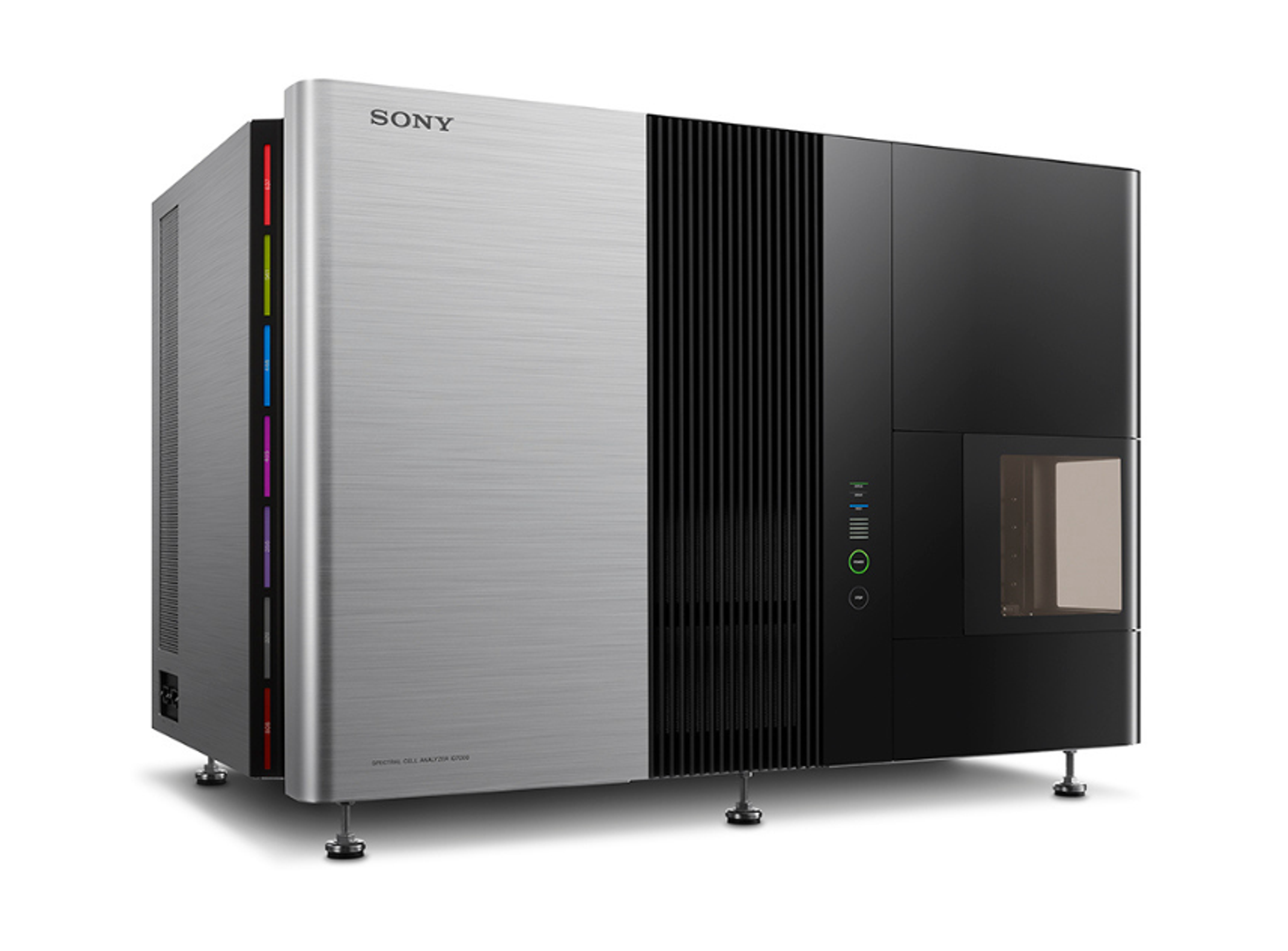
ID7000™ Spectral Cell Analyzer
Sony BiotechnologyA high-parameter spectral cytometer, the ID7000 delivers comprehensive information about heterogeneous cell populations, with high sensitivity to detect dim and rare populations.