Full meeting agenda: Virtual Analytical Summit 2023 – February 14

For its third year running, this free-to-attend online event in the scientific calendar will bring together scientific leaders and manufacturers in analytical research and development

14 Feb 2023
Georgina Wynne Hughes
Editorial Assistant

Editorial article

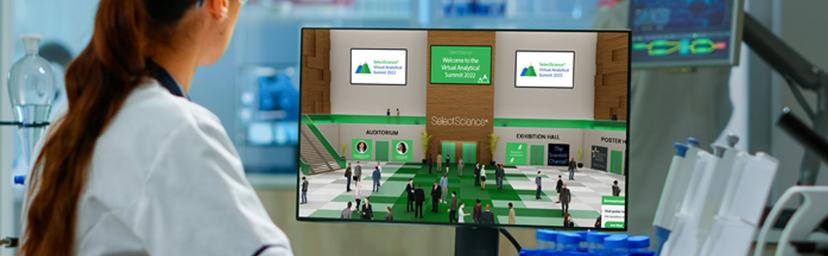
The full exciting presentation schedule has now been announced for the upcoming SelectScience® Virtual Analytical Summit 2023, taking place on February 14. Featuring presentations from Imperial College London, Vanderbilt University, The University of Illinois, Rowan University, and Washington University in St. Louis, among others, this free-to-attend online event offers an interactive forum for scientists and manufacturers to connect, showcase the latest research, and share cutting-edge technology solutions for analytical research and development.

The Summit will host talks by world-leading scientists, live Q&As, video interviews, interactive resource booths, and unique networking opportunities. Attendees will also be able to view academic and industry posters submitted by our global scientific community, leave comments, ask questions, and prompt collaboration through 1-on-1 chat facilities.

 Reserve your free place today

Keynote speakers

  • Prof. Jonathan Sweedler, Department of Chemistry, University of Illinois
  • Dr. Diane Turner, Director, Owner, and Senior Consultant, Anthias Consulting Limited

Agenda

Tuesday, February 14

The Summit sessions will take place in two concurrent tracks. Track 1 talks cover Advances in mass spectrometry, while Track 2 is focused on Trends in chemical and biological analysis. Times in bold are shown as Greenwich Mean Time (GMT).


11:30
 12:30 (CET) 
06:30 (EST)
03:30 (PST)

Opening address & Poster session

 12:15
 13:15 (CET) 
07:15 (EST)
04:15 (PST)

Doing more with less: LC/MS & LC/IM/MS

Prof. Ian Wilson, Visiting Professor, Imperial College London

Immunoassay validation for quantitative bioanalytical assay

Dr. Marianne Scheel Fjording, Founder and CEO, BIOLYZR 13:00
 14:00 (CET) 
08:00 (EST)
05:00 (PST)

Multi-omics approaches to biofluids and tissues

Dr. Elizabeth Want, Senior Lecturer, Imperial College London

Biofuels in the near future: Trends and challenges

Dr. Dimitris Georgantas, QA/QC manager, GF ENERGY 13:45
 14:45 (CET) 
08:45 (EST)
05:45 (PST)

Advanced phenomics with structural mass spectrometry

Prof. John A. McLean, Stevenson Professor of Chemistry, Vanderbilt University

Analysis of the effect of base-pair mismatch on DNA melting temperatures through UV-visible absorption spectroscopy

Dr. Jennifer Empey, Thermo Fisher Scientific 14:30
 15:30 (CET) 
09:30 (EST)
06:30 (PST)

The multiple dimensions of metabolite identification in LC-MS based non-targeted metabolomics

Prof. Michael Witting, Professor of Metabolomics and Proteomics Core, Helmholtz Munich

USP monographs: How to modernize for optimal benefits

Kenneth Berthelette, Senior Scientist, Waters Corporation 15:15
 16:15 (CET) 
10:15 (EST)
07:15 (PST)

Virtual coffee break - Connect with fellow attendees using our proximity-based chat room

 15:35
 16:35 (CET) 
10:35 (EST)
07:35 (PST)

Methods for high throughput single cell profiling using mass spectrometry

Keynote: Prof. Jonathan Sweedler, Department of Chemistry, University of Illinois

Transferring analytical-scale LC separations to compact capillary LC instrumentation

Dr. James Grinias, Associate Professor, Chemistry/Biochemistry & Research, Rowan University 16:20
 17:20 (CET) 
11:20 (EST)
08:20 (PST)

Smart pesticide LC/MS megamethods! Routine screening of 500 pesticides using an intelligent triple quadrupole LC/MS platform

Dr. Patrick Batoon, Product Manager, Agilent

Advanced GC techniques for problem compounds

Keynote: Dr. Diane Turner, Director, Owner, and Senior Consultant, Anthias Consulting Limited 17:05
 18:05 (CET) 
12:05 (EST)
09:05 (PST)

Metabolomics for precision medicine

Prof. Gary Patti, Professor of Chemistry and of Genetics and Medicine, Washington University in St. Louis 17:50
 18:50 (CET) 
12:50 (EST)
09:50 (PST)

Poster session

Sponsors
Virtual Biopharmaceuticals Summit 2022: Full meeting agenda for November 22

Register for free to reserve a place today — you’ll be able to drop in and out as you wish during the Summit.

Watch this space for further updates and follow our social media channels:

Spread the word using #AnalyticalSummit

Catch up on the latest techniques and technologies and play your part in improving science communication by leaving a lab product review.

Links

Tags

Capillary ElectrophoresisCapillary electrophoresis (CE) is used to separate molecules based on charge, size and hydrophobicity. Pressure, voltage or a vacuum is used to introduce the sample to fused silica capillaries. Fluorescence, UV/Vis, UV or diode array detectors are used to visualize components. Types of CE systems include capillary electrochromatography (CEC), capillary zone electrophoresis and capillary gel electrophoresis. Find the best capillary electrophoresis equipment in our peer-reviewed product directory: compare products, check customer reviews and receive pricing direct from manufacturers.Gas ChromatographyGas chromatography (GC) is an analytical technique used to separate and quantitate mixtures of small and volatile compounds. Gas chromatographs or GC systems include components such as GC columns, detectors, pumps and autosamplers. Choose from packed or capillary GC columns, flame ionization (FID), photoionization (PID) electron capture detectors and selective or non-selective detectors. Find the best gas chromatographs in our peer-reviewed product directory: compare products, check customer reviews and receive pricing direct from manufacturers.Ion ChromatographyIon chromatography, also known as ion exchange chromatography, is a high-performance liquid chromatographic technique used for the separation and identification of ions or polar molecules in a sample, including proteins, nucleotides and amino acids. Equipment includes ion exchange columns, ion exclusion columns, ion chromatography systems, pumps, and detectors. Find the best ion chromatography equipment in our peer-reviewed product directory: compare products, check customer reviews and receive pricing direct from manufacturers.Size Exclusion ChromatographySize exclusion chromatography (SEC) is a liquid chromatographic technique used to separate and identify molecules based on their size, including polymers, proteins, nanoparticles & nucleic acid. SEC is further subdivided into gel filtration chromatography (GFC) and gel permeation chromatography (GPC) when an aqueous or organic mobile phase is used respectively. HPLC-based SEC systems and columns are available for analytical separation alongside SEC spin columns or filters to prep samples for many protocols. Find the best size exclusion chromatography equipment in our peer-reviewed product directory: compare products, check customer reviews and receive pricing direct from manufacturers.LC-MSLC-MS (liquid chromatography-mass spectrometry) systems and equipment are used for separation and quantitative analysis of complex mixtures, combining liquid chromatography and mass spectrometry. Quantify proteins, contaminants, pesticides or screen for drug metabolites with a high level of sensitivity. LC-MS systems and equipment include reverse phase, normal phase and specialized columns integrated with various MS detectors such as time-of-flight (TOF), quadrupole, orbitrap or ion trap mass analyzers. LC-MS/MS instruments equipped with a qTOF or triple quadrupole analyzer give greater sensitivity and resolving power to your analysis. Find the best LC-MS equipment in our peer-reviewed product directory: compare products, check customer reviews and receive pricing direct from manufacturers.Mass SpectrometryMass spectrometry (MS) is a powerful analytical technique used to identify and quantify molecules based on the mass-to-charge ratio of gas-phase ions. It provides detailed information about the structure, composition, and properties of compounds and is widely used across fields such as environmental monitoring, materials science, drug discovery and development, food and beverage testing, and wider chemical research. Key MS techniques include tandem mass spectrometry (MS/MS), liquid chromatography–mass spectrometry (LS-MS) and inductively coupled plasma (ICP-MS). Choosing from these wide range of techniques and technologies can be a daunting task, so keep up to date with scientific applications, performance expectations, and customer reviews here all in one place. Visit our product directory to receive quotes direct from the manufacturer. Preparative ChromatographyPreparative chromatography equipment is used for purification purposes, separating and collecting compounds eluted from a mixture which can then be subsequently used for further purposes. This can be done in large quantities or small. Preparative chromatography systems are usually low to medium pressure liquid chromatographs that are semi-automated. Explore a range of preparative columns and fraction collectors. Find the best preparative chromatography equipment in our peer-reviewed product directory: compare products, check customer reviews and receive pricing direct from manufacturers.UltraPerformance Convergence ChromatographyConvergence Chromatography expands the capabilities of reversed phase LC and conventional GC techniques. By varying mobile phase strength, pressure, temperature and stationary phase Convergence Chromatography facilitates the separation, detection and quantification of many compounds and samples. The CO<sub>2< / sub> mobile phase used reduces the need for toxic solvents.Chromatography Method DevelopmentChromatography method development is the process of designing and optimizing chromatographic techniques to separate and analyze complex mixtures. This includes selecting appropriate stationary and mobile phases, determining flow rates, and optimizing detection methods. Successful method development is essential for high-quality results in fields like pharmaceuticals, food safety, and environmental analysis. Explore chromatography method development tools in our peer-reviewed product directory; compare products, check reviews, and get pricing directly from manufacturers.ChromatographyChromatography is a powerful technique used to separate and analyze components of mixtures based on their chemical properties. It is widely used in fields like biochemistry, pharmaceuticals, and environmental analysis. By exploiting differences in the interaction of substances with a stationary phase and a mobile phase, chromatography enables precise purification and quantification of compounds. Whether you're working with complex biological samples or industrial chemicals, chromatography is essential for obtaining high-quality results. Browse our peer-reviewed product directory to find the best chromatography systems, compare products, read customer reviews, and get pricing directly from manufacturers.SpectrometrySpectrometry is a technique used to measure the mass-to-charge ratio of ions. It provides valuable information about the composition, structure, and molecular weight of compounds. Used across a variety of fields, including chemistry, biology, and environmental science, spectrometry is essential for identifying substances, analyzing mixtures, and developing new products. Explore the best spectrometry tools in our peer-reviewed product directory; compare products, check reviews, and get pricing directly from manufacturers.Gas ChromatographyGas chromatography (GC) is an analytical technique used to separate and analyze gases or volatile liquids in a sample. It is widely used in environmental testing, food safety, pharmaceuticals, and forensic science. GC is ideal for identifying and quantifying compounds that are gaseous or can be vaporized without decomposition. Browse our peer-reviewed product directory to find the best gas chromatography systems, compare products, check reviews, and get pricing directly from manufacturers.
Full meeting agenda: Virtual Analytical Summit 2023 – February 14