
Fujifilm Wako expands drug discovery capabilities with advanced CRO services
Fujifilm Wako Chemicals Europe is accelerating drug discovery and development by providing a range of services encompassing rabbit monoclonal antibody discovery, AI-driven drug discovery, neural cell assay services, cyclic peptide discovery, and more
18 Oct 2024Traditionally, rabbits have been recognized for their ability to produce antibodies with higher specificity and affinity compared to mice and rats. However, the lack of a myeloma cell line for rabbits as a fusion cell strain made it challenging to use the hybridoma method to produce monoclonal antibodies. Fujifilm has developed a new platform which overcomes these issues, combining the strengths of the DNA immunization method with their proprietary single B-cell screening technique to produce high-performance, high-affinity monoclonal antibodies against soluble antigens or transmembrane antigens.
The antibodies produced using this platform are not only high-performing but also capable of recognizing complex three-dimensional structures and challenging targets such as multipass transmembrane proteins. The platform can also be adapted according to a customer’s specific needs.
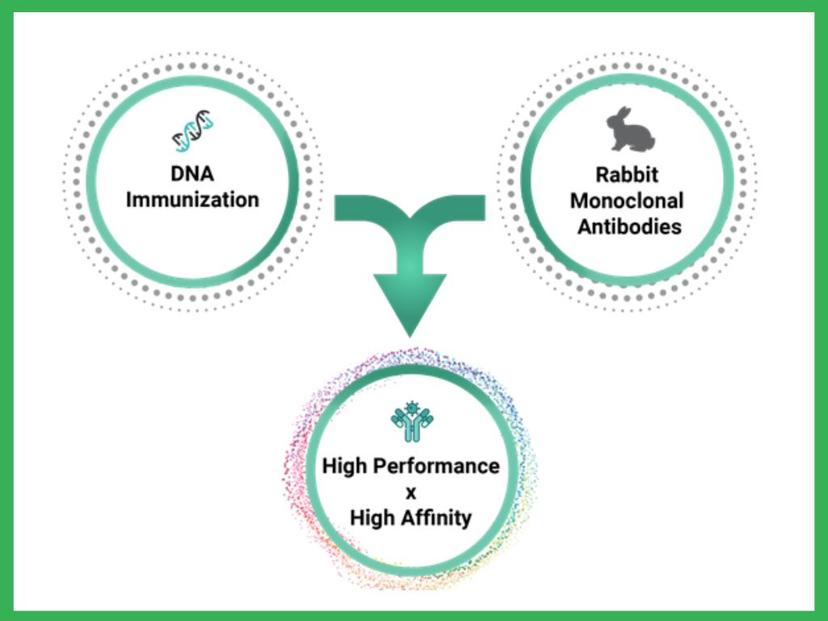
The DNA immunization method has a high success rate in generating antibodies against membrane proteins and complex conformational epitopes.
The DNA immunization method has a high success rate in generating antibodies against membrane proteins and complex conformational epitopes, which are often challenging to target using conventional peptide or protein antigens due to their inability to mimic native protein structures.
Fujifilm’s proprietary Single B-Cell Screening method enables antibodies with high affinity to be acquired, due to the direct selection of individual B cells that produce high-affinity antibodies against the target antigen. This is in contrast to the hybridoma method, where the fusion process can sometimes result in lower-affinity antibodies. However, unlike hybridoma, Single B-Cell Screening also results in more positive clones, providing a broader pool of high-quality antibodies to choose from.
Advancing drug discovery with cyclic peptide screening technology
Cyclic peptides have emerged as promising therapeutic candidates due to their ability to target 'undruggable' proteins with enhanced stability and bioavailability compared to linear peptides or small molecules. Traditional small molecules and antibodies often struggle to bind complex targets, particularly in protein-protein interactions (PPIs).
Fujifilm’s platform overcomes these limitations by utilizing a vast cyclic peptide library, enriched with unnatural amino acids, to screen and identify candidates with high affinity, specificity, and stability for therapeutic development.
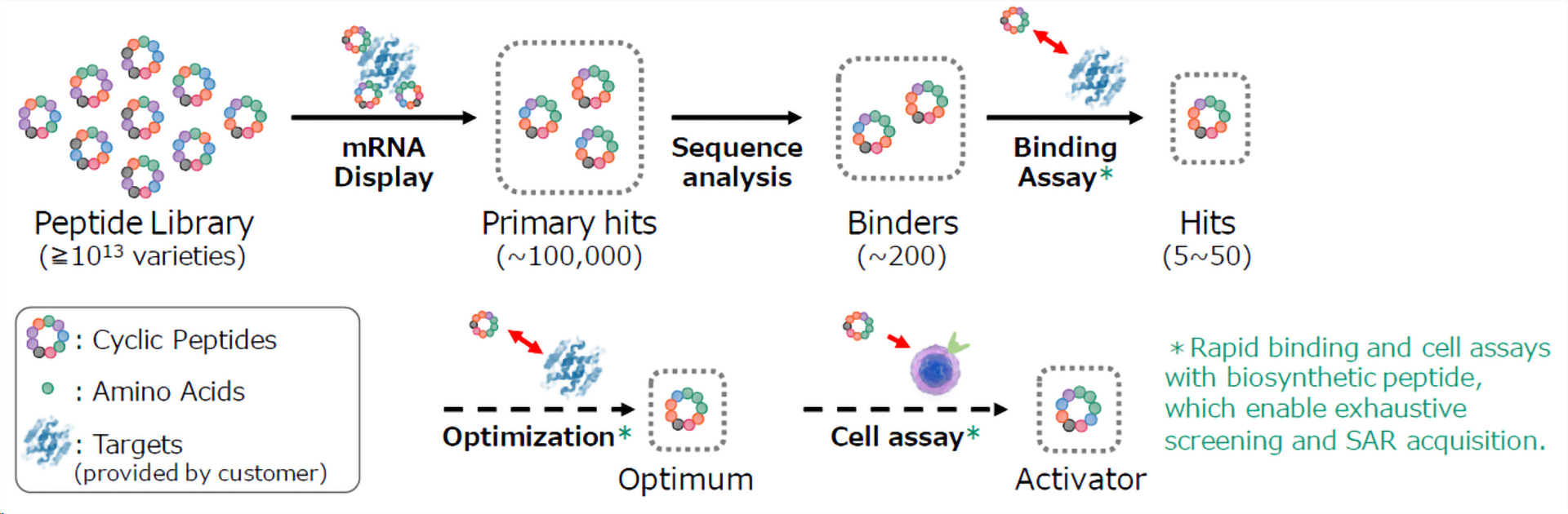
Cyclic peptide screening technology
Fujifilm’s proprietary screening process rapidly identifies peptides that maintain strong binding to complex targets. These peptides exhibit key advantages such as improved tissue permeability, protease resistance, and low immunogenicity, which make them especially useful in drug discovery for cancer, immunotherapy, and beyond.
High-throughput screening ensures rapid lead identification, facilitating the discovery of novel cyclic peptides that can function as inhibitors, agonists, or components of peptide-drug conjugates (PDCs). This service is ideal for development of novel therapeutics targeting difficult proteins, especially those involved in PPIs, signal transduction, and oncology.
Want the latest science news straight to your inbox? Become a SelectScience member for free today>>
Related products
Request Quote for All Products
BalanCD HEK293 Viral Feed
FUJIFILM Biosciences Inc.The first viral feed designed specifically for HEK293 cells