From cannabis to COVID: Discover the power of RNA in situ hybridization

Dr. Jeremy Hirota takes us through the technology behind his translational research program for respiratory health

12 Aug 2020

Charlie Carter
Life Sciences Editor

Editorial article

Jeremy Hirota
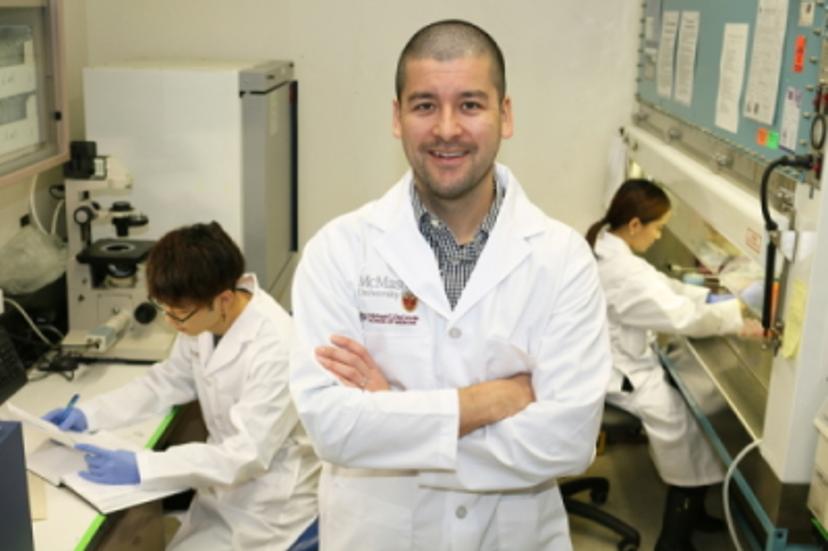
Dr. Jeremy Hirota © Tina Depko - McMaster University

In this expert interview, we hear from Dr. Jeremy Hirota about his work in the Hirota Lab at McMaster University and how he is working to develop an internationally recognized translational research program for respiratory health, focusing on lung health and disease.

The Hirota lab uses a research strategy involving in vitro cell culture models, in vivo pre-clinical models, and clinical studies. “The research of the lab is guided by three mutually reinforcing foci,” Hirota explains, “patient-oriented research on respiratory mucosal immunology in health and disease; small molecule drug discovery programs for commercialization opportunities; and pure basic science characterization of the biology behind innate immune receptor and related signaling pathways.”

RNA ISH for cannabis and COVID-19

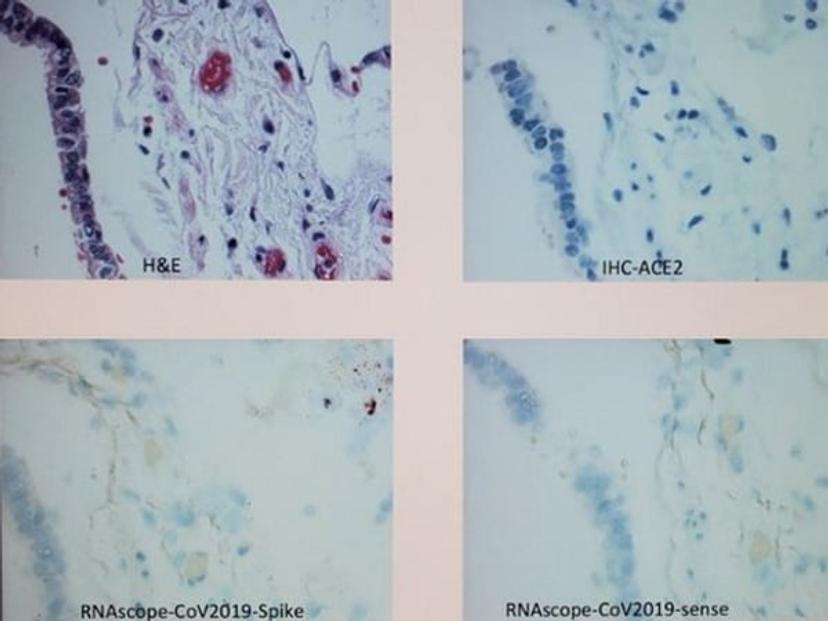
The Hirota Lab has published an impressive volume of peer-reviewed research relating to precision medicine, cell transporters, cannabis, tissue engineering, and most recently COVID-19. An invaluable tool throughout its work has been the RNAscope technology from Advanced Cell Diagnostics, which has been used for research into a variety of biomarkers. This RNA in situ hybridization multiplexing technology has enabled the profiling and identification of various cell transporters and receptors in human lung tissue. A single cell can be identified via a specific marker in one channel, whilst concurrently looking for the co-expression of other target molecules in the other available channels. This molecular approach complements traditional pathology that uses serial sections of H&E (hematoxylin and eosin) histological stains for tissue morphology assessment and cell identification, followed by staining for molecules of interest.

“We have used RNAscope to confirm the in situ presence of gene transcripts for our molecules of interest,” Hirota explains. “However, we are only just beginning to realize the potential of this technology and hope to leverage this further in the future.”

The Hirota lab has used this approach to provide evidence for the expression of cannabinoid receptors 1 and 2 in human airway epithelial cells at the gene level, and, due to the team’s experience working with airway epithelial cells and lung immunology, it has applied these learnings to help tackle SARS-CoV-2. With access to COVID-19 autopsy lung tissue samples, the lab is now assessing candidate SARS-CoV-2 receptors to identify respiratory mucosal immune responses that are predictive of negative SARS-CoV-2 infection outcomes. Regarding this current work, Hirota shares that: “It appears that the SARS-CoV-2 virus is present in areas of lung tissue that do not express the proposed receptor, ACE-2. This suggests that alternate receptors for the virus, or other mechanisms for virus entry, exist.” The lab is currently working to confirm and subsequently publish this work.
© Jeremy Hirota

Working in the pandemic and beyond

Related publications

  • Gene expression and in situ protein profiling of candidate SARS-CoV-2 receptors, available here

  • Isolation, sequence, infectivity, and replication kinetics of SARS-CoV-2, available here

Hirota explains how due to the ongoing pandemic his team has needed to find new ways to work collaboratively, around the clock, and ensure that it is following the recommendations designed to limit the spread of SARS-CoV-2, whilst pushing forward COVID-19 research that aims to help patients, healthcare systems, and governing bodies. “The current environment is constraining,” says Hirota. “We are following social distancing policies in the workplace and currently have limited numbers of staff in the labs.”

Looking to the future, Hirota sees several opportunities for exciting advances in precision medicine treatments and diagnostics, including the merging of molecular technologies, well-phenotyped patient samples, and improved informatics technologies. “We hope to be at the forefront of this work,” Hirota concludes, “working with academic and industry partners to leverage respective strengths and ensure that our research makes it to market to improve health and wellbeing on a global scale.”

Find out more about RNA ISH capabilities with these expert interviews and resources:

RNAscope™ Technology

Advanced Cell Diagnostics

Independent of your genes of interest, thes easy RNA in situ hybridization assays use common reagents and protocols; providing universal assay conditions. All RNA-ISH kits contain reagents in a convenient ready-to-use (RTU) format, and chromogenic dyes are available to interrogate a single or two genes simultaneously. Most versatile are the RNAscope Multiplex Fluorescent Reagent Kits, enabling you to interrogate 1, 2 or 3 genes simultaneously.

(2)

Links

Tags

Cellular PathologyCellular Pathology deals with the microscopic analysis of tissue samples and cells. Sample preparation and processing includes fixation, staining, sectioning and slide mounting, using equipment such microtomes and cryostats. In choosing immunohistochemistry and immunocytochemistry kits, consider chromogens, staining method, antibodies, microscopes and imaging.DNA / RNA Extraction and PurificationPurified DNA and RNA are required for numerous downstream molecular biology applications. Consequently, the importance of high-quality DNA/RNA extraction and purification equipment cannot be underestimated. Many purification kits are available and are typically optimized for nucleic acid type and source, including plasmid DNA, genomic DNA, mRNA, RNA and viral nucleic acid purification kits. Automated extraction and purification of nucleic acids can be implemented with magnetic bead separator instruments or high-throughput purification workstations. Find the best DNA/RNA extraction and purification equipment in our peer-reviewed product directory: compare products, check customer reviews and receive pricing direct from manufacturers.Gene Expression and Molecular CloningMolecular cloning is a set of techniques that utilizes vectors to transfer recombinant DNA into host cells and is an essential tool for investigating the expression of genes and proteins in bacterial or mammalian cells. A variety of vectors optimized for gene cloning and expression in a range of host organisms are available, alongside competent cells for genetic replication. Here, you can explore a range of molecular tools, high-quality genomic and cDNA libraries, premade clones, transformation and transfection reagents and mutagenesis or gene expression detection assays and expression arrays. Find the best gene expression and molecular cloning products in our peer-reviewed product directory: compare products, check customer reviews and receive pricing direct from manufacturers.Biopharmaceutical AdvancesBiopharmaceutical advances follow the development of pharmaceuticals derived from biotechnology, also known as biotechnology medicines. Biopharmaceuticals may be produced from cell lines, plants, or microbial cells. Important considerations of biopharmaceutical use include application, cost, production process and purification.Clinical ChemistryBiochemistry (or clinical chemistry) involves the analysis of bodily fluids using chemical tests. Techniques used include HPLC, chromatography, spectroscopy, mass spectrometry, immunochemical, electrophoresis, turbidometric / spectrophotometric assay, MRI and ISE analysis. Tests are often carried out on plasma or serum but urine (urinalysis) and fecal specimens are also processed.Clinical GeneticsMolecular Genetics covers the analysis of hereditary genetic disease and chromosomal abnormalities. Genetics can be analysed using DNA, RNA, and protein microarrays, PCR, RT PCR and DNA sequencing. Genetic equipment includes genetic workstations, thermal cyclers, cooling blocks and electrophoresis products. Diagnostic kits are used for DNA / RNA extraction and purification.Clinical MicrobiologyMicrobiology is the study of microorganisms including protists, prokaryotes, fungi, and, often, viruses. Microorganisms are a useful research tool as genetic vectors and, in immunology, for antibiotic susceptibility testing, cellular biology and genetics. Microorganisms commonly grow readily in incubators with microbial culture media; this can contain chromogenic supplements to differentiate between cell lines. Estimate your culture’s density of microorganisms with colony counters, or screen and select colonies for desirable clones with automated colony pickers. Additionally, equipment is available to monitor environments for the presence of microbes and identify with microbial identification instruments. Find the best microbiology products in our peer-reviewed product directory: compare products, check customer reviews and receive pricing direct from manufacturers.ImmunologyImmunological techniques measure and characterize immune responses. Immunology kits and analysis systems often use techniques such as ELISA, radioimmunoassay (RIA) and immunodiffusion assays, Immunohistochemistry, and flow cytometry. Immunologists use equipment such as flow Cytometers, plate readers, plate washers and fluorescent microscopes.Gene ExpressionRNARNA is a nucleic acid that plays a key role in gene expression and protein synthesis. It serves as a messenger between DNA and ribosomes, carrying genetic instructions to produce proteins. Advances in RNA-based therapies, such as mRNA vaccines and gene editing, have revolutionized treatment strategies for genetic disorders and infectious diseases. Explore RNA research tools and therapies in our peer-reviewed product directory; compare products, check customer reviews, and get pricing directly from manufacturers.Cell SignalingCannabisCoronavirusCoronaviruses are a large family of viruses that can cause illnesses ranging from the common cold to more severe diseases like COVID-19. Research into the biology, transmission, and treatment of coronaviruses has become a global priority, particularly since the emergence of SARS-CoV-2. Understanding the virus�s structure and behavior is essential for developing vaccines, diagnostics, and antiviral treatments. Explore our peer-reviewed product directory to discover the latest research tools, diagnostic tests, vaccines, and treatments for coronavirus, compare products, read reviews, and receive pricing directly from manufacturers.