Free Webinar: Understanding Cell Motility with Next-Generation Scratch Wound Healing Assays

Get the most from your wound healing assays with our free webinar: February 27, 2018 at 15:00 GMT / 16:00 CET / 10:00 EST / 07:00 PST

15 Feb 2018

Matthew Mcardle

Expert insights

Wound healing assays are an established in vitro procedure to create model ‘wounds’ in cell monolayers, to study collective cell migration and replicate the sheet migration that occurs in a range of biological processes, such as cancer metastasis, embryonic morphogenesis and tissue injury. While numerous assay approaches have been developed, common limitations caused by the influence of both cell migration and cell proliferation still exist in conventional approaches.
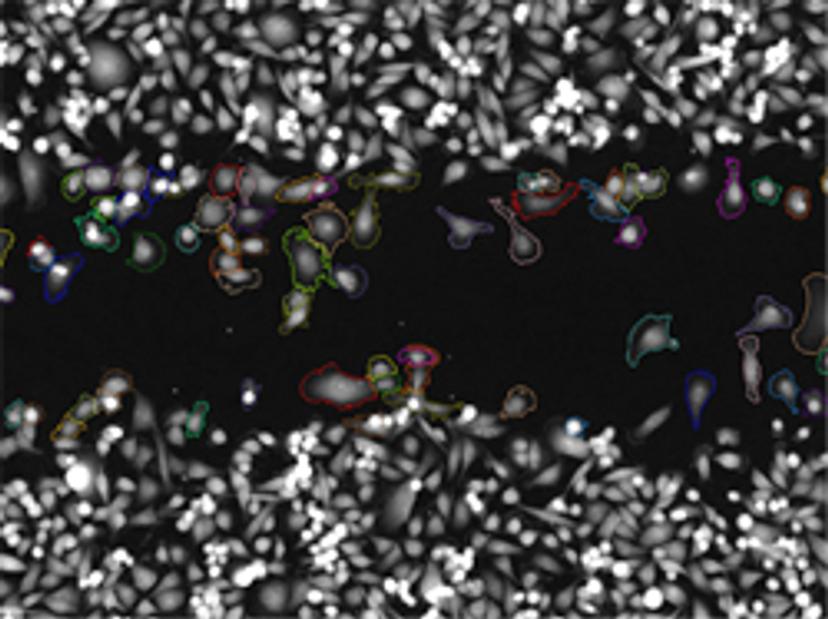
wound healing assays

In our live webinar, Dr. Rakesh Suman, senior biological application scientist at Phasefocus, will discuss how to significantly enhance conventional wound healing assays by diminishing these limitations, and introduce the Livecyte™ Kinetic Cytometer that is enabling these advances in live cell analysis.

To provide research examples, Dr. Matt Hardman and postdoctoral researcher, Liz Roberts, will be discussing how the Livecyte™ system has helped propel their research.

This webinar will explore:

  • Advantages of continuous monitoring of the wound healing process using label-free quantitative phase imaging (QPI) imaging
  • How to separate cell motility from cell proliferation
  • The ability to segment and track individual cells along the leading edge to directly measure cell motility
  • Characterization of morphological and dynamic cell phenotypes during wound healing
Register now

This webinar takes place on Tuesday, February 27, 2018 at:

  • 15:00 GMT
  • 16:00 CET
  • 07:00 PDT
  • 10:00 EST

If you can't attend the webinar at this time, you can still register to catch up at a later date that suits you.

Links

Tags

Cell-Based AssaysCell-based assays are used to monitor the presence, quantity and activities of a desired cellular analyte including drug molecules or biomarkers. This can reveal information on cell health (apoptosis, cytotoxicity, viability and proliferation assays), cell metabolism, cell migration and cell signaling mechanisms. Find the best cell-based assay products, kits and equipment with our peer reviewed product directory: compare products, check customer reviews and receiving pricing direct from manufacturers.Light MicroscopyLight microscopes or optical microscopes are used to visualize microscale objects under magnification, including cells, clinical specimens and materials. Lab equipment for light microscopy includes confocal microscopes, fluorescence microscopes, zoom and stereo microscopes. Microscope slides and imaging reagents are available for visualizing samples, as well as various microscope stages and incubators for large or temperature-sensitive samples. Find the best light microscopes in our peer-reviewed product directory: compare products, check customer reviews and receive pricing direct from manufacturers.CytometryCytometry is a broad term for the quantitative analysis of cells and cell systems. The most popular methods to study cytometry are flow cytometry and image cytometry.Fluorescence MicroscopyFluorescence microscopy has become an essential tool in biology, as well as in materials science. The application of many fluorochromes has made it possible to identify cells and sub-microscopic cellular components with a high degree of specificity. Using multiple fluorescence labels, different probes can simultaneously identify several target molecules.Single Cell AnalysisSingle-cell analysis involves studying individual cells to gain insights into their behavior, gene expression, and function. This approach is valuable in cancer research, stem cell biology, and immunology. Explore single-cell analysis products in our peer-reviewed product directory; compare products, check reviews, and get pricing directly from manufacturers.MicroscopyMicroscopy is a technique used to observe small objects in detail, from cells to materials, using light or electron microscopes. It enables researchers to examine structures with high resolution, aiding in fields such as biology, medicine, and materials science. With advanced microscopy techniques, scientists can gain insights into cellular processes, tissue structures, and material properties. Explore the best microscopy solutions in our peer-reviewed product directory, compare products, read customer reviews, and get pricing directly from manufacturers.Phenotypic ScreeningPhenotypic screening assesses cellular responses to compounds, enabling drug discovery and target identification. This technique is pivotal in finding effective treatments for complex diseases. Discover phenotypic screening platforms and tools with peer-reviewed comparisons and pricing in our directory.