Free Webinar - Smart Cell Assays for Immuno-Oncology

5 Sept 2016

Lynsey Forsyth
Post Doc / Research Fellow

Expert insights

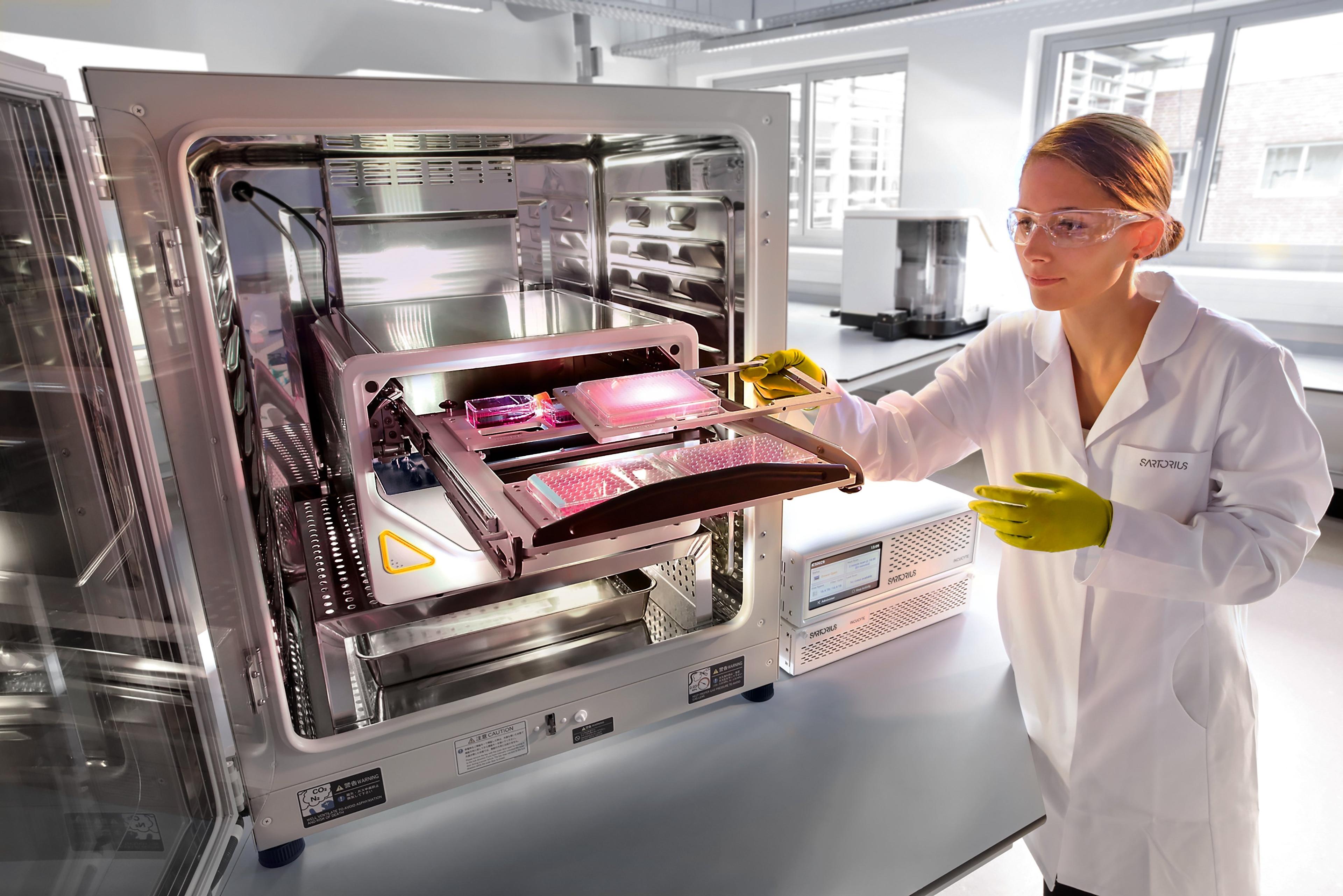
In this free webinar, Tim O'Callaghan, Product Manager at Essen Biosciences, will explain how continuous live-cell imaging is enhancing immuno-oncology research, using a series of case studies to illustrate the advantages.

In this webinar, you will learn how continuous live-cell analysis enables a new range of non-invasive phenotypic measurements for immuno-oncology research including:

  • Immune cell activation, chemotaxis and transendothelial migration
  • Tumor cell proliferation and metastatic potential
  • Immune cell killing of tumor cells and clearance by phagocytosis

These real-time, live-cell assays provide deeper biological insight into the full time course of events. Direct, image-based analyses offer valuable morphological information and ensure every measurement can be validated with images and movies. Fully automated image capture and analysis also enhance workflow productivity.

Register today for the live event on September 23, 2016 at 08:00 PDT/ 11:00 EDT/ 16:00 BST/ 17:00 CEST

Links

Tags

Cell Adhesion AssaysCell adhesion assays are used to quantitate attachment and analyze the molecular mechanisms for extracellular matrix adhesion, cell migration and sensitivity to inhibitors. Find the best cell adhesion assay equipment in our peer-reviewed product directory: compare products, check customer reviews and receive pricing direct from manufacturers.Cell / Tissue CultureCell culture or tissue culture is used to study the biology of cells or tissues and to isolate cellular products in an environment which can be manipulated and well defined. Accurately control your culture environment with bioreactors or culture incubators, bind your cells to a surface or together with an extracellular matrix. Distinguish cell types with differential media or proliferate cells with certain characteristics using selective media. Enrich your media with supplements such as growth factors, sera and vitamins. Find the best cell and tissue culture products, kits and equipment in our peer-reviewed product directory: compare products, check customer reviews and receive pricing direct from manufacturers.Cell Lines Stem Cells and Primary CellsPrimary cell cultures, established cell lines and stem cells are vital for <i>in vitro</i> and <i>ex vivo</i> experimentation. High-quality cells, optimized for your applications, alongside optimized cell substrates, growth medium and supplements, are critical for experimental success. Explore a range of cells suitable for your applications, including isogenic cell lines, competent cells, induced pluripotent stem cell (iPSC)-derived cell lines, fungal/bacterial/mammalian cell lines, stem cells and cancer cell lines. Find the best cells for your research in our peer-reviewed product directory: compare products, check customer reviews and receive pricing direct from manufacturers.Cell-Based AssaysCell-based assays are used to monitor the presence, quantity and activities of a desired cellular analyte including drug molecules or biomarkers. This can reveal information on cell health (apoptosis, cytotoxicity, viability and proliferation assays), cell metabolism, cell migration and cell signaling mechanisms. Find the best cell-based assay products, kits and equipment with our peer reviewed product directory: compare products, check customer reviews and receiving pricing direct from manufacturers.High-Content ScreeningHigh-content screening (HCS), also known as high-content analysis (HCA), is a high-throughput technique used in drug discovery to identify substances that alter the phenotype of cells. HCS uses fluorescent microscopic imaging and automated image analysis to investigate cellular events such as apoptosis, cell viability, GPCR activation, oxide production, neurite outgrowth, and cell signaling. Find the best fluorescent labeling reagents, cellular assays, and high-content imaging systems in our peer-reviewed product directory: compare products, check customer reviews and receive pricing direct from manufacturers.Light MicroscopyLight microscopes or optical microscopes are used to visualize microscale objects under magnification, including cells, clinical specimens and materials. Lab equipment for light microscopy includes confocal microscopes, fluorescence microscopes, zoom and stereo microscopes. Microscope slides and imaging reagents are available for visualizing samples, as well as various microscope stages and incubators for large or temperature-sensitive samples. Find the best light microscopes in our peer-reviewed product directory: compare products, check customer reviews and receive pricing direct from manufacturers.ImmunologyImmunological techniques measure and characterize immune responses. Immunology kits and analysis systems often use techniques such as ELISA, radioimmunoassay (RIA) and immunodiffusion assays, Immunohistochemistry, and flow cytometry. Immunologists use equipment such as flow Cytometers, plate readers, plate washers and fluorescent microscopes.Live Cell ImagingLive cell imaging is the study of living cells using microscopes and high-content imaging systems. This technique provides in-depth insight into fast and complex biological processes, by allowing dynamic imaging of living cells instead of acquiring an individual image at a single point in time.ImmunophenotypingTumorsTumor research focuses on understanding abnormal cell growth that leads to cancer. Identifying biomarkers, studying tumor microenvironments, and developing targeted therapies are critical for advancing cancer treatment. Early detection and personalized treatment options are key to improving outcomes for patients. Browse our peer-reviewed product directory to explore tools for tumor research, diagnostics, and cancer therapies; compare products, read customer reviews, and get pricing directly from manufacturers.Cell Based AutomationCell AnalysisThe analysis of cells allows researchers to understand the factors which contribute to cell health and function. These influencing processes can then be predicted and altered, leading to the development of medication and disease treatments.Cell Based AssaysCell-based assays use living cells to measure biological responses to various treatments or stimuli. They are essential for drug discovery, toxicology testing, and understanding cellular mechanisms. These assays are used to assess cell viability, proliferation, gene expression, and other cellular activities. Browse our peer-reviewed product directory to find the best cell-based assay tools and reagents, compare products, read customer reviews, and get pricing directly from manufacturers.Cell ImagingCell imaging can be achieved using a number of techniques including confocal microscopy, transmission electron microscopy, atomic force microscopy, and light sheet microscopy.Cell CultureCell culture involves growing cells under controlled conditions, typically outside of their natural environment, to study cellular behavior, drug response, and disease models. Cell culture is crucial in biotechnology and biomedical research. Explore cell culture products in our peer-reviewed product directory; compare products, check reviews, and get pricing directly from manufacturers.
Free Webinar - Smart Cell Assays for Immuno-Oncology