Free SelectScience Webinar: New Acquisition and Detection Modes with ZEISS Airyscan

Register your place for this exciting event and Q&A session

29 Sept 2015

Lois Manton-O'Byrne, PhD
Executive Editor

Expert insights

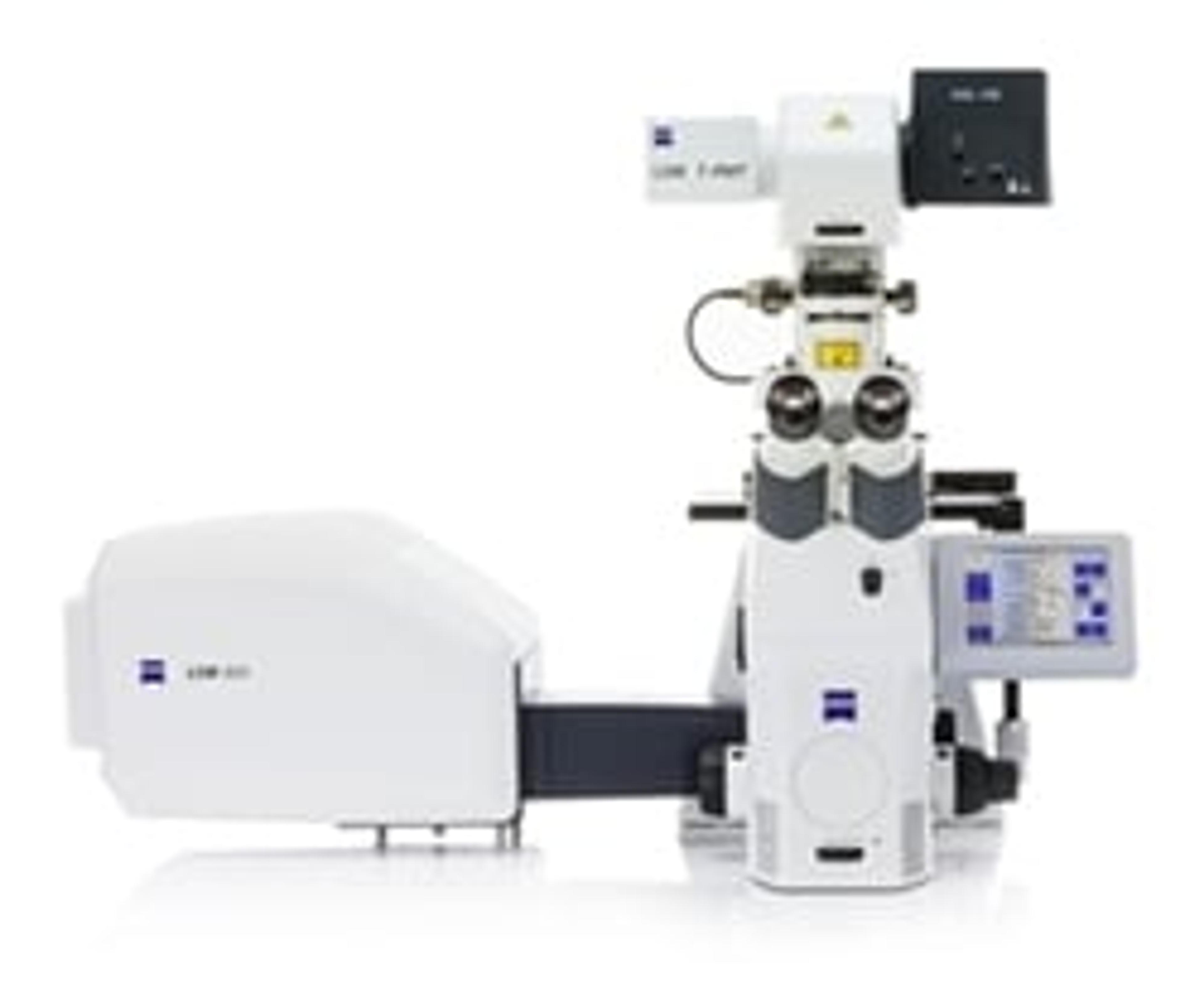
ZEISS Airyscan, a new detector concept designed for improved laser scanning confocal microscopy, enables the simultaneous increase of both resolution and signal-to-noise ratio over traditional confocal imaging. Learn about two new detection and acquisition strategies for the ZEISS Airyscan detection module for laser scanning microscopy. Both modes – sensitivity and two-photon – extend the Airyscan benefits of resolution and signal-to-noise ratio to address more sample types.

In this webinar, Joseph Huff, Product Marketing Manager for Laser Scanning and Superresolution Microscopy for ZEISS Microscopy, will discuss the use of use of Airyscan to increase performance of laser scanning microscopy systems on samples including cell spheroids, Drosophila brain and live cells.

By watching this webinar, you will learn:

  • How the sensitivity mode can be used to increase acquisition speeds while maintaining signal-to-noise ratio.
  • How Airyscan can be combined with two-photon excitation to increase the signal-to-noise ratio and resolution of thick and scattering samples.

The Q&A session during the webinar will give you the opportunity to ask any questions you may have for Joseph.

The webinar will take place at 08:00 PDT / 11:00 EDT / 16:00 BST / 17:00 CEST, October 7, 2015, and will be available on-demand if you are unable to attend the live event.

Register today for your free place.

Links

Tags

Cell / Tissue CultureCell culture or tissue culture is used to study the biology of cells or tissues and to isolate cellular products in an environment which can be manipulated and well defined. Accurately control your culture environment with bioreactors or culture incubators, bind your cells to a surface or together with an extracellular matrix. Distinguish cell types with differential media or proliferate cells with certain characteristics using selective media. Enrich your media with supplements such as growth factors, sera and vitamins. Find the best cell and tissue culture products, kits and equipment in our peer-reviewed product directory: compare products, check customer reviews and receive pricing direct from manufacturers.Light MicroscopyLight microscopes or optical microscopes are used to visualize microscale objects under magnification, including cells, clinical specimens and materials. Lab equipment for light microscopy includes confocal microscopes, fluorescence microscopes, zoom and stereo microscopes. Microscope slides and imaging reagents are available for visualizing samples, as well as various microscope stages and incubators for large or temperature-sensitive samples. Find the best light microscopes in our peer-reviewed product directory: compare products, check customer reviews and receive pricing direct from manufacturers.ConfocalLive Cell ImagingLive cell imaging is the study of living cells using microscopes and high-content imaging systems. This technique provides in-depth insight into fast and complex biological processes, by allowing dynamic imaging of living cells instead of acquiring an individual image at a single point in time.MicroscopyMicroscopy is a technique used to observe small objects in detail, from cells to materials, using light or electron microscopes. It enables researchers to examine structures with high resolution, aiding in fields such as biology, medicine, and materials science. With advanced microscopy techniques, scientists can gain insights into cellular processes, tissue structures, and material properties. Explore the best microscopy solutions in our peer-reviewed product directory, compare products, read customer reviews, and get pricing directly from manufacturers.SpheroidsSpheroids are clusters of cells that have been grown in 3D culture to be used as <i>in vitro</i> model systems. These 3D microtissues can be used for toxicology testing, DMPK studies and many other applications involving cell analysis.Digital ImagingDigital imaging is a technique that captures images of biological and chemical samples in high resolution, often using advanced cameras and sensors. This technology is crucial in microscopy, diagnostics, and quality control. Explore digital imaging systems in our peer-reviewed product directory; compare products, check reviews, and get pricing directly from manufacturers.