Fragments: Making a big impact by thinking small

Discover fragment based drug discovery

17 Nov 2023

Lawrence Howes
Editorial Assistant

Industry news

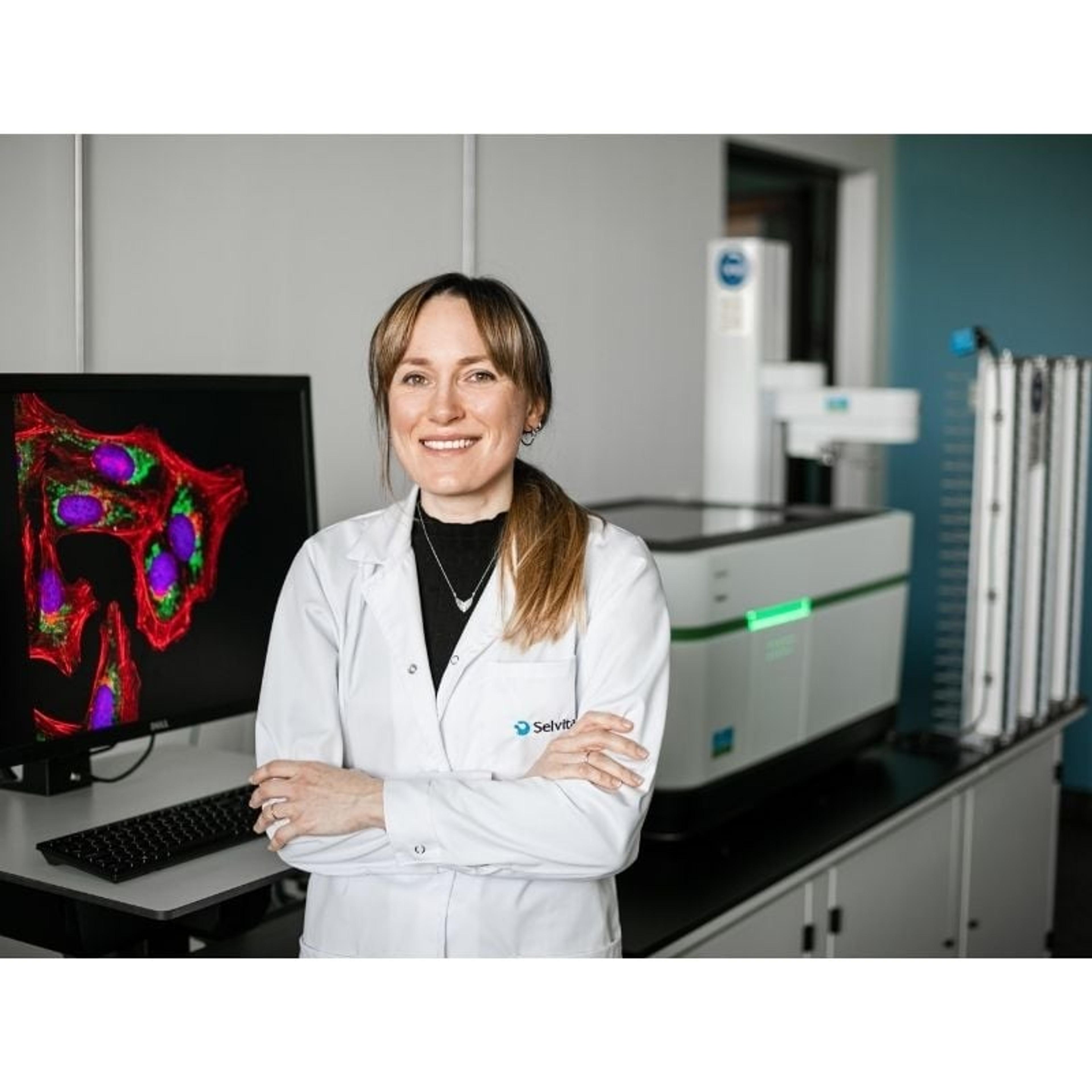
Selvita high content screening

In recent years, fragments have developed as a big topic in the pharmaceutical world, mainly due to their impactful role in fragment-based drug discovery (FBDD) approaches. Fragments are molecules smaller than typical drug-like molecules but still retain a similar propensity to interact with molecular targets such as proteins. Because they are the building blocks of larger compounds, and the number of such building blocks is much lower than the number of their possible combinations, they represent the chemical space much more efficiently, thus reducing the screening library sizes from millions to thousands or even hundreds. Even though initially small and binding with low affinities, their chemical properties render fragments amendable to further growth into usable, potent lead molecules.

Why FBDD?

In recent years, much attention in drug discovery has shifted towards the identification of novel lead molecules previously unexplored and unburdened by IP restrictions. FBDD takes advantage of screening small libraries of fragments (<1500 molecules smaller than 300 Da) to comprehensively scan the chemical space for novel binders, both in terms of chemical composition and binding position. Fragment-based hits have proven to be well-expandable into leads and in multiple cases allowed for the identification of novel binding sites, which is especially valuable in the case of proteins considered 'undruggable'. To date, six fragment-derived drugs have been brought to the market, with many more in clinical trials.

What do you need for a successful FBDD campaign?

A typical FBDD campaign consists of a primary fragment screening by a chosen experimental method (or a combination of more methods), hit validation and orthogonal screens, structural hit analysis, and hit expansion into leads – including both molecule design, synthesis, and validation. If desired, this process can be preceded by a fragment library pre-selection by computational methods, so-called virtual fragment screening. To perform the campaign, a structurally diverse yet comprehensive library of fragments is essential. Furthermore, capabilities in computer-aided drug discovery (CADD) are required throughout the whole project to aid fragment selection, hit validation, and hit-to-lead development. For screening itself, the choice of screening method should be science-driven and tailored to individual protein targets and project needs. Some projects will fare better with crystallographic fragment screening, and some will require comprehensive biophysical screening with methods.

FBDD at Selvita

Selvita offers fully integrated FBDD services delivered by teams from the biochemistry, biology, and computational and medicinal chemistry departments. To start a successful FBDD campaign, there is a unique 950-fragment library including both novel molecules and established ligands, to be used as-is or tailored to the individual needs of a client (including a selected subset suitable for crystallographic screening). Additionally, Selvita has a library of approximately 2000 commercial fragments for biophysical screening and a 96-fragment commercial set optimized for crystallography.

Selvita offers robust methods for fragment screening and validation, including biophysical methods (SPR, TRIC, DSF/TSA, NMR, and ITC) as well as X-ray crystallography. These deliver dependable hit rates (typically 5–15%), and the hits are then developed into leads by fragment growing, linking, and merging using state-of-the-art prediction methods and deep-learning AI models. The molecule designs are then brought to life by Selvita's high-quality synthesis services. The molecules can be validated by biophysical methods or X-ray crystallography, advancing them further into valuable drug discovery leads.

Want the latest science news straight to your inbox? Become a SelectScience member for free today>>

Assay development and screening

Selvita

Selvita provides its clients with effective drug discovery support based on broad capabilities and deep expertise in small molecule drug discovery. The in vitro pharmacology support offering at Selvita covers drug discovery phases from target validation through to preclinical candidate selection. We provide a versatile protein-to-cell approach for the development of pharmacologically active compounds and biologics.

(0)

Links

Tags

X-ray CrystallographyX-ray crystallography is an analytical technique used to determine the arrangement of atoms in a crystal. Monochromatic x-rays are produced from a synchrotron or x-ray generator. An x-ray crystallography system uses a detector to measure the x-ray diffraction from the crystal. The information is used to generate a 3D image of the crystal.Genome AnalysisGenomics, the study of genomes, includes functional genomics, evolutionary genomics and comparative genomics. There are many genomic technologies such as DNA sequencing of whole genomes, computational biology and bioinformatics. DNA and nucleic acids must be isolated and concentrated from cells for analysis with kits, automated analyzers and software. Other useful technologies for studying genomics include PCR, microarrays and electrophoresis.DNA / RNA Extraction and PurificationPurified DNA and RNA are required for numerous downstream molecular biology applications. Consequently, the importance of high-quality DNA/RNA extraction and purification equipment cannot be underestimated. Many purification kits are available and are typically optimized for nucleic acid type and source, including plasmid DNA, genomic DNA, mRNA, RNA and viral nucleic acid purification kits. Automated extraction and purification of nucleic acids can be implemented with magnetic bead separator instruments or high-throughput purification workstations. Find the best DNA/RNA extraction and purification equipment in our peer-reviewed product directory: compare products, check customer reviews and receive pricing direct from manufacturers.Protein CrystallographyProtein crystallization is the process of crystallizing purified proteins for 3D structure analysis by x-ray crystallography. The main methods of protein crystallization include sitting drop, hanging drop and microbatch. It is important to control parameters such as pH, temperature and concentration. Following crystallization, detectors and software are used for data collection and analysis.Gene Expression and Molecular CloningMolecular cloning is a set of techniques that utilizes vectors to transfer recombinant DNA into host cells and is an essential tool for investigating the expression of genes and proteins in bacterial or mammalian cells. A variety of vectors optimized for gene cloning and expression in a range of host organisms are available, alongside competent cells for genetic replication. Here, you can explore a range of molecular tools, high-quality genomic and cDNA libraries, premade clones, transformation and transfection reagents and mutagenesis or gene expression detection assays and expression arrays. Find the best gene expression and molecular cloning products in our peer-reviewed product directory: compare products, check customer reviews and receive pricing direct from manufacturers.Next Generation SequencingNext-generation sequencing (NGS), also known as whole-genome sequencing, high-throughput sequencing and massive parallel sequencing, produces and analyses thousands to millions of nucleotide sequences at once. Sequencing systems operate via varying technologies depending on the manufacturer, including sequencing by synthesis, ligation, pyrosequencing, ion semiconductor and single-molecule real-time sequencing. For NGS, library preparation is paramount to successful sequencing. In this section, explore a range of library preparation kits, from targeted, amplicon-based or hybridization-based kits including epigenomic, transcriptomic and genomic workflows to fragmentation kits. Find the best next-generation sequencing products in our peer-reviewed product directory: compare products, check customer reviews and receive pricing direct from manufacturers.DNA Fragment SizingDrug DiscoveryDrug discovery is the process of identifying potential new medications, involving stages such as target identification, compound screening, and preclinical development. It relies on cutting-edge technologies like high-throughput screening, artificial intelligence, and molecular modeling to accelerate the identification of drug candidates. Drug discovery plays a pivotal role in developing new therapies for diseases ranging from cancer to rare genetic disorders. Browse our peer-reviewed product directory to find the latest drug discovery technologies, compare options, check customer feedback, and get pricing directly from manufacturers.Drug DevelopmentDrug development refers to the process of bringing a new drug to market.