Fluorescence Alternatives to Popular Biological Assays: Caco-2, hERG, Radioligand Binding, and Chromium Release

27 Sept 2012

Product news

As science evolves, new technologies and methods are continuously created that supplant older, outdated methods. The main reasons to replace outdated applications are: to save money, to save time, and to be safer. If a new application can do all three, its chance of successfully replacing an older technology greatly increases.

In the last decade, the microplate reader has become a multi-mode, multi-functional instrument that is used routinely in most laboratories. As such, the number and type of microplate based applications have grown tremendously. A number of these applications use the Fluorescence Intensity, Fluorescence Polarization or Time-Resolved Fluorescence detection mode in a microplate reader. These fluorescent based applications tend to be more cost effective as well as safer than classic radioactive applications. Here we highlight four classic applications that can be measured on one instrument using fluorescence detection methods.

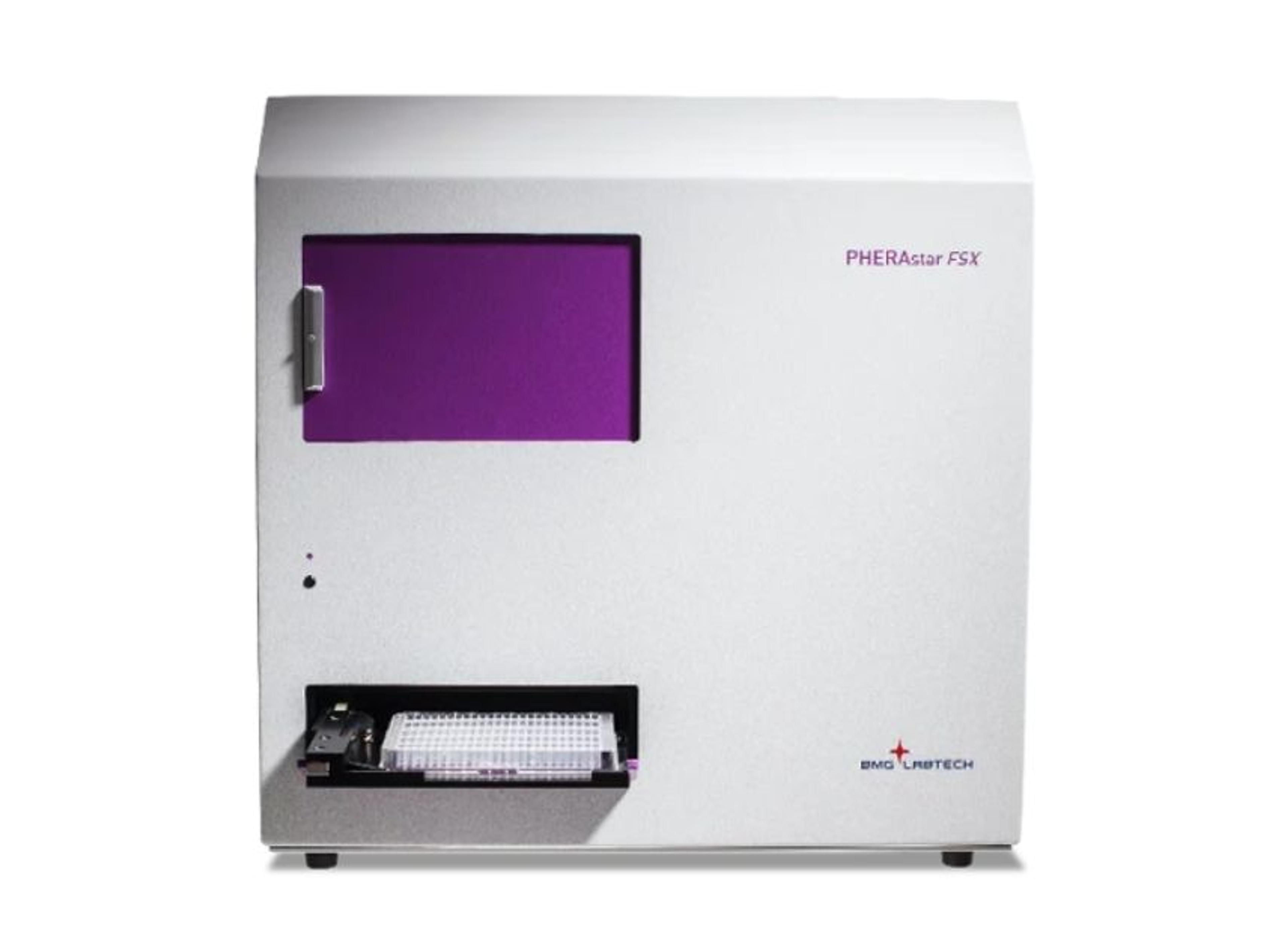
Now with the PHERAstar FS microplate reader from BMG LABTECH, there are safer, faster, and more cost-effective alternatives to the Caco-2 cell-based assay, the hERG patch clamp binding assay, receptor radioligand binding assays, and the radioactive chromium release assay (to name a few). Money will be saved by not buying specialized equipment for each assay. Time will be saved compared to whole cell Caco-2 assays and patch clamp hERG binding assays. In addition, fluorescence material is safer and less expensive than radioactive material for receptor binding or chromium release cytotoxicity assays. Details of these alternative applications can be found in several PHERAstar FS application notes.

These are just a few of the many fluorescent applications that have been developed on the PHERAstar series of microplate readers. The flexibility, sensitivity, and multi-functionality of the PHERAstar enables microplate based applications that were previously not possible. Learn more about the PHERAstar FS, the Gold-standard for microplate readers, by clicking through to the manufacturer’s website.

Links

Tags

MicroplatesMicroplates are multi-well plates used to increase the throughput of biological investigations. The number of wells microplates contain can range from 6 to 3243 wells, with the 96-well format being the most commonly used. Microplates can come tailored for a range of applications including cell culture, PCR, filtration, storage, non-binding surface, protein crystallization, as well as pre-coated, deep well and normal Standard microplates. Additionally, options for microplate colors include clear , black, white or black with clear bottom and white with clear bottom for absorbance microplate reader applications. Find the best microplates for your lab in our peer-reviewed product directory: compare products, check customer reviews and receive pricing direct from manufacturers.Microplate Readers / DetectorsMicroplate readers are used to automate the detection and analysis of labeled or label-free components in microplates during assays or live-cell monitoring. Microplate readers are generally distinguished by their mode of detection. Types include absorbance, luminescence, fluorescence intensity, fluorescence polarization, TRF / FRET and multimode microplate readers. Microplate readers deliver a high throughput of samples by reading multiple wells simultaneously, with the 96-well format the most commonly used. As a result, microplate readers are often used in the drug discovery, bioassays, research and pharmaceutical industries for screening applications. Microplate loading can also be automated, with robotic microplate stackers to increase throughput. Find the best microplate readers in our peer-reviewed product directory: compare products, check customer reviews and receive pricing direct from manufacturers.Cell-Based AssaysCell-based assays are used to monitor the presence, quantity and activities of a desired cellular analyte including drug molecules or biomarkers. This can reveal information on cell health (apoptosis, cytotoxicity, viability and proliferation assays), cell metabolism, cell migration and cell signaling mechanisms. Find the best cell-based assay products, kits and equipment with our peer reviewed product directory: compare products, check customer reviews and receiving pricing direct from manufacturers.Patch ClampFluorescence Based AssayFluorescence based assays are widely used in life science research and high-throughput screening to measure a broad range of cellular activities.Radio-Ligand Binding
Fluorescence Alternatives to Popular Biological Assays: Caco-2, hERG, Radioligand Binding, and Chromium Release