Five Must-See Personalized Medicine Videos

21 Oct 2014

Kerry Parker
CEO

Editorial article


1.The Future of Mass Spectrometry in Health Sciences

Dr Rohit Khanna describes how mass spectrometry is now being used in proteomic, genomic and biomarker studies. In the future, this technology will be used in diagnostics, forming a link between biomarkers and personalized medicine.

2.AACC President Discusses Virtual Conference on Personalized Medicine

Dr Stephen Wong discusses personalized medicine, and why he believes it will play such a vital role in healthcare. Dr Wong also gives details on the AACC's first ever virtual conference on personalized medicine, during which experts in the field discussed the latest scientific advances and the novel technologies driving personalized medicine forward.

3.Personalized Medicine: The Future of Healthcare

Professor Jeremy Nicholson, of the MRC-NIHR National Phenome Centre, describes personalized medicine and how delivering the correct treatment for the right individual, based on their genes and environment, could be the future of healthcare.

4.Extracellular Matrices: Innovative Cancer Research

In this exclusive tour of the Beatson Institute, Prof. Jim Norman describes the current research taking place at the world-class cancer research facility, including cell cancer metabolism, cancer cell proliferation, and mechanisms of invasion and metathesis.

5.What is the Future of Science in Sport?

Hear from world-renowned experts on how the Sportomics approach to analyzing athletes can bridge a methodological gap between hypermetabolic states and personalized medicine.

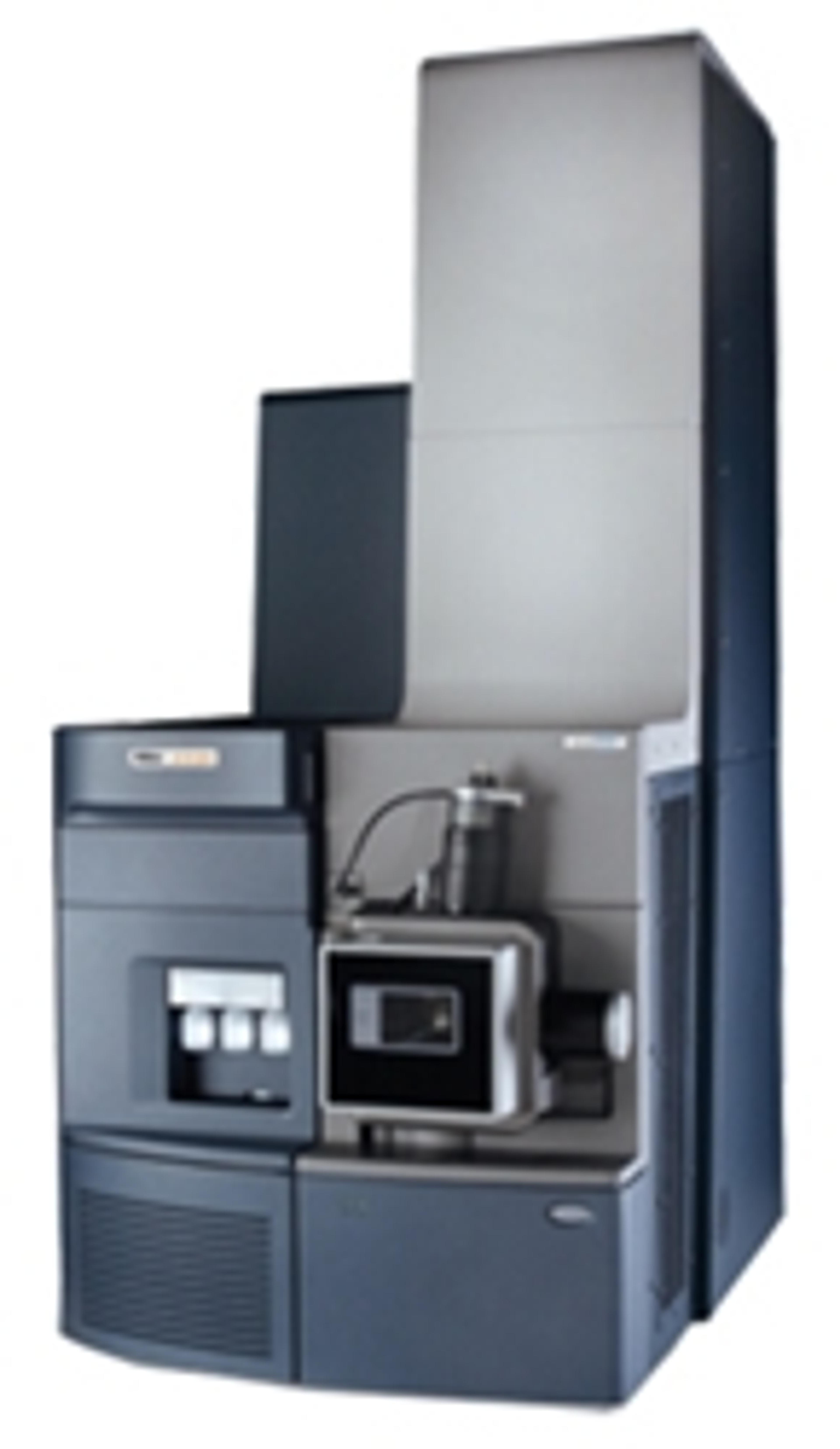
Xevo G2-XS QTof

Waters

Xevo G2-XS QTof - eXtreme Sensitivity, eXtraordinary Selectivity, eXceptional Solutions. For the scientist who needs to identify, quantify and confirm the broadest range of compounds in the most complex and challenging samples the Xevo G2-XS QTof provides maximum robustness with no compromise in performance, class-leading real-world quantitative sensitivity, the highest quality, most comprehensive qualitative information, flexibility to adapt to changing needs and is accessible to experts and non-experts alike.
(17)

Links

Tags

ProteomicsProteomics is the systemic bioinformatics study of proteins and amino acids, including their structure, size, function and identification. Tools used in proteomics include chromatography, blotting and gels, protein arrays, mass spectrometry and ELISA and associated analysis software. Analyzers and proteomic systems should be sensitive, high resolution, fast and may be automated for high-throughput.Cell-Based AssaysCell-based assays are used to monitor the presence, quantity and activities of a desired cellular analyte including drug molecules or biomarkers. This can reveal information on cell health (apoptosis, cytotoxicity, viability and proliferation assays), cell metabolism, cell migration and cell signaling mechanisms. Find the best cell-based assay products, kits and equipment with our peer reviewed product directory: compare products, check customer reviews and receiving pricing direct from manufacturers.Gene Expression and Molecular CloningMolecular cloning is a set of techniques that utilizes vectors to transfer recombinant DNA into host cells and is an essential tool for investigating the expression of genes and proteins in bacterial or mammalian cells. A variety of vectors optimized for gene cloning and expression in a range of host organisms are available, alongside competent cells for genetic replication. Here, you can explore a range of molecular tools, high-quality genomic and cDNA libraries, premade clones, transformation and transfection reagents and mutagenesis or gene expression detection assays and expression arrays. Find the best gene expression and molecular cloning products in our peer-reviewed product directory: compare products, check customer reviews and receive pricing direct from manufacturers.BiomarkersBiomarkers are biological markers which can be measured and evaluated to indicate a biological state. The use of biomarkers in research and diagnosis can indicate a normal or disease state or drug response of cells / tissues. Biomarkers include genetic markers, cell surface markers such as antigens, antibodies or receptors and secreted molecules such as cytokines. An assay system is required for identification of biomarkers. :Clinical GeneticsMolecular Genetics covers the analysis of hereditary genetic disease and chromosomal abnormalities. Genetics can be analysed using DNA, RNA, and protein microarrays, PCR, RT PCR and DNA sequencing. Genetic equipment includes genetic workstations, thermal cyclers, cooling blocks and electrophoresis products. Diagnostic kits are used for DNA / RNA extraction and purification.Next Generation SequencingNext-generation sequencing (NGS), also known as whole-genome sequencing, high-throughput sequencing and massive parallel sequencing, produces and analyses thousands to millions of nucleotide sequences at once. Sequencing systems operate via varying technologies depending on the manufacturer, including sequencing by synthesis, ligation, pyrosequencing, ion semiconductor and single-molecule real-time sequencing. For NGS, library preparation is paramount to successful sequencing. In this section, explore a range of library preparation kits, from targeted, amplicon-based or hybridization-based kits including epigenomic, transcriptomic and genomic workflows to fragmentation kits. Find the best next-generation sequencing products in our peer-reviewed product directory: compare products, check customer reviews and receive pricing direct from manufacturers.Precision MedicinePrecision medicine refers to the idea of customized healthcare, where medical decisions and treatments are tailored to the individual patient. Molecular diagnostics, companion diagnostics and Next Generation Sequencing (NGS) play a pivotal role in this approach. Biomarker DiscoveryClinical biomarkers refer to substances related to known medical conditions that can be accurately measured <i>in vitro</i>. Biomarkers can be used to diagnose presence of a disease and indicate disease severity. The discovery of new biomarkers is incredibly valuable in the field of diagnostics.