
Finding New Drugs - Resolving the Molecular Secrets of Metabolism in Marine Molluscs
A laboratory in Australia is using advanced spectrometry approaches to harness the potential of natural metabolites from marine invertebrates in drug discovery
19 Jan 2018Editorial article
The search for new drugs is a never-ending endeavour, and it takes many forms. One of the most promising routes lies in harnessing molecules from the natural world and Professor Mary Garson and her team in Queensland, Australia, are among the leading players in the global natural products research community. Garson is a chemist working at the University of Queensland’s School of Chemistry and Molecular Sciences who specialises in studying the chemistry and chemical ecology of bioactive metabolites from marine molluscs and sponges. The value of this research is manifest through the US Food and Drug Administration (FDA) currently approving at least six natural products of marine mollusc origin as drugs or in clinical trials.

Understanding Chemical Ecology in Marine Molluscs
Garson and her team are driven by the need to understand the structure, biosynthesis and chemical ecology of the bioactive metabolites which a range of marine invertebrates (molluscs, sponges and ascidians) use in both communication and defence. Not only does this yield information about their potential in human medicine, but it can be pertinent to environmental management approaches in dynamic and highly-valued or protected habitats such as coral reefs.
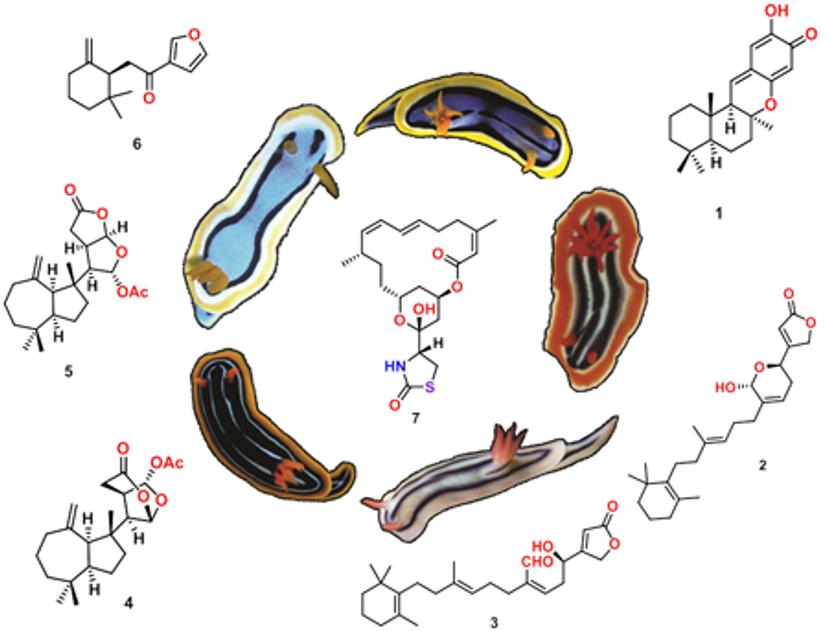
The Garson team is currently focused on using mass spectrometry (MS) imaging to answer questions around how marine molluscs are able to move and store potent cell toxins within their mantle tissue (as a defence to predators), without poisoning themselves. Insights here may have applications in fighting cancer. These toxins are metabolites based on terpene and one in particular – latrunculin-A – has been found is a whole group of closely-related mollusc species. These molecules are large and have complex stereochemistry, presenting a significant challenge when it comes to resolving their molecular configurations and chemical properties.
Harnessing the best spectrometry approach
Garson and her team meet that challenge as follows:
“We need to work with sub-milligram amounts of individual metabolites, therefore access to very high-field instruments, preferably with a cryoprobe, gives us high-quality spectra with excellent resolution,” says Garson.
They therefore looked towards nuclear magnetic resonance (NMR) imaging and selected the Bruker AVANCE™ series of instruments ranging in power from 500MHZ for routine imaging, to 700MHz (adapted) for high-throughput use, right up to 900MHz for the most complex research. Garson’s team runs all the routine 2D NMR experiments (COSY, TOCSY, HSQC, HMBC) to define the planar skeleton of a new metabolite. They then use a combination of NOESY data, J-based configurational analysis and molecular modelling to define the relative configuration of the molecule. Garson also reports that “in complex stereochemical situations, we have been using Density Functional Theory (DFT) calculations to determine the chemical shifts of individual candidate stereoisomers. By comparing this data with experimental data, we have been able to predict the most likely relative configuration for the isolated metabolite.”
In this respect, NMR has the edge over alternative techniques like X-ray crystallography for which Garson asserts that “the isolated metabolite has to be crystalline and this is a limitation.” That is not the only drawback though:
“In the last five years, the structure of halogenated natural products has been determined by the crystalline sponge method. This method does work for non-crystalline products, but with restrictions on molecular size and shape,” says Garson.
When Garson encounters the non-crystalline metabolites of large molecular size and shape that nature comes up with, it is then that the Bruker AVANCE™ NMR series delivers just what is needed.
The resolution power was not the only consideration, however, since Garson points to the instrument’s ease-of-use and short training time as important features:
“My students are able to run routine proton samples after a single 1-2-hour training session. The Bruker Topspin™ software is intuitive and easily understood.”
It is clear her students require more training than this to use alternative MS equipment, and “especially when learning how to run high-resolution measurements,” Garson says.
Future developments
Identifying how marine molluscs protect themselves from their own toxic defences is a key focus for the team going forward. This may yield insights into how cytotoxic drugs can be delivered to the site in the body where they are needed, without damaging healthy cells along the way.
“We are starting to use mass spectrometry imaging to localize metabolites within individual cell substructures (vacuoles, glands) in the mantle rim tissue of nudibranchs,” says Garson.
She continues: “We are also quantifying the individual amounts of metabolite in individual tissue types by running NMR spectra on samples doped with an internal standard.”
For the longer-term future, one thing is certain in Garson’s mind:
“Natural products chemistry will always be providing novel and bioactive targets for medicinal chemistry and drug discovery”.
Garson also foresees an important confluence of technologies ahead, in which the “interconnection of marine natural products, genome mining and systems biology will allow the routine engineering of microorganisms that produce potent drugs for use against cancer and infectious diseases.” Allied to that, she predicts “rapid advances in total organic synthesis…. that will transform the industrial chemical sector, notably in the manufacture of fine chemicals and pharmaceuticals.”
Find out more about the research taking place in the Garson lab and how the latest innovation in the Bruker AVANCE™ NMR series could help you.
Related products
Request Quote for All Products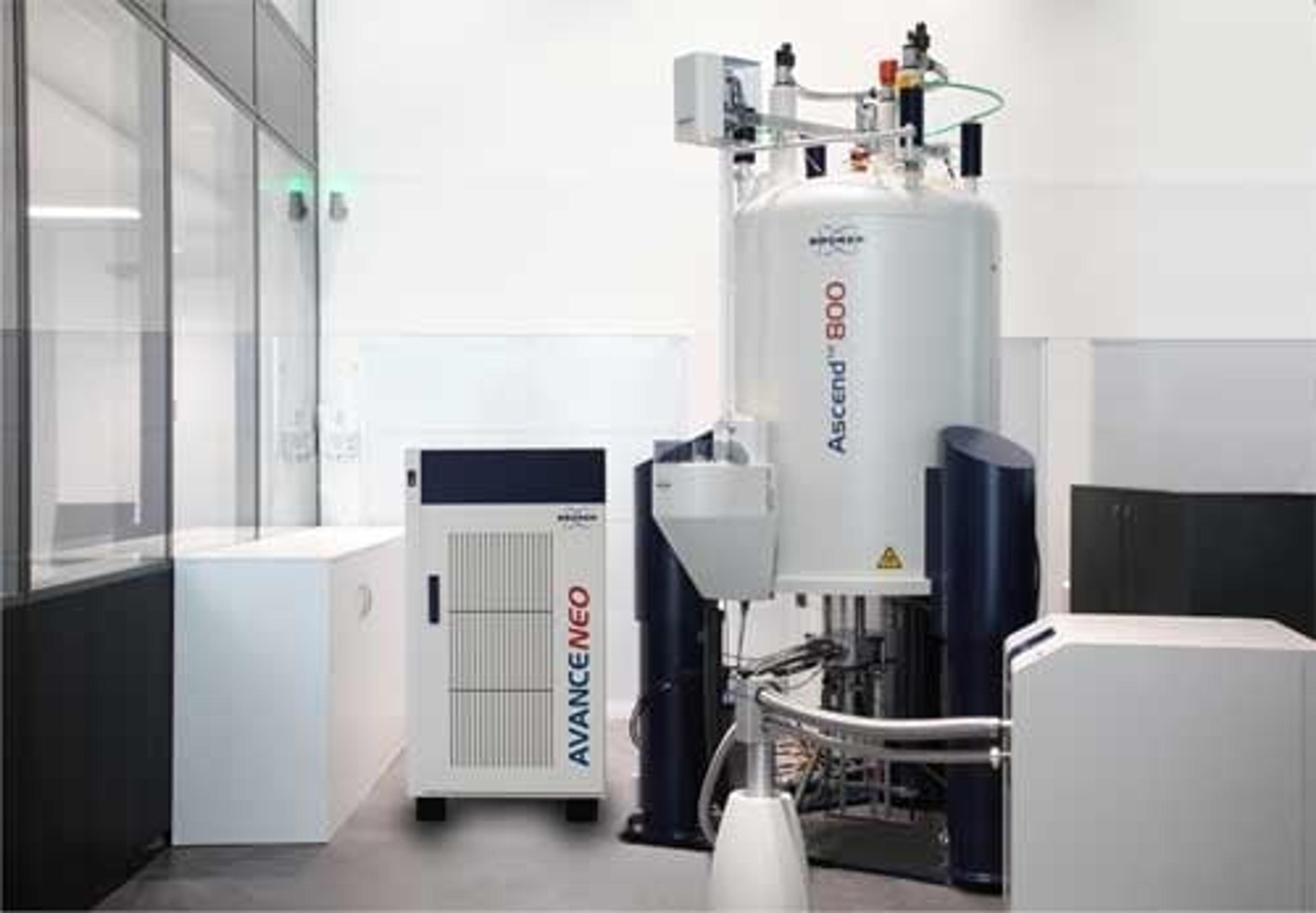
AVANCE NEO
Bruker BioSpinThe AVANCE NEO represents the next generation in the very successful AVANCE series product line, which has established Bruker as the global technology and market leader in NMR.