FDA approves first NGS-based companion diagnostic for RET fusion-positive non-small cell lung cancer

CDx approval expands clinical utility of Oncomine Dx Target Test to identify candidates for GAVRETO

7 Sept 2020

Diane Li
Assistant Editor

Industry news

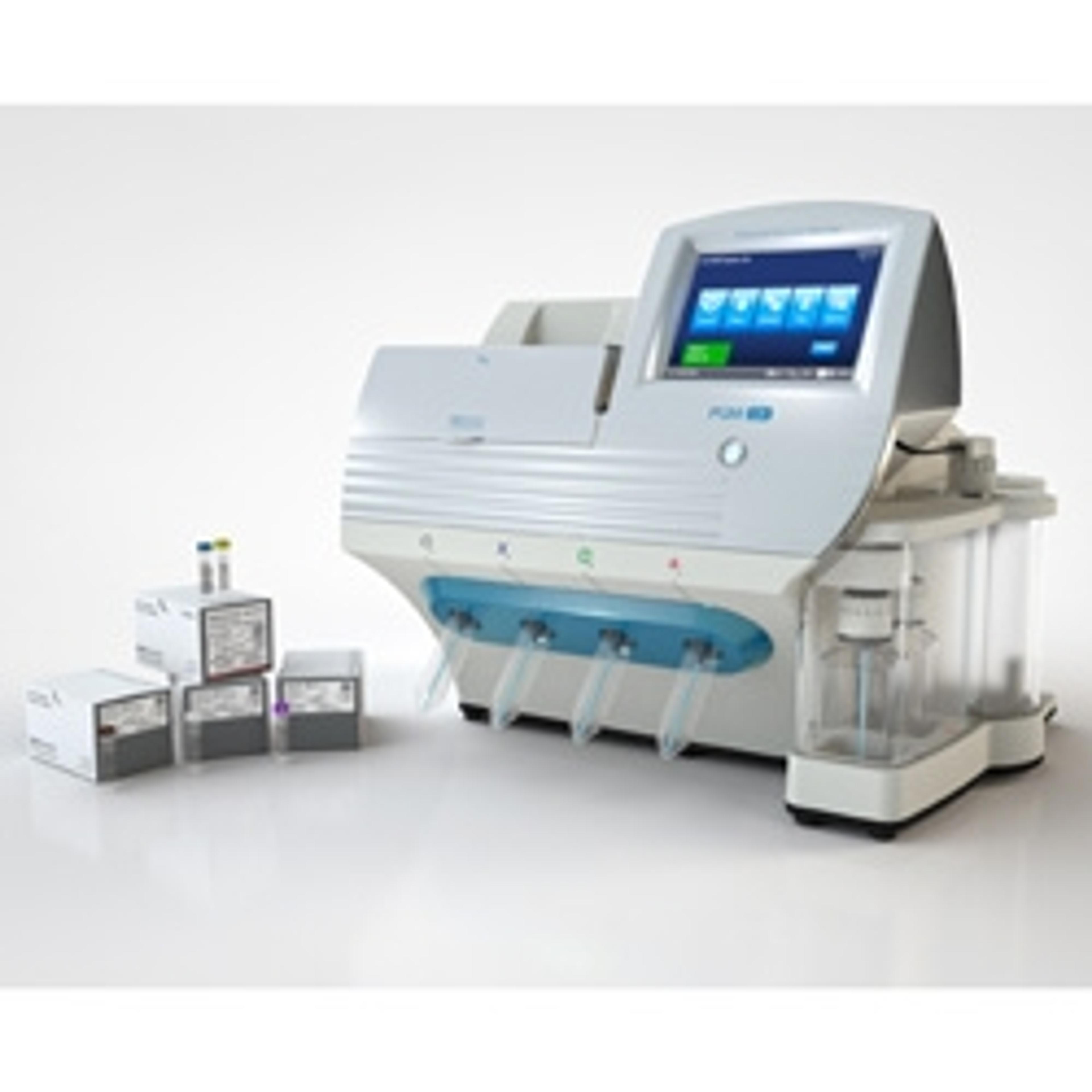
The U.S. Food and Drug Administration (FDA) has granted premarket approval to Thermo Fisher Scientific's Oncomine Dx Target Test as a companion diagnostic (CDx) to identify RET fusion-positive, metastatic non-small cell lung cancer (NSCLC) patients who are candidates for GAVRETO™ (pralsetinib), a targeted therapy developed by Blueprint Medicines. The Oncomine Dx Target Test was initially approved in 2017 as the first targeted next-generation sequencing (NGS)-based CDx for biomarkers associated with three FDA-approved NSCLC therapies. It is now also the first and only FDA-approved test of its kind for a targeted treatment for RET fusion-positive NSCLC. Thermo Fisher will update the Oncomine Dx Target Test to enable it to report RET fusions in the U.S. before the end of the year.

GAVRETO is a potent and selective once-daily oral therapy designed to target RET fusions and mutations. GAVRETO was granted accelerated approval by the FDA on Sep 4 for the treatment of adult patients with metastatic RET fusion-positive NSCLC. The approval was based on data from the ongoing Phase 1/2 ARROW clinical trial in patients with RET fusion-positive NSCLC with or without prior therapy.

RET fusions are believed to be key disease drivers in about 1-2 percent of patients with NSCLC, which accounts for 85 percent of all lung cancers in the United States. New data show that NSCLC mortality has been declining in recent years, suggesting that advances in treatment, including targeted therapies, may be contributing to improved survival rates. RET fusions are on the list of key markers recommended for multi-biomarker testing in NSCLC by National Comprehensive Cancer Network (NCCN) guidelines. The approval now provides NSCLC patients the only path to receive rapid assessment of their RET fusion status with an approved NGS test.

The Oncomine Dx Target Test simultaneously evaluates 23 genes clinically associated with NSCLC. In 2017, the FDA approved it as a CDx to identify patients who may be eligible for specific targeted therapies. The test has also been approved by Japan's Ministry of Health, Labour and Welfare (MHLW) as a CDx for four biomarkers – EGFR, ALK, ROS1 and BRAF – associated with 12 targeted therapies for NSCLC.

Most recently, the MHLW approved the test to assess patients who may be eligible for treatment with entrectinib (Rozlytrek®) following a CDx agreement Thermo Fisher signed earlier this year with Chugai Pharmaceutical Co., Ltd., a member of the Roche Group. The Oncomine Dx Target Test is currently approved and reimbursed by government and commercial insurers in the U.S., Europe, Japan, South Korea and Israel, covering more than 550 million lives globally.

"It is our goal to provide cancer patients globally greater access to highly actionable, NGS-based multi-biomarker testing in important indications like NSCLC as recommended by multiple guidelines. Today's approval underscores this endeavor," said Garret Hampton, president of clinical next-generation sequencing and oncology at Thermo Fisher Scientific. "Our tests are designed to require the least amount of sample of any NGS IVD test on the market, leading to more patients benefiting from the test and put on the right therapy upfront. As part of our commitment, we remain focused on developing our next generation companion diagnostic by taking Oncomine Precision Assay and the Genexus System through the FDA's approval process."

Want more of the latest science news straight to your inbox? Become a SelectScience member for free today>>

Links

Tags

HematologyIn Haematology / Hematology, complete blood cell counts (or full blood counts) are obtained using automated blood count analyzers to enumerate blood cell types.  Hematology also encompasses haemostasis and coagulation, thrombophilia and hemophilia, plasma viscosity and ESR analysis, hemoglobinopathies, cell morphology and haematinic measurement.Cellular PathologyCellular Pathology deals with the microscopic analysis of tissue samples and cells. Sample preparation and processing includes fixation, staining, sectioning and slide mounting, using equipment such microtomes and cryostats. In choosing immunohistochemistry and immunocytochemistry kits, consider chromogens, staining method, antibodies, microscopes and imaging.Biopharmaceutical AdvancesBiopharmaceutical advances follow the development of pharmaceuticals derived from biotechnology, also known as biotechnology medicines. Biopharmaceuticals may be produced from cell lines, plants, or microbial cells. Important considerations of biopharmaceutical use include application, cost, production process and purification.Clinical ChemistryBiochemistry (or clinical chemistry) involves the analysis of bodily fluids using chemical tests. Techniques used include HPLC, chromatography, spectroscopy, mass spectrometry, immunochemical, electrophoresis, turbidometric / spectrophotometric assay, MRI and ISE analysis. Tests are often carried out on plasma or serum but urine (urinalysis) and fecal specimens are also processed.Clinical GeneticsMolecular Genetics covers the analysis of hereditary genetic disease and chromosomal abnormalities. Genetics can be analysed using DNA, RNA, and protein microarrays, PCR, RT PCR and DNA sequencing. Genetic equipment includes genetic workstations, thermal cyclers, cooling blocks and electrophoresis products. Diagnostic kits are used for DNA / RNA extraction and purification.Clinical MicrobiologyMicrobiology is the study of microorganisms including protists, prokaryotes, fungi, and, often, viruses. Microorganisms are a useful research tool as genetic vectors and, in immunology, for antibiotic susceptibility testing, cellular biology and genetics. Microorganisms commonly grow readily in incubators with microbial culture media; this can contain chromogenic supplements to differentiate between cell lines. Estimate your culture’s density of microorganisms with colony counters, or screen and select colonies for desirable clones with automated colony pickers. Additionally, equipment is available to monitor environments for the presence of microbes and identify with microbial identification instruments. Find the best microbiology products in our peer-reviewed product directory: compare products, check customer reviews and receive pricing direct from manufacturers.Next Generation SequencingNext-generation sequencing (NGS), also known as whole-genome sequencing, high-throughput sequencing and massive parallel sequencing, produces and analyses thousands to millions of nucleotide sequences at once. Sequencing systems operate via varying technologies depending on the manufacturer, including sequencing by synthesis, ligation, pyrosequencing, ion semiconductor and single-molecule real-time sequencing. For NGS, library preparation is paramount to successful sequencing. In this section, explore a range of library preparation kits, from targeted, amplicon-based or hybridization-based kits including epigenomic, transcriptomic and genomic workflows to fragmentation kits. Find the best next-generation sequencing products in our peer-reviewed product directory: compare products, check customer reviews and receive pricing direct from manufacturers.FDAThe Food and Drug Association (FDA) is an agency within the U.S. Department of Health and Human Services. Among other things, it is responsible for ensuring the safety, effectiveness and quality of drugs, vaccines and other biological products, and medical devices. Hematology SolutionsHematology solutions involve diagnostic tests and equipment used to analyze blood samples and diagnose blood disorders such as anemia, leukemia, and hemophilia. These tools include automated full blood count analyzers, reagents, and digital morphology systems. Explore hematology solutions in our peer-reviewed product directory; compare products, check reviews, and get pricing directly from manufacturers.Clinical NGSNext Generation Sequencing (NGS) refers to the use of massive parallel sequencing of multiple small fragments of DNA. This high-throughput genomic analysis yields enormous amounts of sequence data, which if appropriately analyzed could have huge potential for clinical laboratories. For this to happen there are technique and bioinformatic hurdles to be overcome.Cancer ResearchCancer research aims to understand the mechanisms of cancer development and progression to improve prevention, diagnosis, and treatment. From molecular biology to clinical trials, research spans a wide range of disciplines, including immunotherapy, targeted therapies, and drug discovery. Explore the best cancer research products in our peer-reviewed product directory; compare products, check reviews, and get pricing directly from manufacturers.TumorsTumor research focuses on understanding abnormal cell growth that leads to cancer. Identifying biomarkers, studying tumor microenvironments, and developing targeted therapies are critical for advancing cancer treatment. Early detection and personalized treatment options are key to improving outcomes for patients. Browse our peer-reviewed product directory to explore tools for tumor research, diagnostics, and cancer therapies; compare products, read customer reviews, and get pricing directly from manufacturers.Biomarker DiscoveryClinical biomarkers refer to substances related to known medical conditions that can be accurately measured <i>in vitro</i>. Biomarkers can be used to diagnose presence of a disease and indicate disease severity. The discovery of new biomarkers is incredibly valuable in the field of diagnostics.