Fast and Accurate At-Line Elemental Analysis for Industry

5 Feb 2018

Finn Price
Administrator / Office Personnel

Product news

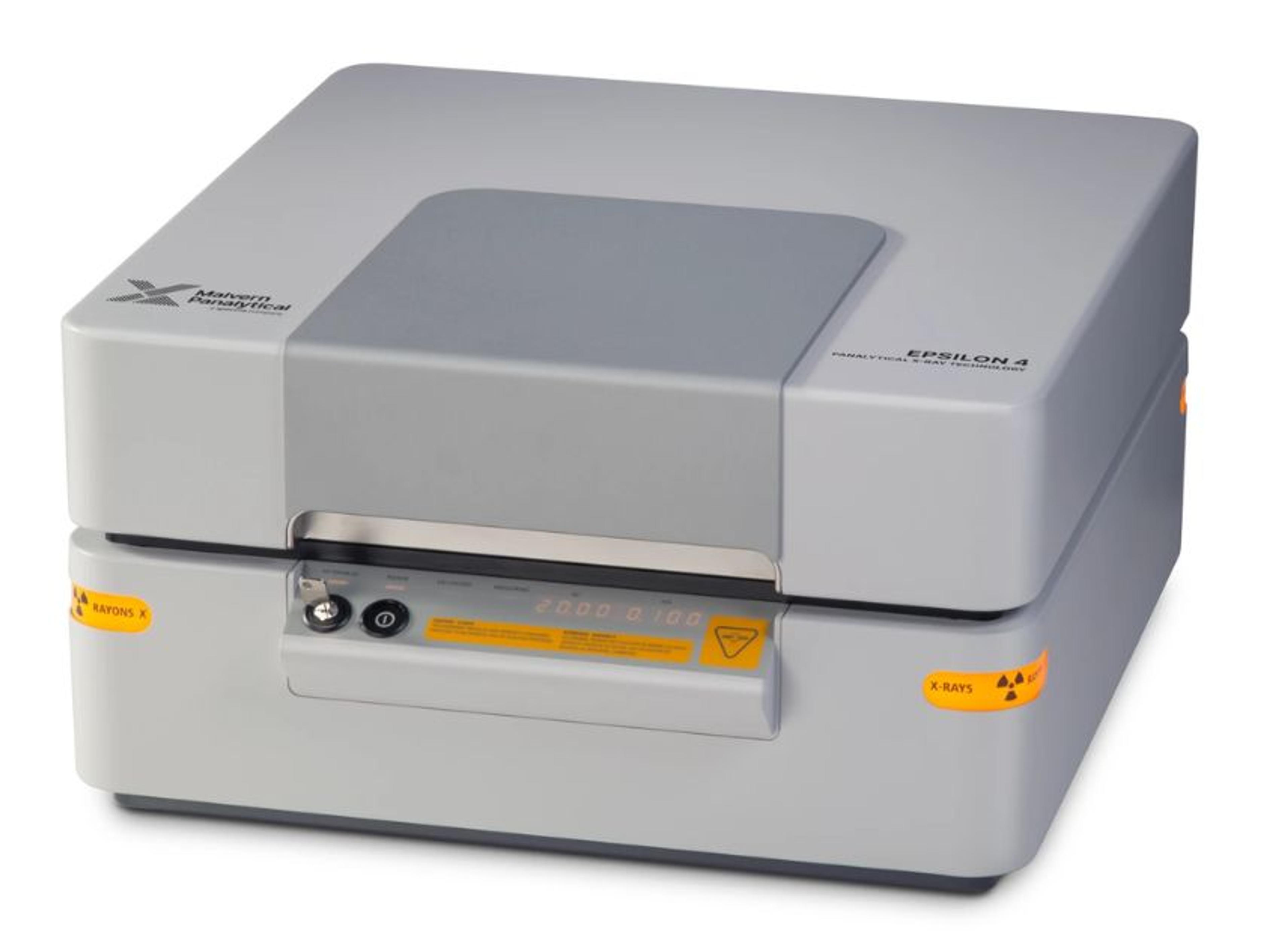
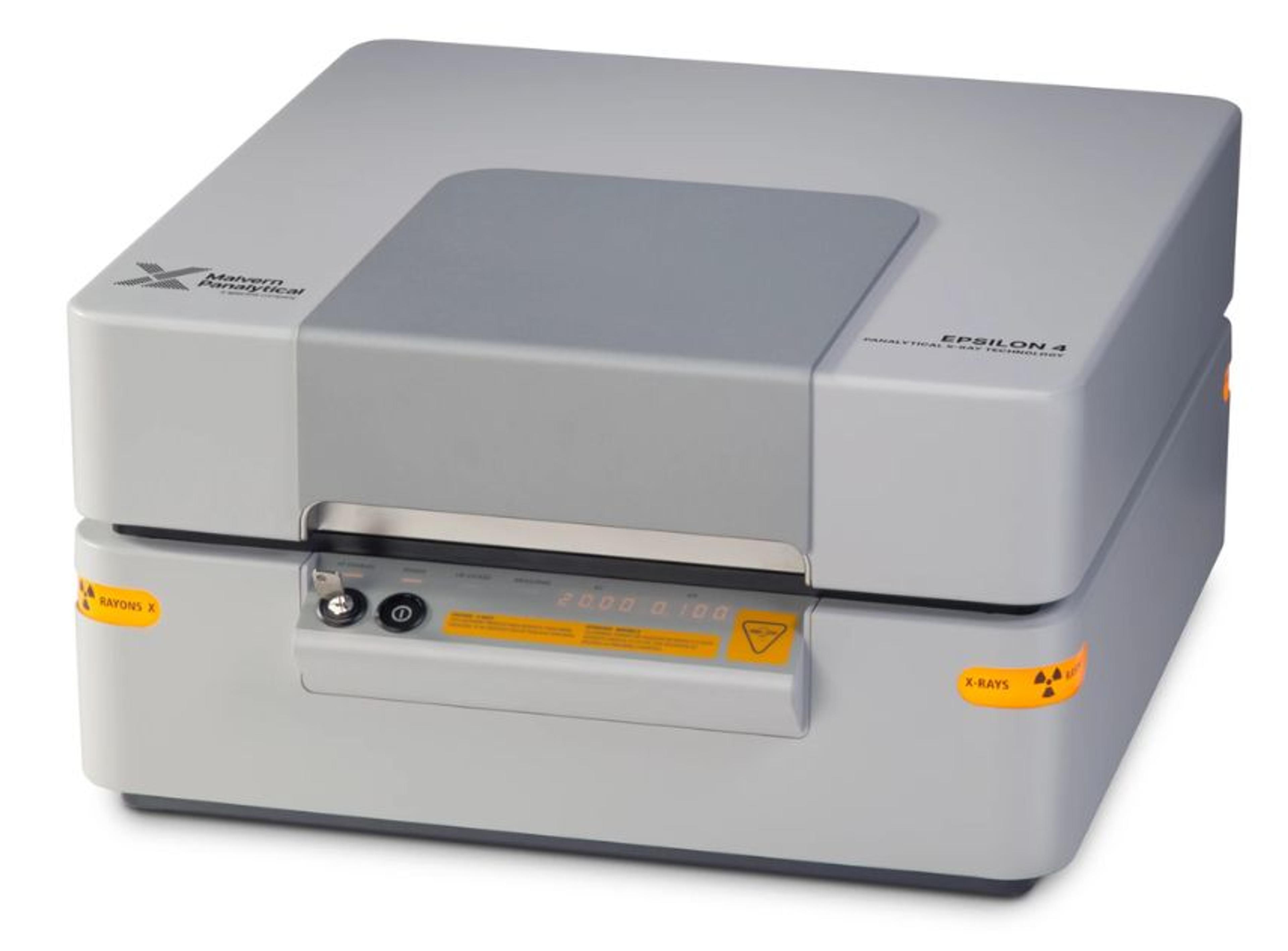
Malvern Panalytical presents Epsilon 4, the new high-performance benchtop analytical tool for the determination of the chemical composition of all kinds of material. Built on the experience and success of the proven Epsilon 3 range of XRF spectrometers, the Epsilon 4 is a multi-functional instrument opening new applications for industries such as mining, pharma or oils & fuels who are obliged to comply with international regulations and test methods. Combining the latest advances in excitation and detection technology with mature software and a smart design, the analytical performance of the new benchtop instrument approaches the one of more powerful and floor-standing spectrometers.

Due to its low infrastructural requirements, Epsilon 4 can be placed next to the production line anywhere in your process. Its high performance enables most applications to be operated at ambient conditions, reducing costs for helium or vacuum maintenance. The unique low-drift metal-ceramic X-ray tube, designed and manufactured by Malvern Panalytical, delivers compliant results for years without the need for costly re-calibration. The instrument can automatically process sample batches without the need for operator attention.

Find out more about the latest advances in X-ray fluorescence spectrometry in our Spectroscopy Community >>

Epsilon 4 is a highly flexible tool available in a 10-Watt version for elemental analysis (F – Am) in areas from R&D through to process control. For even higher sample throughput or extended light-element capabilities and in more challenging environments a 15-Watt version is available, which can even analyze carbon, nitrogen and oxygen. “Epsilon 4 delivers the highest count rate in the market while little or no sample preparation is required to achieve very fast and reproducible results”, says Simon Milner, product director at Malvern Panalytical. “It is the perfect analytical tool for any industry needing to comply with increasingly stringent test methods and norms. Trust our experienced staff to work with you on tailored solutions for your analytical challenges.”

Do you use Malvern Panalytical's Epsilon X-ray fluorescence spectrometers in your laboratory? Write a review today for your chance to win $400 in Amazon Vouchers.

Links

Tags

Fluorescence SpectroscopyFluorometers and spectrofluorometers (also called fluorescence spectrometers) are used to measure the intensity and wavelength of fluorescent light emitted from a sample after excitation by illumination. Spectrofluorometers utilize monochromators to select the desired wavelengths, whereas filter fluorometers employ a set of filters. Spectrofluorometers for measuring steady-state fluorescence and lifetime fluorescence (or time-resolved fluorescence) are available, as well as fluorescence microscopes and microplate readers. Find the best fluorescence spectroscopy products in our peer-reviewed product directory: compare products, check customer reviews and receive pricing direct from manufacturers.X-Ray Diffraction and SpectroscopyX-Ray diffraction & spectroscopy are used in material characterization to discern the structure and elemental composition of a sample. X-Ray diffractometers (XRD) are superior instruments in elucidating the dimensional atomic structure of crystalline materials, including powders, thin films and single crystals. For large unit cells or ordered macromolecules, consider small-angle X-ray scattering (SAXS). X-ray spectroscopic techniques include X-ray fluorescence (XRF) and X-ray photoelectron spectroscopy (XPS), both providing simple and accurate methods for determining the elemental composition of a material. Energy dispersive (EDXRF) and wavelength dispersive (WDXRF) XRF spectrometers are available, as well as handheld/portable devices. High-resolution, 3D microstructure characterization of materials can be achieved with X-ray microscopes combining sub-micron resolution imaging with 3D computed tomography. Find the best XRD and XRF spectrometers in our peer-reviewed product directory: compare products, check customer reviews and receive pricing direct from manufacturers.X-Ray FluorescenceX-ray fluorescence (XRF) is an analytical technique used to determine the elemental composition of materials. It is widely used in geology, materials science, and environmental testing for detecting heavy metals and other elements. Browse our peer-reviewed product directory to find the best XRF systems, compare products, check reviews, and get pricing directly from manufacturers.Elemental AnalysisElemental analysis involves determining the elemental composition of a sample, often used in environmental, pharmaceutical, and material sciences. Techniques like ICP-MS, X-ray fluorescence, and atomic absorption spectroscopy allow precise quantification of elements such as metals and nonmetals in complex matrices. Browse our peer-reviewed product directory to find the best elemental analysis tools, compare products, check reviews, and get pricing directly from manufacturers.