Expanding the Range of Selectivity for Ultra-high Performance

7 Mar 2011
bridget bridget
Laboratory Director

Product news

Phenomenex will feature new options for rapid and efficient separations, with expanded selectivities and products optimized for tough applications. New Kinetex C8 and XB-C18 phases increase the range of selectivity for chromatographers seeking ultra-high performance on any LC system.

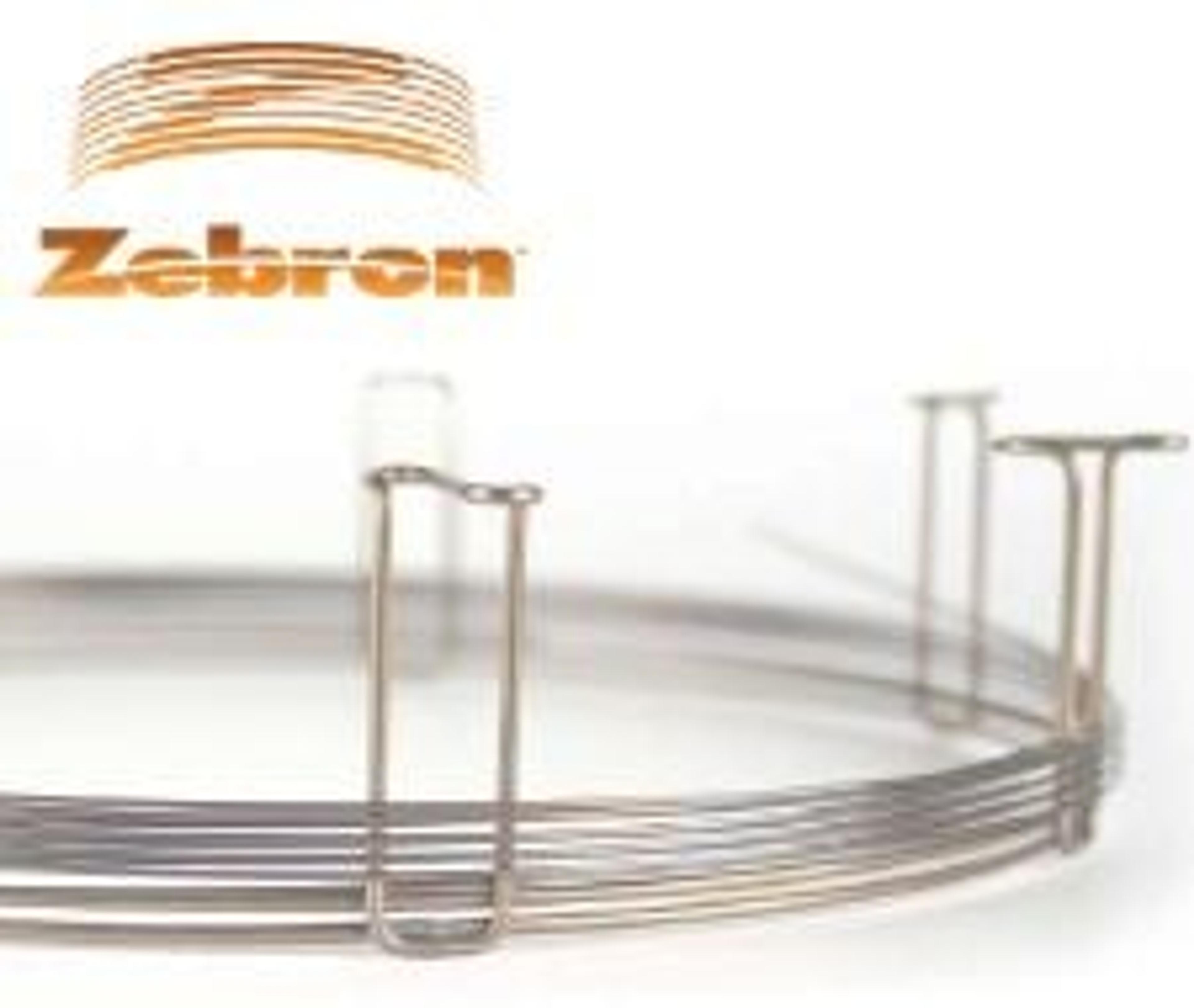
Recently introduced metal Zebron GC columns provide efficiency gains of up to 70 percent over comparable metal columns, with improved resolution of C50/C52 hour after hour. With the recent addition of two new phases to the Lux suite, Cellulose-3 and Cellulose-4, one can expect to resolve over 92 % of their enantiomers.

To reduce the complexity of toxicology analyses, new Strata-X-Drug B allows for extraction of 11 drugs of abuse using only three methods. The new Verex line of certified vials provides high quality options for all chromatography applications.

Organized workshops discuss the role of columns in maximizing separation performance, and integrating Fast LC with MS detection, as well as looking at emerging drugs and analyses in the toxicology field.

In the Pittcon Technical Program, Phenomenex researchers will present on recent developments in chromatography and their applications to current challenges.

Featured at Pittcon 2011:

Kinetex® C8 and XB-C18
2 NEW Kinetex phases expand the range of selectivity for chromatographers seeking ultra-high performance on any LC system. Kinetex XB-C18 gives superior peak shape and enhanced separation of basic compounds in acidic and neutral pH conditions. Kinetex C8 brings the benefits of core-shell technology to methods that require a USP L7 and other C8 column methods.

Strata™-X-Drug B
Imagine needing only one SPE sorbent for all of your drugs of abuse extractions. With Strata-X-Drug B you can extract 11 drugs of abuse using only 3 methods on one sorbent.

Zebron™ ZB-1XT SimDist GC Column
New metal GC columns provide efficiency gains of up to 70 percent over comparable metal columns, with longer lifetimes and improved resolution of C50/C52 hour after hour. Zebron ZB-1XT SimDist features Phenomenex’s unique Glass Infusion™ technology, which ensures consistent phase coating for higher, sharper peak shapes.

Verex™ Certified Vial Products
There is a difference! From start to finish, Verex™ CERTIFIED vial and cap products are manufactured to provide high quality, state-of-the-art solutions for your most challenging, sensitive applications. Our innovative precision products offer compatibility with virtually any autosampler and provide air-tight, leak-free seals to safely store and transfer your most important samples. Verex vials are guaranteed for 100% satisfaction.

Lux™ Cellulose-3 and Cellulose-4
The Lux family of polysaccharide chiral columns, including both amylose and cellulose phases, provides a variety of complementary selectivities for screening. With the recent addition of two new phases, Lux Cellulose-3 and Lux Cellulose-4, one can expect to resolve over 92 % of their enantiomers.

Organized Workshops:
• UHPLC - Chromatography Column Influences on Maximizing Separation Performance
Session 510
M, Mar 14
2:00 PM
Room 409

• Emerging Drugs, Tests, and Analyses in the Toxicology Field
Session 810
T, Mar 15
8:00 AM
Room 409

• Successful Integration of Fast LC with MS Detection
Session 1070
T, Mar 15
2:00 PM
Room 409

Phenomenex is a global technology leader committed to developing novel analytical chemistry solutions that solve the separation and purification challenges of researchers in industrial, government and academic laboratories. Phenomenex’s core technologies include products for liquid chromatography, gas chromatography, sample preparation, bulk purification chromatographic media, and chromatography accessories and equipment. For more information on Phenomenex, visit the company website.

Zebron™ ZB-1XT SimDist GC Columns

Phenomenex Inc

Consistent, Reliable Results for Simulated DistillationUniform Glass Infusion™ coating for sharp peaks and high efficiencyIndividually tested for improved reproducibility45 – 70 % higher efficiency than other manufacturersImproved resolution of C50/C52 hour after hourRecommended ApplicationsASTM Methods (D2887, D2887X, D3710, D6352, D7169), Crude Oil, Gasoline Fractions, Petroleum Distillates, Petroleum Fractions, Simulated Distillation, Vacuum Distillates

(0)

Links

Tags

Gas ChromatographyGas chromatography (GC) is an analytical technique used to separate and quantitate mixtures of small and volatile compounds. Gas chromatographs or GC systems include components such as GC columns, detectors, pumps and autosamplers. Choose from packed or capillary GC columns, flame ionization (FID), photoionization (PID) electron capture detectors and selective or non-selective detectors. Find the best gas chromatographs in our peer-reviewed product directory: compare products, check customer reviews and receive pricing direct from manufacturers.UHPLC and HPLCHigh performance liquid chromatography (HPLC) and ultra high performance liquid chromatography (UHPLC), also known as UPLC, are analytical techniques used to separate, identify and quantitate components of complex mixtures including biological samples such as proteins and lipids as well as chemical mixtures of pesticides, drugs and oils. Both techniques are liquid chromatographic methods but differ by operating pressures (HPLC < 6000 psi < UHPLC ). Components of HPLC and UHPLC systems include columns, detectors, pumps, autosamplers and column heaters. Explore a range of UHPLC and HPLC columns for your specific sample needs including reverse phase, normal phase, ion exchange, HILIC, ion exclusion and size exclusion columns. For more specialized HPLC, explore FPLC, countercurrent LC and simulated moving bed systems. Find the best UHPLC and HPLC equipment in our peer reviewed product directory: compare products, check customer reviews and receive pricing direct from manufacturers.LC-MSLC-MS (liquid chromatography-mass spectrometry) systems and equipment are used for separation and quantitative analysis of complex mixtures, combining liquid chromatography and mass spectrometry. Quantify proteins, contaminants, pesticides or screen for drug metabolites with a high level of sensitivity. LC-MS systems and equipment include reverse phase, normal phase and specialized columns integrated with various MS detectors such as time-of-flight (TOF), quadrupole, orbitrap or ion trap mass analyzers. LC-MS/MS instruments equipped with a qTOF or triple quadrupole analyzer give greater sensitivity and resolving power to your analysis. Find the best LC-MS equipment in our peer-reviewed product directory: compare products, check customer reviews and receive pricing direct from manufacturers.Combinatorial ChemistryCombinatorial chemistry, also known as combichem, is a technique used in drug discovery to create libraries of structurally related compounds. A library is generated by synthesis with a chemical reactor system or by computer-based modeling of compound combinations. When undertaking combinatorial chemistry consider reagents, buffers, resins and standards.Lab-on-a-ChipLab-on-a-chip (LOC) technology uses microfluidic chips, such as microarrays, to perform biochemical assays on a small scale. Benefits of lab-on-a-chip include the small volume of sample required as well as the speed of analysis. In selecting lab-on-a-chip devices consider the assay, cost, reliability, sensitivity and signal to noise ratio.High-Throughput ScreeningHigh-throughput screening (HTS) is an automated drug discovery technique for identification of active compounds against a compound library. Use HTS readers and integrated assay preparation / analysis workstations to screen your compounds. Identify active compounds against various HTS libraries, including membranes, proteins and peptides and HTS cell lines. Find the best high-throughput screening products in our peer-reviewed product directory: compare products, check customer reviews and receive pricing direct from manufacturers.Preparative ChromatographyPreparative chromatography equipment is used for purification purposes, separating and collecting compounds eluted from a mixture which can then be subsequently used for further purposes. This can be done in large quantities or small. Preparative chromatography systems are usually low to medium pressure liquid chromatographs that are semi-automated. Explore a range of preparative columns and fraction collectors. Find the best preparative chromatography equipment in our peer-reviewed product directory: compare products, check customer reviews and receive pricing direct from manufacturers.ADME-ToxicologyADME-toxicology (ADME-Tox) studies are used in pharmacology and pharmacokinetics to assess the activity/toxicity of drugs <i>in vivo</i> or <i>in vitro</i>. Find bioassays for absorption, distribution, metabolism, and excretion of drug molecules including cytotoxicity, transporter/permeability, metabolism and activity assays as well as hepatocytes and cell lines for ADME. Find the best ADME-toxicology products in our peer-reviewed product directory: compare products, check customer reviews and receive pricing direct from manufacturers.NanoLCNano LC is a nano scale liquid chromatography technique typically used for proteomic applications. The nano refers to the very low flow rate of the mobile phase in the system. The advantage of nanoLC is its high sensitivity. Often the system is integrated with a mass spectrometer in nano LC-MS or nano LC-MS/MS. When using nanoLC equipment consider column choice, software and accurate and precise flow rate control.Assay AssemblyAssay Assembly is technique used in drug discovery to develop assays to test the cytotoxicity, genotoxicity, or other activities of a compound on a cell. Assay assembly requires chip assembly, a delivery system and a detection and analysis method. Beneficial features of assay kits or automated systems include high-throughput, high speed and sensitivity and low signal to noise ratio.Compound LibrariesCompound libraries, or chemical libraries, are used in drug discovery for the identification of potential therapeutics compounds. Used in conjunction with high-throughput screening, the libraries of stored compounds are often generated for specific purposes as a drug target or disease model. Cheminformatics are commonly used when designing a compound library and software can be used to analyze the screening process.  Medicinal ChemistryMedicinal chemistry is a broad discipline encompassing the design, identification, synthesis and development of chemicals in drug discovery. It includes a number of techniques covering structural biology, synthetic chemistry and molecular biology. Technologies used in medicinal chemistry include ADME, lab-on-a-chip, high content screening and assay assembly.Microarray AnalysisMicroarrays, also known as biochips, are used for the detection and analysis of multiple genes, proteins, antibodies, or biomarkers on a single microchip. This can reveal information on protein or gene expression, single nucleotide polymorphism (SNP), copy number variation (CNV), epigenetics and patient health in clinical diagnostic tests. Discover a range of microarray scanners and prefabricated antibody, protein, RNA and DNA microarrays for your analysis or consider creating your own custom microarrays with a microarray printer. Find the best microarray products in our peer-reviewed product directory: compare products, check customer reviews and receive pricing direct from manufacturers.Process ChemistryProcess chemistry is an important stage of drug development for scaling-up drug production or chemical synthesis reactions. It is useful for optimizing economical and efficient drug production. Process chemistry uses reactors and pump systems as well as reagents, standards and buffers.SNPs TechnologySingle nucleotide polymorphisms (SNPs) are individual base variations in a DNA sequence. SNPs are used in research to study predispositions to disease and drug discovery. Products for studying single nucleotide polymorphisms include SNP arrays and detection systems to detect polymorphisms, SNP typing systems for genotyping DNA, and PCR to amplify specific SNPs.