Essen Bioscience to Showcase Incucyte Live-cell Imaging System and Applications at AACR

Booth #1365

27 Mar 2017

Lois Manton-O'Byrne, PhD
Executive Editor

Product news

The Incucyte® live-cell analysis platform from Essen BioScience will be showcased at the upcoming AACR conference, booth #1365. A variety of applications will be highlighted at the booth and poster sessions across a multitude of research and therapeutic areas including immuno-oncology, immunology, neuroscience and stem cell biology.

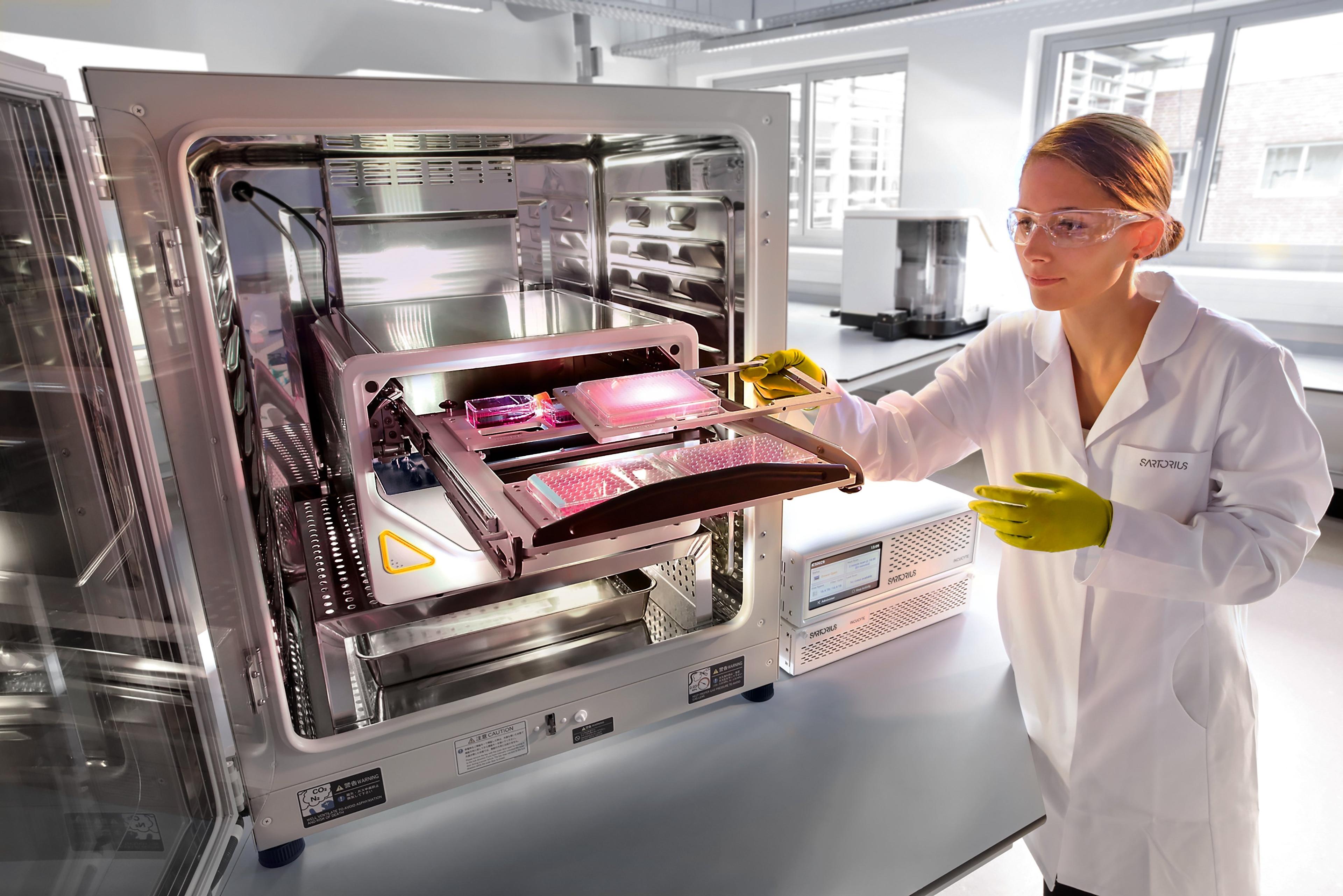
The Incucyte® system, placed directly in a standard incubator, automatically collects and analyzes images throughout the course of an experiment while cells remain unperturbed in a physiologically relevant environment. The platform provides researchers with the ability to gain new insights and understanding into biological processes via real-time, quantitative analysis of live cells.

Poster Presentations

  • CD47 antibody-induced engulfment of human T cell leukemia cells by bone marrow-derived macrophages.
    CD47 is a trans-membrane “don’t eat me” signaling protein that enables tumor cells to evade clearance by phagocytes. Blocking CD47 allows phagocytes to identify and clear tumor cells and is a promising new approach for immunotherapy. The poster will describe a model system for quantitative functional analysis and derivation of mechanistic insights into CD47 modulators as cancer therapeutics.
    Session date and time: Monday, April 3, 1-5pm
    Location: Poster section 26, poster board 7
  • Validation of novel continuous live-cell assays for immune cell activation and killing of blood cell cancers
    Novel high throughput live-cell image-based assays for immune cell activation and killing of target cells enable screening for new treatments for blood cell cancers. The assays allow non-invasive continuous measurement of proliferation, activation, clustering and immune-cell killing of non-adherent tumor cells at industrial scale. Unlike flow cytometry, this approach follows the full time-course of the biology without perturbing the cells and allows cell-cell interactions to be visualized. These assays are amenable to testing new therapeutic antibodies, small molecules and CAR-T approaches.
    Session date and time: Tuesday, April 4, 1-5pm
    Location: Poster section 1, poster board 1

Links

Tags

Microplate Readers / DetectorsMicroplate readers are used to automate the detection and analysis of labeled or label-free components in microplates during assays or live-cell monitoring. Microplate readers are generally distinguished by their mode of detection. Types include absorbance, luminescence, fluorescence intensity, fluorescence polarization, TRF / FRET and multimode microplate readers. Microplate readers deliver a high throughput of samples by reading multiple wells simultaneously, with the 96-well format the most commonly used. As a result, microplate readers are often used in the drug discovery, bioassays, research and pharmaceutical industries for screening applications. Microplate loading can also be automated, with robotic microplate stackers to increase throughput. Find the best microplate readers in our peer-reviewed product directory: compare products, check customer reviews and receive pricing direct from manufacturers.Cell-Based AssaysCell-based assays are used to monitor the presence, quantity and activities of a desired cellular analyte including drug molecules or biomarkers. This can reveal information on cell health (apoptosis, cytotoxicity, viability and proliferation assays), cell metabolism, cell migration and cell signaling mechanisms. Find the best cell-based assay products, kits and equipment with our peer reviewed product directory: compare products, check customer reviews and receiving pricing direct from manufacturers.Cell AnalysisThe analysis of cells allows researchers to understand the factors which contribute to cell health and function. These influencing processes can then be predicted and altered, leading to the development of medication and disease treatments.Live Cell ImagingLive cell imaging is the study of living cells using microscopes and high-content imaging systems. This technique provides in-depth insight into fast and complex biological processes, by allowing dynamic imaging of living cells instead of acquiring an individual image at a single point in time.Assay DevelopmentThe process of proving an assay to be sensitive with respect to the target is known as assay development. The assay should be able to characterize novel compounds and measure the potency of these compounds against a validated biological target.Cell IncubationCell incubation involves maintaining controlled environmental conditions for growing and nurturing cells. It is essential for cell culture studies, drug testing, and regenerative medicine. Explore cell incubation solutions in our peer-reviewed product directory; compare products, check reviews, and get pricing directly from manufacturers.Drug DiscoveryDrug discovery is the process of identifying potential new medications, involving stages such as target identification, compound screening, and preclinical development. It relies on cutting-edge technologies like high-throughput screening, artificial intelligence, and molecular modeling to accelerate the identification of drug candidates. Drug discovery plays a pivotal role in developing new therapies for diseases ranging from cancer to rare genetic disorders. Browse our peer-reviewed product directory to find the latest drug discovery technologies, compare options, check customer feedback, and get pricing directly from manufacturers.AACRThe American Association for Cancer Research (AACR) is a leading organization focused on cancer research and treatment. It provides a platform for scientists, healthcare professionals, and industry leaders to share knowledge and collaborate in the fight against cancer.
Essen Bioscience to Showcase Incucyte Live-cell Imaging System and Applications at AACR