Essen BioScience Launches the Incucyte S3 Live-Cell Analysis Platform

2 Apr 2017
Jay Leech
Marketing / Sales

Product news

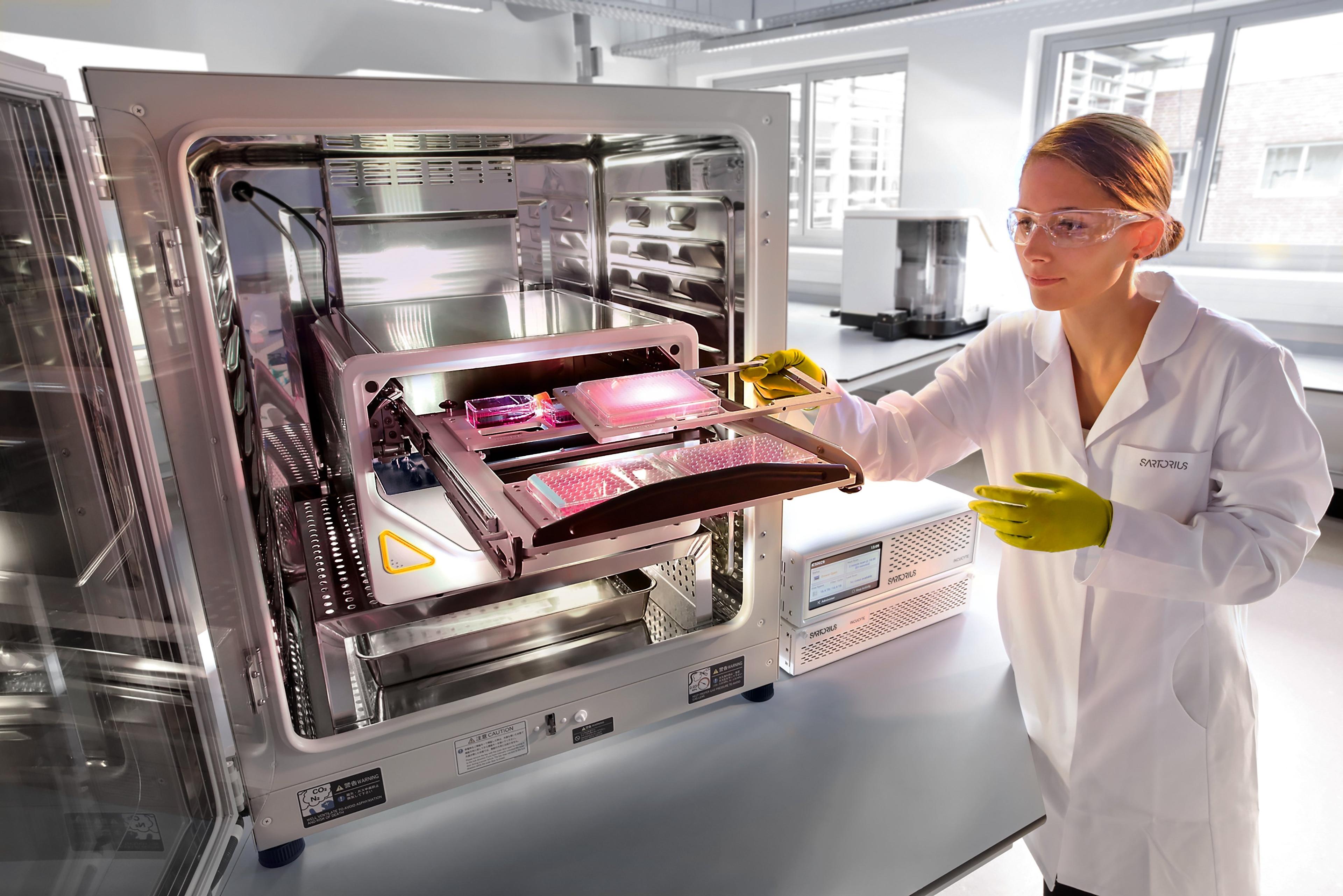
Essen BioScience, a pioneer and leader in the field of cell-based assays and instrumentation used for drug discovery and basic research, has launched the Incucyte®S3 live-cell analysis platform for real-time, automated measurements of cell health, proliferation, movement and function directly inside a standard incubator.

In sharp contrast to manual monitoring and analysis, real-time live-cell analysis using the Incucyte S3 automates data capture and cell assessment delivering new insights and understanding into biological processes. Cells can be continuously monitored and data collected around-the-clock and at precise, regularly scheduled sampling intervals for days, weeks, or months, while remaining unperturbed in a physiologically relevant environment.

The Incucyte S3 platform includes instrumentation, reagents, consumables and analytical software to perform kinetic, image-based measurements. These measurements provide more physiologically relevant data and deeper, more meaningful insights into active biological processes and cellular function than what is achievable with conventional endpoint assays. The Incucyte® system and reagents are non-perturbing to cell health and morphology, further reducing potential artifacts in user experiments, and combining information-rich, image-based analysis with the convenience and throughput of microplate assays.

The S3 offers a completely redesigned user interface, enabling even first-time users to set up an experiment within minutes and then walk away as the Incucyte automatically collects and analyzes images. In addition to improving productivity for individual users, the S3 accommodates multiple users and applications seamlessly, allowing multiple users to run different applications in parallel. Furthermore, data is accessible remotely to any user via unlimited, free networked licenses.

“The Incucyte S3 platform represents a transformative approach to live-cell analysis, enabling researchers to conceive of and execute experiments that were not previously thought possible and answer new types of questions,” said Brett Williams, President and CEO, Essen BioScience. “We initially launched this ground-breaking platform in 2006 and the impact is obvious. We are gratified to see our approach to live-cell analysis cited in more than 1000 peer-reviewed publications for applications across many research and therapeutic areas including immuno-oncology, immunology, neuroscience and stem cell biology.”

Multiple T-flasks or up to six 96 or 384 well microtiter plates fit within the Incucyte S3 system, increasing productivity and allowing different applications and assays to be run simultaneously. More than 4,000 images can be collected per hour, converting traditional endpoint assays to a kinetic format for studying movement, migration, apoptosis and other cell behaviors. Images from a 96-well experiment can be viewed simultaneously, then converted into movies, metrics, and graphs that are publication- and presentation-ready with just a few clicks.

Links

Tags

Cell Adhesion AssaysCell adhesion assays are used to quantitate attachment and analyze the molecular mechanisms for extracellular matrix adhesion, cell migration and sensitivity to inhibitors. Find the best cell adhesion assay equipment in our peer-reviewed product directory: compare products, check customer reviews and receive pricing direct from manufacturers.Cell-Based AssaysCell-based assays are used to monitor the presence, quantity and activities of a desired cellular analyte including drug molecules or biomarkers. This can reveal information on cell health (apoptosis, cytotoxicity, viability and proliferation assays), cell metabolism, cell migration and cell signaling mechanisms. Find the best cell-based assay products, kits and equipment with our peer reviewed product directory: compare products, check customer reviews and receiving pricing direct from manufacturers.Light MicroscopyLight microscopes or optical microscopes are used to visualize microscale objects under magnification, including cells, clinical specimens and materials. Lab equipment for light microscopy includes confocal microscopes, fluorescence microscopes, zoom and stereo microscopes. Microscope slides and imaging reagents are available for visualizing samples, as well as various microscope stages and incubators for large or temperature-sensitive samples. Find the best light microscopes in our peer-reviewed product directory: compare products, check customer reviews and receive pricing direct from manufacturers.ImmunologyImmunological techniques measure and characterize immune responses. Immunology kits and analysis systems often use techniques such as ELISA, radioimmunoassay (RIA) and immunodiffusion assays, Immunohistochemistry, and flow cytometry. Immunologists use equipment such as flow Cytometers, plate readers, plate washers and fluorescent microscopes.Cell ImagingCell imaging can be achieved using a number of techniques including confocal microscopy, transmission electron microscopy, atomic force microscopy, and light sheet microscopy.Cell AnalysisThe analysis of cells allows researchers to understand the factors which contribute to cell health and function. These influencing processes can then be predicted and altered, leading to the development of medication and disease treatments.Live Cell ImagingLive cell imaging is the study of living cells using microscopes and high-content imaging systems. This technique provides in-depth insight into fast and complex biological processes, by allowing dynamic imaging of living cells instead of acquiring an individual image at a single point in time.Cell ProliferationCell proliferation refers to the process by which cells divide and multiply. This is a key concept in cancer research, tissue regeneration, and immunology studies. Explore cell proliferation tools in our peer-reviewed product directory; compare products, check reviews, and get pricing directly from manufacturers.Cell Based AssaysCell-based assays use living cells to measure biological responses to various treatments or stimuli. They are essential for drug discovery, toxicology testing, and understanding cellular mechanisms. These assays are used to assess cell viability, proliferation, gene expression, and other cellular activities. Browse our peer-reviewed product directory to find the best cell-based assay tools and reagents, compare products, read customer reviews, and get pricing directly from manufacturers.Cell MigrationCancer ResearchAlthough cancer is often referred to as a single condition, it actually consists of more than 100 different diseases. Microscopy, mass spectrometry, high throughput sequencing and flow cytometry are some of the most common techniques employed in cancer research labs.