ERBA Mannheim opens new subsidiary in Brazil

12 Sept 2019

Charlie Carter
Life Sciences Editor

Industry news

Erba Mannheim is expanding its global footprint by opening a new subsidiary in Brazil, headquartered in Nova Lima north of the nation’s capital. The new organization plans to sell a full range of blood and urine test automation solutions in clinical chemistry, hematology, hemostasis, immunoassay, urinalysis, diabetes, critical care and microbiology.

“This new operation significantly enhances our footprint in LATAM,” said Nikhil Vazirani, MD of Erba Mannheim. “We have an excellent team who are looking forward to helping improve workflow and quality whilst reducing cost and turnaround time of Brazilian labs”.

We will be showcasing key products, including XL200 and XL640 clinical chemistry instruments, LAURA XL automatic urinalysis system, Elite 580 and H560 automatic hematology analysers and the ECL760 automatic coagulation analyser.

“We are very excited to be able to serve our customers and support our channel partners from within Brazil” said Tarcisio Vilhena, Brazil country manager. “We have a dedicated team ready to support our customers with application and service expertise as well as sales and marketing support. From the simplest semi-automatic system to the impressive sophistication of our future NEXUS range, we are committed to help improve the lives of millions in Brazil through high quality, affordable automation”

Visit ERBA Mannheim at 53rd Brazilian Congress of Clinical Pathology in Rio De Janeiro, Booth #113 or learn more here.

Watch this video to learn more>>

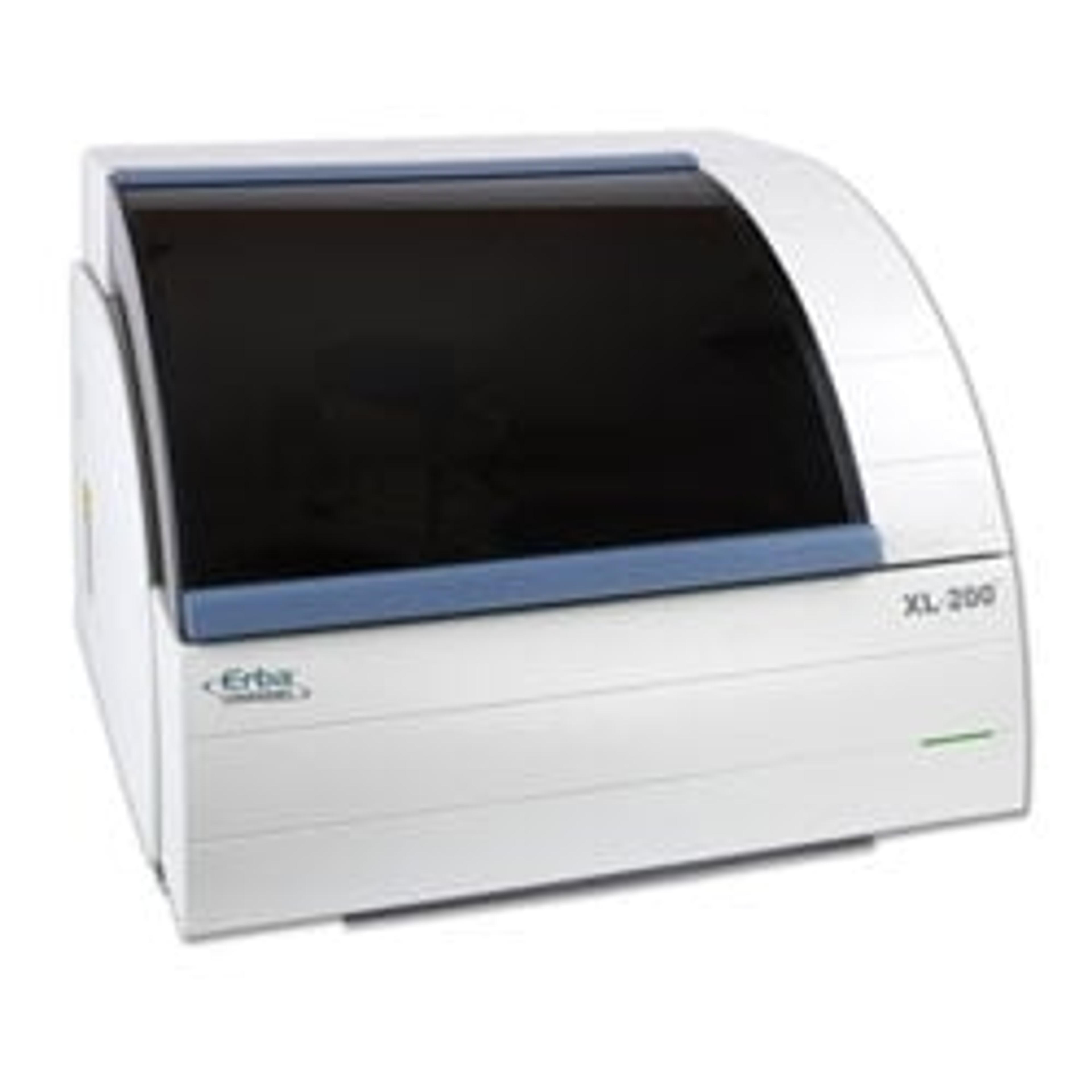
Biochemical analyzer XL 200

Erba Mannheim

The XL 200 fully-automated benchtop analyzer is designed for labs processing up to 200 photometric tests/hr (360 tests/hour with ISE). The XL 200 is designed for use in small routine/emergency laboratories or as a backup analyzer in larger labs. The XL 200 promises to be an optimal and cost effective solution for your lab. Additionally, the built-in cuvette washing system allows users to reuse cuvettes, aiming to lower operating costs for labs.

(3)

Links

Tags

HematologyIn Haematology / Hematology, complete blood cell counts (or full blood counts) are obtained using automated blood count analyzers to enumerate blood cell types.  Hematology also encompasses haemostasis and coagulation, thrombophilia and hemophilia, plasma viscosity and ESR analysis, hemoglobinopathies, cell morphology and haematinic measurement.ImmunologyImmunological techniques measure and characterize immune responses. Immunology kits and analysis systems often use techniques such as ELISA, radioimmunoassay (RIA) and immunodiffusion assays, Immunohistochemistry, and flow cytometry. Immunologists use equipment such as flow Cytometers, plate readers, plate washers and fluorescent microscopes.Cellular PathologyCellular Pathology deals with the microscopic analysis of tissue samples and cells. Sample preparation and processing includes fixation, staining, sectioning and slide mounting, using equipment such microtomes and cryostats. In choosing immunohistochemistry and immunocytochemistry kits, consider chromogens, staining method, antibodies, microscopes and imaging.Point-of-CarePoint-of-Care Testing (POCT) or Near Patient Testing (NPT) products are available for urine, blood and other clinical chemistry analyses. POCT includes: blood glucose testing, blood gas and electrolytes analysis, rapid coagulation testing (PT / INR), rapid cardiac markers diagnostics, drugs of abuse screening, urine strips testing, pregnancy testing, fecal occult blood analysis, food pathogens screening, hemoglobin diagnostics, infectious disease testing and cholesterol screening.Clinical ChemistryBiochemistry (or clinical chemistry) involves the analysis of bodily fluids using chemical tests. Techniques used include HPLC, chromatography, spectroscopy, mass spectrometry, immunochemical, electrophoresis, turbidometric / spectrophotometric assay, MRI and ISE analysis. Tests are often carried out on plasma or serum but urine (urinalysis) and fecal specimens are also processed.MicrobiologyMicrobiology is the study of microorganisms including protists, prokaryotes, fungi, and, often, viruses. Microorganisms are a useful research tool as genetic vectors and, in immunology, for antibiotic susceptibility testing, cellular biology and genetics. Microorganisms commonly grow readily in incubators with microbial culture media; this can contain chromogenic supplements to differentiate between cell lines. Estimate your culture’s density of microorganisms with colony counters, or screen and select colonies for desirable clones with automated colony pickers. Additionally, equipment is available to monitor environments for the presence of microbes and identify with microbial identification instruments. Find the best microbiology products in our peer-reviewed product directory: compare products, check customer reviews and receive pricing direct from manufacturers.ImmunoassayImmunoassays are laboratory tests that utilize antibody-antigen interactions to detect specific substances. They are widely used in diagnostics for detecting diseases, drug testing, and environmental monitoring. These assays offer rapid, sensitive, and precise detection of biomarkers, making them invaluable in clinical and research labs. Browse our peer-reviewed product directory to compare immunoassay systems, read user reviews, and get pricing directly from manufacturers.DiabetesDiabetes is a metabolic disorder characterized by high blood sugar levels, either due to insufficient insulin production or resistance to its effects. Ongoing diabetes innovation focuses on developing better diagnostic tools, treatments, and preventive measures. Browse our peer-reviewed product directory to find the best diabetes diagnostic tools, compare products, check reviews, and get pricing directly from manufacturers.Hematology SolutionsHematology solutions involve diagnostic tests and equipment used to analyze blood samples and diagnose blood disorders such as anemia, leukemia, and hemophilia. These tools include automated full blood count analyzers, reagents, and digital morphology systems. Explore hematology solutions in our peer-reviewed product directory; compare products, check reviews, and get pricing directly from manufacturers.HemostasisClinical AutomationClinical laboratory automation refers to the use of automated systems in clinical laboratories to increase efficiency, reduce human error, and improve patient care. From sample analysis to total laboratory automation, this plays a critical role in modern diagnostics and laboratory workflows. Explore clinical automation solutions in our peer-reviewed product directory; compare products, check reviews, and get pricing directly from manufacturers.Clinical ChemistryClinical chemistry involves the analysis of bodily fluids, like blood and urine, to diagnose and monitor diseases. Tests in clinical chemistry provide critical information for patient care and treatment decisions. Explore clinical chemistry tools in our peer-reviewed product directory; compare products, check reviews, and get pricing directly from manufacturers.Blood AnalysisThe analysis of blood is vital for many areas of life sciences and forensic investigations. Blood samples can be tested for a number of different reasons such as diagnosis, glucose levels, cholesterol and drug testing.UrineThe analysis of urine is important in medicinal, anti-doping, forensic and life sciences applications. The ability to evaluate what someone has ingested through their urine enables fast detection and diagnosis of certain illnesses.
ERBA Mannheim opens new subsidiary in Brazil